Everlasting Tales of the Quran – Volume 03 Issue 33

The Hijrah: A Dawn Rising from the Heart of the Desert
For many years, the call to Tawḥīd (the Oneness of God) had echoed through the narrow streets and alleys of Makkah. The Quraysh had exhausted every means at their disposal to extinguish it—from bribery, persecution, and the economic and social boycott in the Valley of Abū Ṭālib, to intimidation and threats. Yet the sun of Islam refused to set. During those days of relentless hardship, the believers, burdened by suffering, would sometimes ask themselves:
…مَتَىٰ نَصْرُ اللَّهِ…
“When will the help of Allah come?” (Qur’an 2:214)
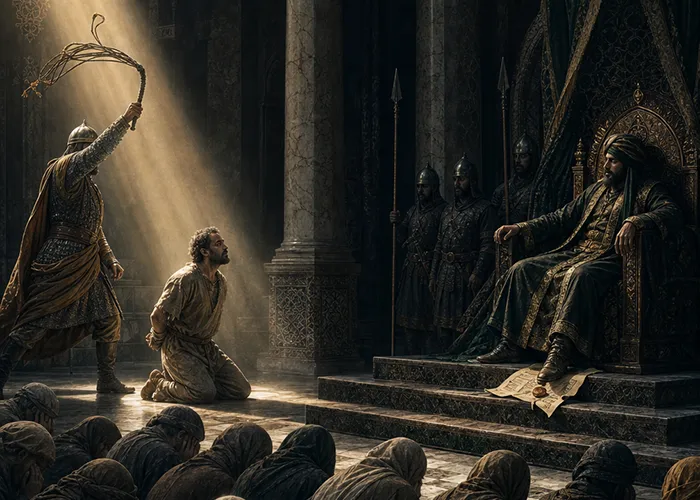
Following the passing of the Prophet’s two greatest supporters, Khadījah and Abū Ṭālib (peace be upon them), darkness seemed to descend upon the city. The chiefs of Quraysh assembled in Dār al-Nadwah and resolved to eliminate the Prophet (pbuh) once and for all. They agreed that forty skilled young swordsmen, chosen from all the major clans, would attack his house simultaneously.
But the plan of Allah was swifter and wiser than the designs of those consumed by hatred. The Angel Jibrīl (Gabriel) descended, revealing the conspiracy through the following verse:
“وَإِذْ يَمْكُرُ بِكَ الَّذِينَ كَفَرُوا لِيُثْبِتُوكَ أَوْ يَقْتُلُوكَ أَوْ يُخْرِجُوكَ ۚ وَيَمْكُرُونَ وَيَمْكُرُ اللَّهُ ۖ وَاللَّهُ خَيْرُ الْمَاكِرِينَ“
“And [remember] when those who disbelieved plotted against you to imprison you, or kill you, or expel you. They plotted, and Allah planned, and Allah is the Best of Planners.” (Qur’an 8:30)
The divine command was then given: the Messenger of Allah ﷺ was to leave Makkah under the cover of night and set out for Yathrib. Yet his bed could not be left empty, lest the enemy discover his departure.
The Night of the Bargain with Allah
The Messenger of Allah ﷺ entrusted the secret of that night to a twenty-three-year-old young man who had been raised in his household since childhood: ʿAlī ibn Abī Ṭālib (peace be upon him).
ʿAlī did not ask what would become of him. Instead, he asked only one question:
“O Messenger of Allah, if I sleep in your bed, will your life be protected?”
When the Prophet ﷺ answered in the affirmative, ʿAlī smiled, wrapped himself in the Prophet’s green cloak, and lay down fearlessly in what appeared to be a bed of certain death.
Night fell. Forty drawn swords surrounded the house from every side. Meanwhile, the Prophet ﷺ quietly walked through the ring of his enemies while reciting the miraculous verse from Sūrat Yā-Sīn:
“وَجَعَلْنَا مِنْ بَيْنِ أَيْدِيهِمْ سَدًّا وَمِنْ خَلْفِهِمْ سَدًّا فَأَغْشَيْنَاهُمْ فَهُمْ لَا يُبْصِرُونَ“
“And We placed before them a barrier and behind them a barrier, and We covered them, so they could not see.” (Qur’an 36:9)
In the heavens, the selfless sacrifice of the man who had offered his own life as a shield for the Prophet (pbuh) astonished the angels. Then the following timeless verse was revealed:
“وَمِنَ النَّاسِ مَن يَشْرِي نَفْسَهُ ابْتِغَاءَ مَرْضَاتِ اللَّهِ ۗ وَاللَّهُ رَءُوفٌ بِالْعِبَادِ“
“And among the people is he who sells his own soul seeking the pleasure of Allah. And Allah is Most Kind to His servants.” (Qur’an 2:207)
Daybreak and the Great Migration
At dawn, the assassins stormed into the house with unsheathed swords. But when they pulled away the covering, they found not the Prophet ﷺ but ʿAlī (peace be upon him), who rose with dignity and composure. Fury and bewilderment overwhelmed them- the Messenger of Allah ﷺ was already far beyond their reach.
Meanwhile, on the outskirts of Makkah, the Prophet ﷺ and Abū Bakr had taken refuge in the Cave of Thawr. The trackers of Quraysh reached the entrance of the cave, but the web spun across its opening caused them to abandon their search. In those anxious moments, divine reassurance descended:
“إِلَّا تَنصُرُوهُ فَقَدْ نَصَرَهُ اللَّهُ إِذْ أَخْرَجَهُ الَّذِينَ كَفَرُوا ثَانِيَ اثْنَيْنِ إِذْ هُمَا فِي الْغَارِ إِذْ يَقُولُ لِصَاحِبِهِ لَا تَحْزَنْ إِنَّ اللَّهَ مَعَنَا…”
“If you do not support him, Allah has already supported him when those who disbelieved drove him out, while he was one of the two, when they were in the cave, and he said to his companion, ‘Do not grieve; indeed, Allah is with us.’…” (Qur’an 9:40)
Thus, the carefully devised scheme of Quraysh collapsed. The Messenger of Allah ﷺ was delivered safely from danger, and the greatest migration in Islamic history had begun.
The Glad Tidings of Victory at al-Juḥfah
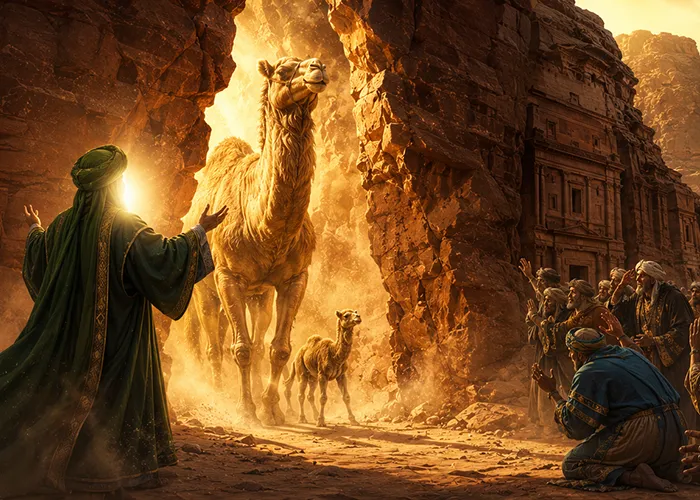
The relentless desert sun blazed over the rolling sand dunes as the caravan reached al-Juḥfah, the place where the roads to Makkah and Madinah diverged.
There, the Prophet ﷺ paused. Turning toward the south, he gazed sorrowfully at his beloved birthplace—Makkah, the city of the Sacred House, filled with both cherished memories and painful trials.
At that very moment, revelation descended once more, filling his heart with certainty and hope:
“إِنَّ الَّذِي فَرَضَ عَلَيْكَ الْقُرْآنَ لَرادُّكَ إِلىٰ مَعادٍ…”
“Indeed, He who has made the Qur’an binding upon you will surely return you to your place of return [Makkah].” (Qur’an 28:85)
It was a magnificent divine promise: today’s migration would become tomorrow’s triumphant return.
On the Outskirts of Madinah: The Foundation of the First Mosque
It should also be noted that, besides Abū Bakr, others accompanied or joined the caravan during different stages of the journey.
One was ʿĀmir ibn Fuhayrah, Abū Bakr’s freed servant, who accompanied the Prophet ﷺ and Abū Bakr from the outset. He tended sheep around the Cave of Thawr to erase their footprints and supplied the travelers with fresh milk. He remained with the caravan throughout the journey.
Another was ʿAbdullāh ibn Urayqiṭ, an experienced guide whom the Prophet ﷺ hired because of his trustworthiness and expert knowledge of the routes. He guided the caravan from the Cave of Thawr toward Madinah by way of little-known and unconventional coastal paths, thereby avoiding the usual routes.
After enduring days of hardship and the harshness of the desert, the caravan reached the village of Qubāʾ, a few kilometres from Madinah. The people eagerly came out to welcome the Messenger of Allah ﷺ. However, he declared that he would not enter the heart of Madinah until his brother, ʿAlī (peace be upon him)– who had remained behind in Makkah to return the trusts entrusted to the Prophet (pbuh) and to bring the women of the Prophet’s household- had joined him.
During the few days spent at Qubāʾ, the Muhājirūn (Emigrants) and the Anṣār (Helpers) worked together to lay the foundation of the first official centre of Islam. A simple mosque, yet filled with faith, was built, whose virtue the Noble Qur’an immortalized in these words:
“…لَمَسْجِدٌ أُسِّسَ عَلَى التَّقْوَىٰ مِنْ أَوَّلِ يَوْمٍ أَحَقُّ أَن تَقُومَ فِيهِ ۚ فِيهِ رِجَالٌ يُحِبُّونَ أَن يَتَطَهَّرُوا ۚ وَاللَّهُ يُحِبُّ الْمُطَّهِّرِينَ“
“…A mosque founded upon piety from the very first day is more worthy for you to stand in. In it are men who love to purify themselves, and Allah loves those who purify themselves.” (Qur’an 9:108)
The Sunrise over Yathrib
When Imam ʿAlī (peace be upon him) finally arrived with the Fawāṭim (the noble ladies bearing the name Fāṭimah), the Messenger of Allah ﷺ mounted his camel and proceeded toward Madinah.
Yathrib was overflowing with joy. Its palm groves seemed to sing songs of gratitude, and with the arrival of the Messenger of Allah ﷺ, a new chapter in human history began -the establishment of the first Islamic society and the dawn of an era illuminated by faith.
Educational and Moral Reflections
- Trust in Allah Accompanied by Careful Planning
Although the Messenger of Allah ﷺ relied upon divine revelation and heavenly support, he also employed every reasonable and strategic measure available. He appointed a substitute to sleep in his bed in order to mislead his enemies, chose an unexpected route by heading south toward the Cave of Thawr instead of taking the direct northern road to Madinah, and remained concealed with meticulous planning. This teaches us that faith and reliance upon Allah never negate wisdom, prudent planning, or sound strategy.
- The Status of Self-Sacrifice and Mission-Centred Commitment in Islamic Education
The self-sacrifice of Imam ʿAlī (peace be upon him) demonstrates that, in moments of crisis, the defining characteristic of a true believer is to place the divine mission above personal safety. Imam ʿAlī (peace be upon him) did not ask, “Will I survive?” Rather, he asked, “Will your life be protected?” This question represents one of the highest expressions of responsibility, selflessness, and complete devotion to the cause of Allah.
- Divine Assistance Comes After Human Effort
Divine support and miraculous intervention come only after people have exhausted their own efforts, exercised sound judgment, and taken the first step with sincere trust in Allah. Expecting supernatural help without any initiative or sacrifice is entirely foreign to the teachings of the Qur’an and the divine laws governing human affairs.
This is one of the fundamental differences between Laylat al-Mabīt (the Night of Sleeping in the Prophet’s Bed) and the story of the Children of Israel. During Laylat al-Mabīt, the Prophet ﷺ and Imam ʿAlī (peace be upon him) accepted the greatest personal risk and fulfilled their responsibilities with complete courage before divine victory arrived. In contrast, the Children of Israel expected Allah to destroy their enemies without any effort on their own part; consequently, they were reproached and condemned to wander in the wilderness.
- Inner Peace and Steadfastness in the Most Difficult Circumstances
The Prophet’s recitation of “لَا تَحْزَنْ إِنَّ اللَّهَ مَعَنَا” (“Do not grieve; indeed, Allah is with us”) at the entrance of the Cave of Thawr, together with his recitation of verse 9 of Sūrat Yā-Sīn while passing through the circle of armed assassins, offers a profound lesson in crisis management and emotional resilience. A heart connected to the infinite power of Allah remains calm and steadfast even when surrounded by overwhelming danger.
- How Simple Means Can Defeat Elaborate Schemes
The highly sophisticated conspiracy devised at Dār al-Nadwah -with representatives from forty clans carefully coordinating every detail- was ultimately frustrated by two seemingly simple means: a young man sleeping in the Prophet’s bed and the delicate web of a spider stretched across the entrance of a cave. This reminds us that material power is utterly fragile before the will of Allah.
- Loyalty and Faithfulness Even in Times of Great Urgency (The Stay at Qubāʾ)
Before entering Madinah, the Messenger of Allah ﷺ remained in Qubāʾ and refused to proceed until Imam ʿAlī (peace be upon him) and the members of the Prophet’s household had safely arrived. His conduct provides a timeless lesson in gratitude, loyalty to faithful companions, and commitment to family responsibilities—even during one of the most critical moments in Islamic history.
- Taqwā as the Only True Foundation of Legitimacy and Endurance (The Mosque of Qubāʾ)
The establishment of Islam’s first mosque upon the foundation of taqwā “أُسِّسَ عَلَى التَّقْوَىٰ”
demonstrates that, in the Islamic vision of civilization, the value and lasting success of any institution depend upon sincere intention and righteous foundations rather than outward appearance or physical grandeur.
- Hope and Vision in the Midst of Exile (At al-Juḥfah)
The revelation of Allah’s promise “لَرَادُّكَ إِلَىٰ مَعَادٍ” (“He will surely return you to your place of return”) came while the Prophet ﷺ was leaving his beloved city as a refugee. This teaches an enduring lesson in hope, vision, and confidence in Allah’s promise. A believer never regards hardship or apparent defeat as final but remains certain that Allah will fulfil His promise at the proper time.
- The Great Value of Striving for Allah’s Cause
The Qur’an’s praise of those who migrate in the path of Allah (Qur’an 4:100) teaches that, according to the divine standard, sincere striving itself possesses immense value -not merely reaching the final destination. Even if a believer dies before completing the journey after making every possible effort, he or she receives the full reward of that struggle.
Qur’anic References
- Sūrat al-Anfāl (8:30): Refers to the conspiracy of Dār al-Nadwah to imprison, kill, or expel the Prophet ﷺ.
- Sūrat al-Baqarah (2:207): The verse describing one who “sells his soul,” traditionally understood as referring to Imam ʿAlī’s sacrifice during Laylat al-Mabīt.
- Sūrat Yā-Sīn (36:9): The verse concerning the barrier placed before and behind the disbelievers as the Prophet ﷺ departed safely from his home.
- Sūrat al-Tawbah (9:40): Refers to the Prophet’s stay in the Cave of Thawr and the descent of divine tranquillity.
- Sūrat al-Baqarah (2:214): Describes the severe trials endured by the believers before divine victory.
- Sūrat al-Nisāʾ (4:100): Highlights the virtue of migration in Allah’s cause and the reward of those who die during the journey or endure hardship for His sake.
- Sūrat al-Qaṣaṣ (28:85): The divine promise that the Prophet ﷺ would one day return victoriously to Makkah, traditionally understood to have been revealed at al-Juḥfah.
- Sūrat al-Tawbah (9:108): Concerning the excellence of the Mosque of Qubāʾ, founded upon piety.
Historical and Classical Sources
- Fakhr al-Dīn al-Rāzī, Al-Tafsīr al-Kabīr, Vol. 5, p. 223: Narrates Allah’s praise of Imam ʿAlī’s self-sacrifice before the angels Jibrīl and Mīkāʾīl.
- Abū Ḥāmid al-Ghazālī, Iḥyāʾ ʿUlūm al-Dīn, Vol. 3, p. 23: Reports the revelation of Qur’an 2:207 concerning Laylat al-Mabīt.
- Al-Ṭabarī, Tārīkh al-Rusul wa al-Mulūk, Vol. 2, pp. 371–374: A detailed account of the Dār al-Nadwah conspiracy, Imam ʿAlī’s sleeping in the Prophet’s bed, and the Prophet’s departure to the Cave of Thawr. Page 469: Describes the Prophet’s stay at Qubāʾ, his waiting for Imam ʿAlī and the Fawāṭim, and his subsequent entry into Madinah.
- Ibn Hishām, Al-Sīrah al-Nabawiyyah, Vol. 2, p. 124: Describes the Quraysh’s attack on the Prophet’s house and their encounter with Imam ʿAlī.
- Al-Ganjī al-Shāfiʿī, Kifāyat al-Ṭālib, p. 239: Records narrations identifying Qur’an 2:207 with Imam ʿAlī.
- Shaykh al-Ṭūsī, Al-Amālī, p. 466: Narrates the conversation between the Prophet ﷺ and Imam ʿAlī before the latter slept in the Prophet’s bed.
- Al-Ṭabarsī, Iʿlām al-Warā bi-Aʿlām al-Hudā, Vol. 1, p. 301: Provides a detailed narrative of the events surrounding Laylat al-Mabīt.
- Nāṣir Makārim Shīrāzī, Tafsīr Nemūneh, commentary on Qur’an 2:207 and 8:30: Presents a comprehensive analysis of the occasions of revelation and their historical context. Vol. 16, p. 376: Discusses the revelation of Qur’an 28:85 and its connection to the Prophet’s migration.
- Al-Ṭabarsī, Majmaʿ al-Bayān, commentary on Qur’an 28:85: Reports the Prophet’s longing for Makkah at al-Juḥfah and the revelation of the promise of his return.
- Ibn Hishām, Al-Sīrah al-Nabawiyyah, Vol. 2, pp. 137–142: Details the construction of the Mosque of Qubāʾ and the historic arrival of the Messenger of Allah ﷺ in Yathrib.
editor's pick

news via inbox
Subscribe to the newsletter.