Editorial – volume 03 Issue 33
What Will the Future Remember About Us?
Introduction
We are now reflecting on the events of the past and learning from them. May we live through the present in such a way that future generations will look back with appreciation upon the actions we took and the decisions we made in our time.
28 Safar: The Passing of the Prophet Muhammad (PBUH) and the Martyrdom of Imam Hasan al-Mujtaba (AS)
28 Safar marks the passing of the Prophet Muhammad (PBUH) in Medina in 11 AH. The same date is also commemorated as the martyrdom of his grandson, Imam Hasan al-Mujtaba (AS), in 50 AH.
Passing of the Prophet (pbuh) and martyrdom of Imams (pbut) remind Muslims that the continuity of Islam depends not upon the physical presence of a single leader, but upon preserving revelation, moral principles, justice and prophetic character. The Qur’an describes the Prophet’s mission in these words:
لَقَدْ كَانَ لَكُمْ فِي رَسُولِ اللَّهِ أُسْوَةٌ حَسَنَةٌ لِمَنْ كَانَ يَرْجُو اللَّهَ وَالْيَوْمَ الْآخِرَ وَذَكَرَ اللَّهَ كَثِيرًا
“Indeed, in the Messenger of Allah you have an excellent example for whoever has hope in Allah and the Last Day and remembers Allah often.” (Surah Al-Ahzab, 33:21)
Message for today:
True loyalty to the Prophet (pbuh) is demonstrated by carrying his mercy, justice and wisdom into the realities of our own time.
30 Safar: The Martyrdom of Imam ‘Ali al-Rida (AS)
30 Safar is commemorated as the martyrdom of Imam ‘Ali al-Rida (AS), the eighth Imam (pbuh), in 203 AH. Imam al-Rida (AS) is especially remembered for his knowledge, intellectual engagement and ability to respond to diverse religious and philosophical arguments. One of the central principles associated with the intellectual tradition of the Ahl al-Bayt is the pursuit of knowledge together with humility, moral responsibility and closeness to God.
Message for today:
Let knowledge deepen faith, let dialogue strengthen understanding, and let intellectual excellence remain joined to moral character.
1 Rabi‘ al-Awwal: The Hijrah of the Prophet Muhammad (PBUH) from Makkah to Madinah
The Hijrah was not simply a journey from one city to another; it marked the transition of the Muslim community from a persecuted minority in Makkah towards the establishment of a community in Madinah founded upon faith, solidarity and responsibility. The Hijrah subsequently became the starting point of the Islamic calendar.
Message for today:
When circumstances demand change, move towards what is right with faith, preparation, courage and trust in Allah.
1 Rabi‘ al-Awwal: Laylat al-Mabit
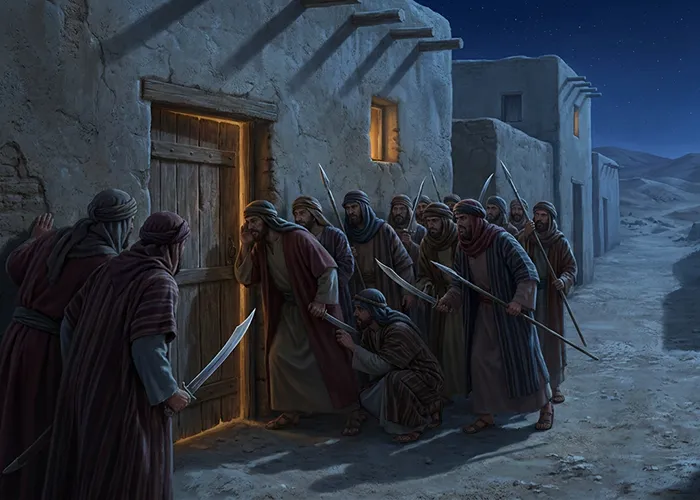
The polytheists of Makkah agreed to select one man from each tribe to assassinate the Prophet (peace and blessings be upon him and his family) together, so that the Banu Hashim would not be able to seek vengeance for his death. In this way, they hoped to put an end to the Prophet’s mission and keep themselves in the darkness and ignorance in which they lived. The Prophet (peace and blessings be upon him and his family) became aware of their plot. In order to ensure that the Prophet (pbuh) could leave Makkah safely, Imam ‘Ali (peace be upon him) slept in his bed on this night. It was on this occasion, according to the Islamic tradition, that the following verse was revealed concerning him:
وَ مِنَ الْنَّاسِ مَنْ يَشْرِى نَفْسَهُ ابْتغَآءَ مَرْضَاتِ اللَّهِ وَ اللَّهُ رَءُوفٌ بِالْعِبَادِ
“And among the people is he who sells his soul, seeking the pleasure of Allah. And Allah is Most Kind to His servants.” (Qur’an 2:207)
Message for today:
A life centred on Allah is measured not by what we gain, but by what we are willing to sacrifice for truth and the good of others.
4 Rabi‘ al-Awwal: The Prophet’s Departure from the Cave of Thawr towards Madinah
After spending several nights in the Cave of Thawr, the Prophet Muhammad (PBUH) and his companion continued their journey towards Madinah. The Qur’an records the Prophet’s words in the cave:
لَا تَحْزَنْ إِنَّ اللَّهَ مَعَنَا
“Do not grieve; indeed Allah is with us.” (Qur’an 9:40)
Message for today:
Trust in Allah should make us calmer and more responsible-not less prepared.
5 Rabi‘ al-Awwal: The Passing of Sayyidah Sukaynah (SA), Daughter of Imam al-Husayn (AS)
Sayyidah Sukaynah (SA), the daughter of Imam al-Husayn (AS), lived through the tragedy of Karbala and its aftermath, including the captivity and forced journey of the surviving family of the Prophet (pbuh). Sukaynah’s life reminds us that the moral consequences of a historical tragedy do not end when the battlefield falls silent. The preservation of memory, testimony and truth is itself a form of resistance to injustice.
Message for today:
Remembering the past means preserving truth, giving dignity to the oppressed and refusing to let injustice disappear from collective memory.
5 Rabi‘ al-Awwal: The Martyrdom of al-Shahid al-Thani, Zayn al-Din al-‘Amili (965 AH)
Zayn al-Din ibn ‘Ali al-‘Amili, known as al-Shahid al-Thani (the Second Martyr), was one of the great jurists and scholars of the Shi‘i tradition and passed away in 965 AH. He became renowned particularly for works such as al-Rawdah al-Bahiyyah, which became an important text in Shi‘i jurisprudential education. His life also reflects the difficult position of religious scholarship in periods of political tension, when intellectual independence could carry serious personal risks.
Message for today:
Protect the integrity of religious knowledge by learning carefully, verifying claims and giving scholarship its rightful place in community life.
12 August 2026 – International Youth Day
The United Nations observes International Youth Day every year on 12 August; the date was endorsed by the UN General Assembly in 1999 following the World Conference of Ministers Responsible for Youth. The day aims to draw attention to the opportunities and challenges facing young people and to recognise them as partners in building societies. Islam has never treated young people as merely “the future”; young Muslims have repeatedly played active roles in the formation and defence of the early Muslim community. ‘Ali ibn Abi Talib (AS), Mus‘ab ibn ‘Umayr, Usamah ibn Zayd and many other young companions demonstrate that youth can carry extraordinary intellectual, spiritual and social responsibility.
Message for today:
Do not merely speak about young Muslims as the future-trust, educate and empower them to serve the present.
editor's pick

news via inbox
Subscribe to the newsletter.