Topic of the Week – Volume 03 Issue 44

The Importance of Timing in History, Faith and Everyday Life
Seyed Hashem Moosavi
The art of acting at the right moment – From the Tawwabeen uprising to our responsibilities today
Introduction
In our personal lives and in the history of nations, some moments have a value that no clock or calendar can measure. A sound decision can change the course of the future, while hesitation can cause harm that years of effort may never fully repair. Sometimes the problem is neither a failure to recognise the truth nor an unwillingness to make sacrifices. It is that we step forward only after the crucial opportunity has passed.
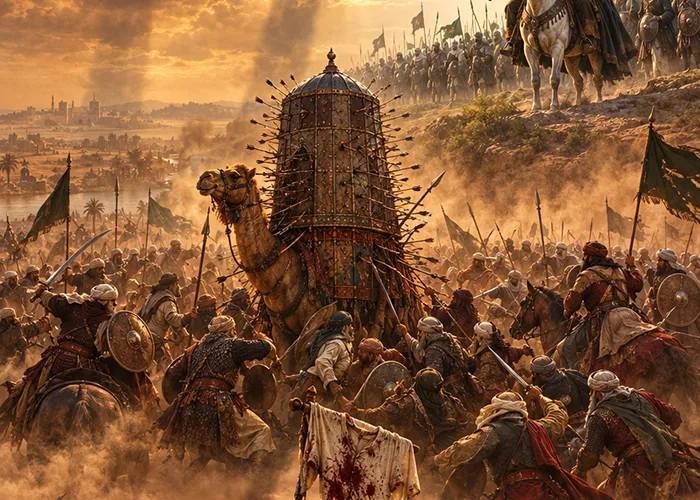
Islamic history offers striking examples of this reality. Among the most instructive is the uprising of the Tawwabeen, the Penitents: several thousand men from Kufa who, after the tragedy of Ashura, rose in remorse to avenge Imam Husayn (peace be upon him), the Master of Martyrs, and sacrificed their lives. Yet, having missed the decisive opportunity, this great sacrifice could neither change the course of events that had already unfolded nor prevent that immense tragedy. Reflecting on their experience helps us understand the need for timely decisions and action in our personal, family and social lives, and in our preparation for Imam al-Mahdi (atjs).
Their remorse and sacrifice deserve thoughtful consideration. Yet a painful question remains: if the resolve that emerged after Ashura had become effective support beforehand, what opportunities might it have created to defend the truth? The story of the Tawwabeen confronts us with a question that remains alive today: do we fulfil today’s responsibilities today, or leave ourselves only tomorrow’s regret?
The Tawwabeen and the lost opportunity to prevent tragedy
According to the widely cited historical account, the Tawwabeen’s public mobilization under Sulayman ibn Surad al-Khuza‘i began at the start of Rabi‘al-Thani in 65 AH, after Yazid’s death, and was directed against the Umayyad authorities of the Marwanid period. Around four thousand men are reported to have assembled at the outset, although accounts differ on their numbers at different stages. At the Battle of ‘Ayn al-Warda, Sulayman and many of his companions were killed, while a group returned under the leadership of Rifa‘a ibn Shaddad.
(Al-Tabari, Tarikh al-Tabari, events of 65 AH, account of the Tawwabeen’s mobilization and the Battle of ‘Ayn al-Warda.)
In assessing them, we should avoid treating every individual and every reason for absence as identical. Any detailed claim about a particular person’s conduct during the uprising of Muslim ibn ‘Aqil (peace be upon him) requires independent historical evidence. What matters here is the movement’s collective acknowledgement that it had failed to support the Imam in time (pbuh), and its subsequent effort to make amends.
We cannot say with certainty that the presence of two thousand or more supporters alongside the Imam’s representative at the outset would necessarily have brought Imam Husayn (pbuh) to power in Kufa and overthrown Umayyad rule. We can, however, confidently say that organized and timely support would have increased the opportunities to defend the Imam (pbuh) and his representative, and made it harder to isolate them. A force that mobilized too late, outside the period in which it could have made that difference, was no longer in a position to prevent the tragedy of Ashura.
The Tawwabeen’s uprising was not entirely without effect. It expressed protest against the crime of Karbala and a willingness to bear the cost of loyalty. Yet the worth of repentance and sacrifice is not the same as the ability to repair past losses. They could turn away from their failure, but they could not recover the opportunity to support the Imam (pbuh) before his martyrdom.
In explaining this lesson, Ayatollah Khamenei (may Allah have mercy on him) emphasized the difference between fulfilling a duty at its proper time and acting after the opportunity has passed. The lesson is that the scale of a sacrifice alone does not determine its effectiveness. The moment at which one steps forward also shapes the outcome.
(Official website of the Office of Ayatollah Khamenei, report of the meeting with the people of Qom, 19 Dey 1395 (8 January 2017), on fulfilling duties at the proper time, with reference to the Tawwabeen.)
Qur’anic path from understanding and consultation to action
The Qur’an calls believers to act with understanding and resolve. Its command makes clear that good deeds should not be held back by endless waiting:
«فَاسْتَبِقُوا الْخَيْرَاتِ»
“Race one another in good deeds.” (Qur’an, al-Baqarah 2:148)
Elsewhere, it describes the relationship between consultation and decisiveness:
«وَشَاوِرْهُمْ فِي الْأَمْرِ فَإِذَا عَزَمْتَ فَتَوَكَّلْ عَلَى اللَّهِ»
“Consult them in the matter; then, when you have decided, place your trust in Allah.”
(Qur’an, Al ‘Imran 3:159)
This verse offers a clear pattern: decisions should follow careful consideration and consultation, but once the way forward is clear, we should not remain trapped in hesitation. Trust in Allah gives us the strength to act after deciding. Having made reasonable preparations, a believer does not wait for every outcome to be guaranteed.
The Qur’an even distinguishes the value of outwardly similar actions according to the circumstances in which they are performed:
«لَا يَسْتَوِي مِنْكُمْ مَنْ أَنْفَقَ مِنْ قَبْلِ الْفَتْحِ وَقَاتَلَ»
“Those of you who spent and fought before the victory are not equal [to those who did so afterwards].” (Qur’an, al-Hadid 57:10)
Support in a time of hardship, when victory is still uncertain and supporters are few, is not equivalent to joining in once the danger has passed. This principle also applies to everyday life. Helping a family before it breaks down, listening to a child before emotional bonds are severed, and defending an innocent person’s reputation before an accusation spreads all have a value that later action may not fully recover.
Good timing between haste and hesitation
Emphasizing timely action does not justify rash decisions. In his instructions to Malik al-Ashtar, the Commander of the Faithful, Imam ‘Ali (peace be upon him), warns:
«وَإِيَّاكَ وَالْعَجَلَةَ بِالْأُمُورِ قَبْلَ أَوَانِهَا، أَوِ التَّسَاقُطَ فِيهَا عِنْدَ إِمْكَانِهَا»
“Beware of rushing matters before their proper time, or being sluggish in pursuing them when action becomes possible.” (Nahj al-Balagha, Letter 53, instructions to Malik al-Ashtar. Some editions record alternative readings for al-tasaqut, including al-tasaqqut and al-tathabbut)
In the continuation of the same passage, the Imam (pbuh) stresses the need to put each matter in its proper place and carry out each action at the appropriate time. We must therefore guard against two errors: acting before the necessary conditions are in place, and holding back when our duty is clear and action is possible. Sometimes a sensitive conversation should wait until emotions have settled. At other times, that very delay allows someone’s rights to be lost.
Imam al-Sadiq (peace be upon him) relates from his noble father:
«إِذَا هَمَمْتَ بِخَيْرٍ فَبَادِرْ، فَإِنَّكَ لَا تَدْرِي مَا يَحْدُثُ»
“When you intend to do something good, act promptly, for you do not know what may happen.” (Wasa’il al-Shi‘a, vol. 1, p. 111, Abwab Muqaddimat al- ‘Ibadat, chapter 27, hadith 2)
This instruction concerns an action already recognized as good. Where the consequences of an action remain unclear, further consideration is needed. The art of good timing lies in discerning this difference: when should we think further, and when should we stop deliberating and act?
The people of Yunus and Pharaoh and their different outcomes
Within a single surah, the Qur’an places side by side two striking scenes of people turning back. Of the people of Yunus, it says:
«إِلَّا قَوْمَ يُونُسَ لَمَّا آمَنُوا كَشَفْنَا عَنْهُمْ عَذَابَ الْخِزْيِ فِي الْحَيَاةِ الدُّنْيَا وَمَتَّعْنَاهُمْ إِلَىٰ حِينٍ»
“Except the people of Yunus: when they believed, We removed from them the punishment of disgrace in the life of this world and allowed them enjoyment for a time.” (Qur’an, Yunus 10:98)
They turned back, and their return changed their collective destiny. The verse makes clear that a warning can lead to awakening and reform before destruction occurs. A community that recognises the signs of danger and changes course may be saved from a devastating future.
Pharaoh, by contrast, professed belief only when he was drowning. The answer came:
«آلْآنَ وَقَدْ عَصَيْتَ قَبْلُ وَكُنْتَ مِنَ الْمُفْسِدِينَ»
“Now? When you had disobeyed before and were among those who spread corruption!” (Qur’an, Yunus 10:91)
The issue here is not simply a delay of a few minutes. Pharaoh had spent his opportunity for choice and obedience in rebellion, and professed submission only when confronted by death. The Qur’an also distinguishes repentance at the arrival of death from repentance while the opportunity of life remains. (Qur’an, al-Nisa’ 4:18)
These two accounts also offer guidance for families and communities. We need to heed warnings while a change of direction is still possible. Correcting a small mistake can sometimes prevent much greater costs later. Repeatedly denying the signs of danger, however, steadily narrows our choices.
Al Hurr and the opportunity that remained
If the Tawwabeen remind us of an opportunity lost, al-Hurr ibn Yazid al-Riyahi shows that we should not despair of reform while a real opportunity remains. In al-Irshad, Shaykh al-Mufid reports that, on the Day of Ashura, as al-Hurr decided to join Imam Husayn (peace be upon him), he said:
«إِنِّي وَاللَّهِ أُخَيِّرُ نَفْسِي بَيْنَ الْجَنَّةِ وَالنَّارِ»
“By Allah, I see myself choosing between Paradise and Hell.” (Shaykh al-Mufid, al-Irshad, vol. 2, p. 99)
That very day, he left the opposing army and hastened to support the Imam (pbuh). He had missed earlier opportunities, but he did not squander the one that remained. His story completes the lesson of the Tawwabeen: we should not delay our return until the possibility of offering support has ended, nor use the lateness of the hour as an excuse to abandon a duty that can still be fulfilled.
Regret becomes constructive when we ask: what obligation rests upon me now, and what part of the damage can I still repair?
The home and the lasting impact of small decisions
Not everyone faces a great historical decision, but each of us has opportunities to make a difference within our own circumstances. For parents, it may be the moment a worried child turns to them for comfort. For a husband or wife, it may be when an exhausted spouse needs to be heard. For an adult child, it may be when an elderly parent expresses a need without saying a word. Any of these can be a moment in which duty calls.
In its guidance on how to treat parents, the Qur’an says:
«فَلَا تَقُلْ لَهُمَا أُفٍّ وَلَا تَنْهَرْهُمَا وَقُلْ لَهُمَا قَوْلًا كَرِيمًا»
“Do not say even “uff” to them, nor rebuke them, but speak to them respectfully.” (Qur’an, al-Isra’ 17:23)
This courtesy must also be evident when we are tired or under pressure. A few minutes of listening without judgement, a sincere word of thanks, or the simple acknowledgement, “I know today has been difficult for you,” can strengthen a fragile bond at the moment it is needed. By contrast, humiliating a spouse in front of others or reproaching a child at a moment of failure can leave a lasting wound.
Of course, a single affectionate remark cannot guarantee a stable family life; trust grows through consistent behaviour. Yet some moments carry greater weight. Affection when it is needed, and respect during disagreement, reveal the true effect of that consistent conduct.
The time and place of a conversation matter too. A concern that could be raised privately and calmly may provoke resistance and hurt if expressed publicly in a humiliating tone.
Social responsibility and the consequences of silence
In society, delay does not always amount to neutrality. When a rumour threatens someone’s reputation, a factual explanation issued after the accusation has spread may never reach everyone who first heard it. When someone’s rights are being violated, assistance offered after the opportunity has vanished cannot replace support given at the moment of need. Managers, teachers, religious scholars and those who run media outlets each bear responsibility in proportion to their authority and influence.
Taking a timely stand, however, is different from commenting immediately on every report. The Qur’an instructs:
«فَتَبَيَّنُوا»
“Verify the facts.” (Qur’an, al-Hujurat 49:6)
Sometimes our immediate responsibility is to stop circulating an unverified report and begin checking it. At other times, once the truth has become clear, prolonged silence helps injustice continue. Speed must go hand in hand with accuracy and justice.
Awaiting the Imam and practising loyalty today
This perspective also helps us understand an aspect of the spiritual education involved in awaiting Imam al-Mahdi (may Allah hasten his reappearance). Love for the Imam (atfs) takes root in daily life when it is accompanied by readiness to honour our commitment to him. We practice that readiness through trustworthiness, justice, cooperation and the fulfilment of the clear responsibilities before us today.
The failure of earlier communities to prepare, their hesitation, and their inability to recognise the right moment to support the infallible Imams (peace be upon them) led to the occultation of Allah’s appointed guardian. The reappearance will take place when his supporters understand the need for their presence and their duty at the appropriate time, and are ready to act.
Those who await the Imam (atfs) are responsible for preparing themselves and supporting the truth. Anyone who repeatedly postpones a clear and achievable duty today needs to reflect on their readiness for greater responsibilities. Constructive anticipation makes us more responsible within the opportunities we already have.
How can we learn to recognise the right moment
Recognizing the demands of one’s time is an important quality in a successful and responsible person, but it takes more than possessing a great deal of information. Imam al-Sadiq (peace be upon him) says:
«الْعَالِمُ بِزَمَانِهِ لَا تَهْجُمُ عَلَيْهِ اللَّوَابِسُ»
One who understands his times will not be overwhelmed by confusing matters.”
(Al-Kafi, vol. 1, p. 27, Book of Intellect and Ignorance)
Several connected practices can help us develop this quality.
First, clarify the duty.
Before asking when the best moment is, we need to establish what obligations we have and what action lies within our ability and authority. Strong feelings alone do not establish a duty.
Second, understand the circumstances through reliable sources.
We need to consider our family’s actual needs, the situation in society, our own abilities and the likely consequences of acting. Understanding our times means understanding people, relationships and changing circumstances.
Third, allow a proportionate amount of time for investigation and consultation.
A complex issue needs more research, but endless research can also become a cover for fear. We should ask: what information is truly necessary for this decision, and how long can we wait without causing harm?
Fourth, calculate the cost of delay as well.
We usually notice the risks of acting but give less attention to the risks of doing nothing. If I do not have this conversation, offer this help or correct this mistake today, what opportunity will be diminished tomorrow?
Fifth, examine honestly what lies behind our hesitation.
Is the issue really unclear, or are we worried about our position, comfort, reputation or other people’s reactions? Sometimes what we call “caution” is a fear we are not yet willing to acknowledge.
Sixth, turn the decision into a specific first step.
Instead of saying, “I need to improve this relationship,” set a time for a conversation. Instead of saying, “Someone should help this person in need,” identify your own contribution and what you will do. A decision with no practical step can easily remain no more than a wish.
Seventh, review each day’s opportunities.
What did I do at the right time today? What did I postpone without good reason? What can still be put right? This self-examination should lead to making amends. Fruitless self-reproach can itself consume a fresh opportunity.
Conclusion
The Tawwabeen teach us that a willingness to make great sacrifices does not always restore a lost opportunity. The people of Yunus show that turning back in time can change a community’s destiny. Pharaoh’s story warns us against wasting the opportunity to choose until death confronts us. Al-Hurr reminds us that, while support and reform remain possible, we must make our decision.
At home, in society and on the path of serving Allah, there are moments when our duty is clear and we have the means to act. At such moments, one thoughtful step can spare us years of regret. Before finding excuses for what we have left undone, we need to seize the chance to do it. Tomorrow we may be capable of greater sacrifice, yet the opportunity to serve that exists today may no longer remain.
editor's pick

news via inbox
Subscribe to the newsletter.