
The Nasirean Ethics
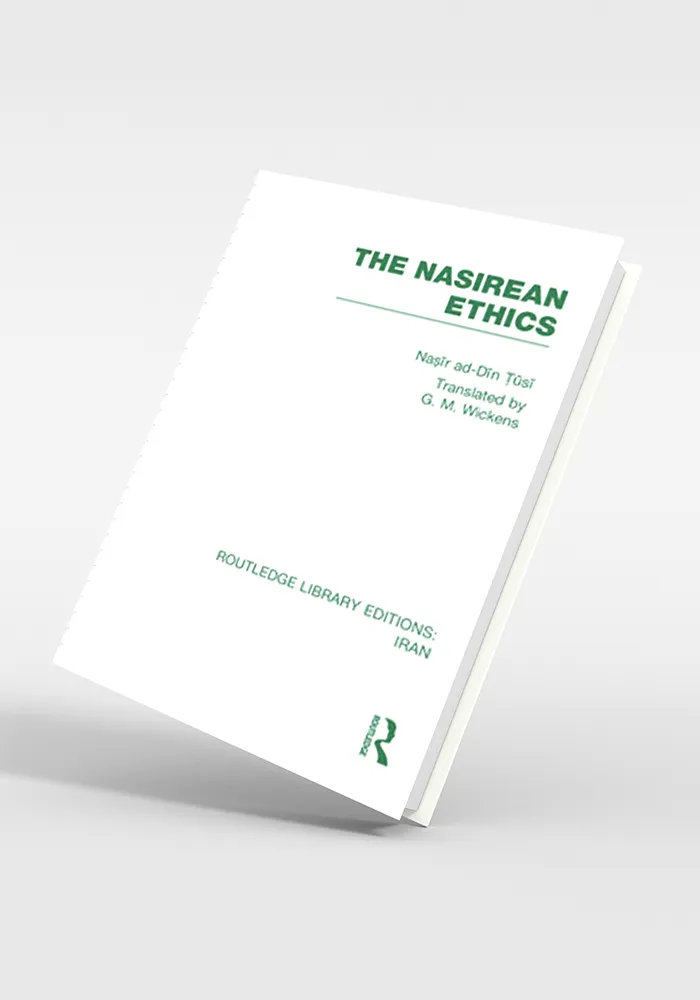
The Nasirean Ethics
Occasion for presenting this book:
11 Jumada al-Awwal: The Birth of Nasir al-Din al-Tusi
Book Bibliographic Details:
Author: Nasīr ad Dīn Tūsi
Translator: G. M. Wickens
Publisher: Routledge
Length: 352 Pages
Language: English
ISBN: 9781032547091
Publication Date: November 27, 2023
About the Book:
The Nasirean Ethics (Akhlāq-i Nāṣirī), written in 1235 by the Persian philosopher Nasīr al-Dīn Ṭūsī, is one of the most influential works of ethical philosophy in medieval Persian and Islamic intellectual history. The book presents a comprehensive account of moral conduct and human flourishing, examining the relationship between individual virtue, household management, and political governance. Divided into three main discourses—ethics, economics (understood primarily as the management of domestic and family affairs), and politics—it explores the cultivation of moral character, the nature of justice, the pursuit of happiness and perfection, and the principles necessary for maintaining harmonious social and political communities. Drawing on Greek philosophical traditions, particularly Aristotelian and Platonic thought, alongside Islamic intellectual perspectives, the work offers a systematic vision of the relationship between personal morality and the common good. The Routledge edition, translated from Persian by G. M. Wickens, provides English-speaking readers with access to this foundational text and its enduring contribution to ethical and political philosophy.
About the Author:
Nasīr al-Dīn Muḥammad ibn Muḥammad Ṭūsī, commonly known as Naṣīr al-Dīn Ṭūsī, was a distinguished thirteenth-century Persian philosopher, theologian, mathematician, astronomer, and polymath whose contributions profoundly influenced Islamic intellectual history. Born in Ṭūs, in northeastern Persia, he worked across numerous fields, including ethics, metaphysics, logic, mathematics, astronomy, and political thought. His intellectual achievements reflect a remarkable engagement with Greek philosophical traditions, particularly the works of Aristotle and Plato, which he interpreted and developed within Islamic philosophical frameworks. Beyond his scholarly writings, Ṭūsī played a significant role in the political and intellectual transformations of his era and was instrumental in establishing the famous Maragha Observatory under Mongol patronage. His The Nasirean Ethics remains one of his most important contributions to moral and political philosophy, demonstrating his conviction that the cultivation of individual virtue, the proper ordering of family life, and the just governance of society are interconnected dimensions of human perfection and collective well-being. His work continues to attract scholarly attention for its synthesis of philosophical traditions and its lasting influence on Persian and Islamic ethical thought.
Where to find it:
You can find the book at one of the online bookstores below:
- Routledge
- Amazon
- Google Book
editor's pick

news via inbox
Subscribe to the newsletter.