Everlasting Tales of the Quran – Volume 03 Issue 39
The Story of Dhul-Qarnayn: The Epic of a Just Traveller
When the Holy Qur’an seeks to introduce one of the most outstanding examples of just governance and humanity, it draws attention to the idea of travel and exploration. Dhul-Qarnayn is known above all for his long journeys to the farthest reaches of the east and west and to mountainous regions. These were purposeful journeys -not undertaken for conquest and plunder, but for establishing justice, protecting the oppressed, and observing and discovering the wonders of creation. Through the account of his journeys, the Qur’an demonstrates how travel and exploration can bring wisdom, security, and prosperity to communities.
The story begins one day in Makkah, when three leading figures of Quraysh returned exhausted from a journey to Yathrib (Medina). They had gone to Jewish scholars to seek a difficult question with which they could test Prophet Muhammad (pbuh). The Jewish scholars told them: “Ask him about a king who travelled across the entire earth, from east to west. If he gives you the answer, then he is truly a Prophet (pbuh).” When the question was put to the Prophet (pbuh), the verses of Surah al-Kahf were revealed, unveiling the remarkable story of Dhul-Qarnayn—a believing, just, and courageous ruler to whom God had granted authority and the means to accomplish his purposes:
وَیَسْأَلُونَکَ عَنْ ذِی الْقَرْنَیْنِ ۖ قُلْ سَأَتْلُو عَلَیْکُمْ مِنْهُ ذِکْرًا * إِنَّا مَکَّنَّا لَهُ فِی الْأَرْضِ وَآتَیْنَاهُ مِنْ کُلِّ شَیْءٍ سَبَبًا * فَأَتْبَعَ سَبَبًا
“They ask you about Dhul-Qarnayn. Say, ‘I will relate to you something of his story.’ Indeed, We established him firmly in the land and granted him the means to accomplish everything. So he followed a means.” (Al-Kahf, 18:83–85)
The First Journey: The Setting of the Sun
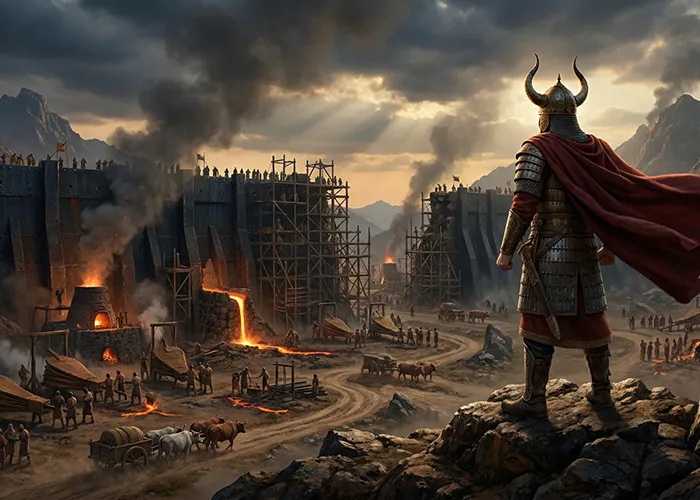
Dhul-Qarnayn, who was known by this name either because of his two-horned helmet or because he had reached the two extremities of the known world, prepared his army and headed westward. He travelled a great distance until he reached the shore of a vast body of water, where he perceived the sun as setting in a dark, muddy spring:
حَتَّىٰ إِذَا بَلَغَ مَغْرِبَ الشَّمْسِ وَجَدَهَا تَغْرُبُ فِی عَیْنٍ حَمِئَةٍ وَوَجَدَ عِنْدَهَا قَوْمًا ۗ قُلْنَا یَا ذَا الْقَرْنَیْنِ إِمَّا أَنْ تُعَذِّبَ وَإِمَّا أَنْ تَتَّخِذَ فِیهِمْ حُسْنًا
“Until, when he reached the setting place of the sun, he found it setting in a dark, muddy spring, and he found a people there. We said, ‘O Dhul-Qarnayn, either you may punish them or adopt a good course concerning them.’” (Al-Kahf, 18:86)
There he encountered a rebellious and lawless people. God entrusted Dhul-Qarnayn with the authority to decide how they should be treated. Dhul-Qarnayn demonstrated his commitment to justice:
قَالَ أَمَّا مَنْ ظَلَمَ فَسَوْفَ نُعَذِّبُهُ ثُمَّ یُرَدُّ إِلَىٰ رَبِّهِ فَیُعَذِّبُهُ عَذَابًا نُکْرًا * وَأَمَّا مَنْ آمَنَ وَعَمِلَ صَالِحًا فَلَهُ جَزَاءً الْحُسْنَىٰ ۖ وَسَنَقُولُ لَهُ مِنْ أَمْرِنَا یُسْرًا
“He said, ‘As for the one who does wrong, we shall punish him; then he will be returned to his Lord, and He will punish him with a terrible punishment. But as for the one who believes and does righteous deeds, he shall have the finest reward, and we shall speak to him gently and make our command easy for him.’” (Al-Kahf, 18:87–88)
He established just laws and governance among them, and then prepared for his next journey.
The Second Journey: The Rising of the Sun
The travelling king then headed eastward. He journeyed until he reached a barren land where the sun rose upon a people for whom there was no shelter, covering, or protection from its rays:
ثُمَّ أَتْبَعَ سَبَبًا * حَتَّىٰ إِذَا بَلَغَ مَطْلِعَ الشَّمْسِ وَجَدَهَا تَطْلُعُ عَلَىٰ قَوْمٍ لَمْ نَجْعَلْ لَهُمْ مِنْ دُونِهَا سِتْرًا
“Then he followed a means, until, when he reached the rising place of the sun, he found it rising upon a people for whom We had provided no shelter from it.” (Al-Kahf, 18:89–90)
Instead of humiliating or exploiting these vulnerable people, Dhul-Qarnayn treated them with compassion, established security in their land, and continued his journey northward without harming them.
The Third Journey: Gog and Magog and the Construction of the Iron Barrier
Continuing his journeys, Dhul-Qarnayn reached a mountainous region, traditionally associated with the Caucasus, between two towering barriers. There he encountered a people who spoke a language that was difficult to understand and who were suffering from the brutal attacks of tribes known as Gog and Magog:
حَتَّىٰ إِذَا بَلَغَ بَیْنَ السَّدَّیْنِ وَجَدَ مِنْ دُونِهِمَا قَوْمًا لَا یَکَادُونَ یَفْقَهُونَ قَوْلًا * قَالُوا یَا ذَا الْقَرْنَیْنِ إِنَّ یَأْجُوجَ وَمَأْجُوجَ مُفْسِدُونَ فِی الْأَرْضِ فَهَلْ نَجْعَلُ لَکَ خَرْجًا عَلَىٰ أَنْ تَجْعَلَ بَیْنَنَا وَبَیْنَهُمْ سَدًّا
“Until, when he reached between the two barriers, he found beside them a people who could hardly understand speech. They said, ‘O Dhul-Qarnayn, Gog and Magog are causing corruption in the land. May we pay you a tribute so that you may build a barrier between us and them?’” (Al-Kahf, 18:93–94)
Dhul-Qarnayn’s response reflected the integrity of his rule. He rejected their offer of payment and said:
قَالَ مَا مَکَّنِّی فِیهِ رَبِّی خَیْرٌ فَأَعِینُونِی بِقُوَّةٍ أَجْعَلْ بَیْنَکُمْ وَبَیْنَهُمْ رَدْمًا
“He said, ‘What my Lord has established me with is better. So help me with strength, and I will build a strong barrier between you and them.’” (Al-Kahf, 18:95)
Then the great engineering project began. He placed large pieces of iron between the two mountains and ordered them to blow until the iron became red-hot. He then had molten copper poured over it, creating a formidable structure:
آتُونِی زُبَرَ الْحَدِیدِ ۖ حَتَّىٰ إِذَا سَاوَىٰ بَیْنَ الصَّدَفَیْنِ قَالَ انْفُخُوا ۖ حَتَّىٰ إِذَا جَعَلَهُ نَارًا قَالَ آتُونِی أُفْرِغْ عَلَیْهِ قِطْرًا * فَمَا اسْطَاعُوا أَنْ یَظْهَرُوهُ وَمَا اسْتَطَاعُوا لَهُ نَقْبًا
“Bring me blocks of iron.” Then, when he had filled the gap between the two mountain sides, he said, “Blow!” Then, when he had made it glowing like fire, he said, “Bring me molten copper to pour over it.” Thus, they were unable to climb over it, nor were they able to pierce it. (Al-Kahf, 18:96–97)
The oppressed people were finally able to live in security and peace.
The Conclusion: Humility at the Height of Power
At the end, when everyone was amazed by this extraordinary engineering achievement, Dhul-Qarnayn did not become proud or arrogant. He looked upon the mighty barrier and attributed the achievement entirely to God:
قَالَ هَٰذَا رَحْمَةٌ مِنْ رَبِّی ۖ فَإِذَا جَاءَ وَعْدُ رَبِّی جَعَلَهُ دَکَّاءَ ۖ وَکَانَ وَعْدُ رَبِّی حَقًّا
“He said, ‘This is a mercy from my Lord. But when the promise of my Lord comes, He will reduce it to rubble, and the promise of my Lord is true.’” (Al-Kahf, 18:98)
Educational Lessons and Moral Messages of the Story
Like the other stories of the Qur’an, this is not merely a historical narrative. Rather, it presents a comprehensive model of leadership, social conduct, and spirituality. Its most important lessons include:
- Purposeful and responsible travel: In Islam, travel is not merely aimless sightseeing. It can be a means of discovering the wonders of creation, helping people overcome their difficulties, learning about different communities, and drawing lessons from history.
- Rejecting exploitation and greed: When the oppressed people offered Dhul-Qarnayn payment, he declined it, saying that what God had given him was sufficient. This provides an important lesson for those entrusted with leadership: genuine service should be motivated by a commitment to God and to the welfare of the people, rather than personal gain.
- Community participation and empowerment: Dhul-Qarnayn did not simply tell the people, “I will build a barrier for you.” Instead, he said: “So help me with strength” (فَأَعِینُونِی بِقُوَّةٍ). He involved the people in the project, mobilised their capabilities, and enabled them to contribute to their own security and future.
- Balanced justice and compassionate governance: In dealing with the people of the west, he established a clear principle of governance: punishment for wrongdoing, while treating those who believed and acted righteously with fairness, ease, and kindness: “and we shall speak to him gently and make our command easy for him” (وَسَنَقُولُ لَهُ مِنْ أَمْرِنَا یُسْرًا).
- Humility at the height of power and success: The greatest lesson of the story appears in its concluding verse. After constructing the immense barrier, Dhul-Qarnayn did not become proud or claim personal glory. Instead, he called it “a mercy from my Lord” (هَٰذَا رَحْمَةٌ مِنْ رَبِّی) and reminded everyone that, when God’s appointed promise arrives, even the greatest human achievements will ultimately come to an end.
A) Qur’anic and Exegetical Sources
- Tafsir al-Mizan, Allamah Sayyid Muhammad Husayn Tabataba’i, Vol. 13, commentary on the verses of Surah al-Kahf.
- Tafsir Nemuneh, Ayatollah Naser Makarem Shirazi, Vol. 12, commentary on verses 83–98 of Surah al-Kahf.
- Tafsir al-Kashif, Allamah Muhammad Jawad Mughniyah, Vol. 5.
- Al-Tafsir al-Kabir (Mafatih al-Ghayb), Fakhr al-Din al-Razi, Vol. 21.
- Tafsir Ibn Kathir, Hafiz Ibn Kathir al-Dimashqi, Vol. 5.
- Tafsir al-‘Ayyashi, Vol. 2, p. 340.
- Bihar al-Anwar, Vol. 12, p. 198.
B) Historical and Research Sources
- Tarikh al-Tabari (History of the Prophets and Kings), Muhammad ibn Jarir al-Tabari.
- Al-Athar al-Baqiyah ‘an al-Qurun al-Khaliyah, Abu Rayhan al-Biruni, particularly his discussion of the lineage and titles of kings.
- Kamal al-Din wa Tamam al-Ni’mah, Shaykh al-Saduq, Vol. 2, p. 393.
- ‘Ilal al-Shara’i, Shaykh al-Saduq, Vol. 1, p. 39.
- Al-Kafi, al-Kulayni, Vol. 8, p. 303.
- Tafsir al-Qummi, ‘Ali ibn Ibrahim al-Qummi, Vol. 2.
- Al-Durr al-Manthur, al-Suyuti, Vol. 5, p. 355.
editor's pick

news via inbox
Subscribe to the newsletter.