Exploring Islamic Jurisprudence – Volume 03 Issue 40
Ritual Purity in Islamic Jurisprudence (10)
Purifying Agents (al-Mutahhirat) (4): The Evaporation of Two-Thirds of Grape Juice, Purification of Buildings, Pools, and Purification from corpse (Maytah)
In this section, the final agents of ritual purification are presented, including “the evaporation of two-thirds of grape juice,” “the self-purification of the purifying agent,” and “methods for purifying premises and buildings,” along with “rulings regarding carrion (maytah).”
Jurisprudential Rulings and Standards
A) The Evaporation of Two-Thirds of Grape Juice (‘Asir ‘Anabi)
If grape juice boils due to heat or fire, consuming it becomes prohibited (haram). However, if heating continues until two-thirds of it evaporates and only one-third remains, it becomes ritually pure (tahir) and permissible to consume once again.
B) The Self-Purification of the Purifying Agent
Whenever an intrinsically impure (najis) object is washed with water, the detached wash-water (ghusalah), as well as the hands or vessel used in the washing process, become purified by virtue of the object itself becoming pure.
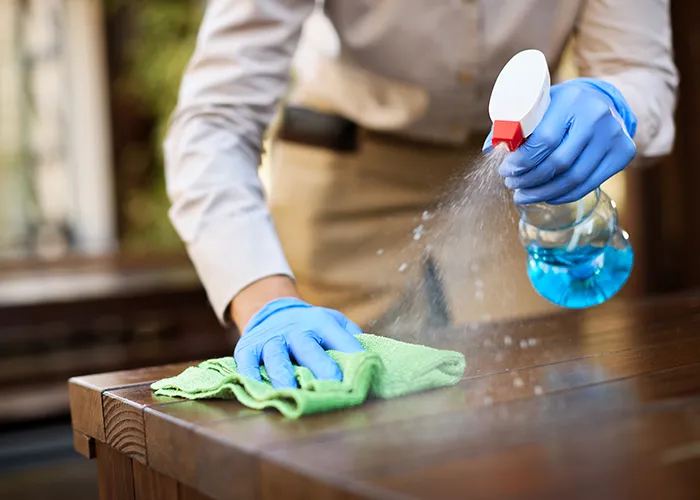
C) Purification of Ground, Walls, and Buildings
To purify najis ground, hall flooring, paving, or walls:
- The essential impurity (‘ayn al-najasah) must first be completely removed.
- If washed with kurr water or running tap water, the area becomes pure as soon as the water reaches and washes it; removing the wash-water (ghusalah) is not required.
- If purified using small-quantity water (ma’ qalil, such as a jug or pitcher), water must be poured over the area, and the collected water must subsequently be removed with a cloth or broom to attain purity.
D) Purification of Pools and Swimming Pools
- Pools connected to kurr or flowing water: If an impurity enters and the water does not undergo any change in smell, colour, or taste, the entire body of water remains pure. If a change occurs, the connection to kurr water must be maintained until the change is eliminated.
- Empty pools: If the walls or floor are najis, washing them with kurr water purifies all surfaces as soon as the water flows over them.
E) Purification from Carrion (Maytah)
- Animal Carrion: Contact of the body or clothing with the carcass of an animal that possesses gushing blood – where transferring moisture is present – causes impurity (najasah), which is purified by washing once with kurr water.
- Human Corpse (Mayyit): Touching a human body after it has cooled down and prior to the ritual bath of the deceased (ghusl al-mayyit) renders the area of contact najis, which is purified by washing once. In addition, performing the ritual bath for touching a corpse (ghusl mass al-mayyit) is obligatory for prayer.
Practical Notes and Differences in Edicts (Fatawa)
1) Purification of the Ground with Small-Quantity Water (Ma’ Qalil)
- Common Principle: In cases of impurity caused by urine, the wash-water (ghusalah) must be collected.
- Differences in Edicts:
- Ayatollahs Khamenei and Makarem Shirazi: Pouring water twice is required.
- Ayatollah Sistani: Pouring water once is sufficient, provided the essential impurity of urine has been removed.
2) Ruling on Grape Juice Boiling Spontaneously
- Ayatollahs Khamenei and Sistani: It is najis and haram; reducing it by two-thirds over fire does not purify it; the only way it becomes pure is by turning into vinegar (inqilab).
- Ayatollah Makarem Shirazi: It is not najis, but its consumption is haram; it becomes permissible (halal) if reduced by two-thirds or if it turns into vinegar.
3) Purification of Vessels Made Najis by Dogs, Swine, or Carrion
- Vessel touched/licked by a dog: It must first be rubbed with soil (ta’fir / khakmal), then washed twice with small-quantity water or once with kurr water.
- Vessel affected by swine, wine, or a dead mouse:
- Ayatollahs Khamenei and Makarem Shirazi: Must be washed seven times.
- Ayatollah Sistani: A wine vessel must be washed three times; washing seven times is a recommended precaution (ihtiyat mustahabb).
Educational and Ethical Lessons of the Rulings
- Ease of the Law (Shari’ah) in purifying with kurr water: Connection to tap water makes the purification of premises remarkably simple and eliminates the need to extract the wash-water.
- Dignity of the human body in touching a corpse (mass al-mayyit): The obligation of ritual bathing and purification serves as a reminder of the respect owed to the human body, even after death.
Frequently Asked Questions
A) Splashing of kurr water during purification
Splashes from tap water are pure, provided no essential impurity (‘ayn al-najasah) is visible in them and they have not acquired the smell of impurity.
B) Purifying a small pool not connected to kurr water
The najis water must be drained, the walls and floor washed, and the wash-water removed; pouring pure water into the pool afterwards renders it pure.
C) Contact of clothing with the carcass of a permissibly edible animal
If the carcass is dry and there is no transferring moisture, the clothing does not become najis. If either is wet, the point of contact becomes najis and must be washed.
Purification of Carpets and Rugs in Homes and Mosques
Method 1: Purification with Kurr Water (Tap Water)
This is the easiest and most common method, requiring no complete extraction of absorbed water.
- Remove the essential impurity (‘ayn al-najasah).
- Direct tap water onto the najis area.
- Apply light pressure to move the water inside the carpet (the water that exits is pure).
- Upon the arrival of kurr water and light pressure, the carpet becomes pure.
Note: For fitted carpets/rugs, wiping with a cloth to absorb excess water is sufficient.
Method 2: Purification with Small-Quantity Water (Ma’ Qalil)
- Remove the essential impurity.
- Pour water over the affected area.
- Press and collect the wash-water (ghusalah), which is najis.
- Number of washings:
- Impurities other than urine: Once is sufficient.
- Urine: Required twice.
Differences in Edicts
- Squeezing/Pressing under kurr water:
- Ayatollahs Khamenei and Makarem Shirazi: Required.
- Ayatollah Sistani: Not required if kurr water penetrates; it is a recommended precaution.
- Carpet cleaning machines:
- If connected to kurr water and extracting water simultaneously, the carpet becomes pure.
- If using small-quantity water, it purifies only for impurities other than urine; for urine, the process must be repeated twice.
Related Questions
- Penetration of impurity to the underside of the carpet: Kurr water must reach the underside of the carpet for it to become pure.
- Spread of impurity to the entire house: Impurity is transferred only via transferring moisture; a dry carpet does not spread impurity.
Answers to Frequently Asked Questions Regarding Grape Juice, Boiling, and Fermentation
Q1) Does the rule of two-thirds evaporation apply to all wines?
No; it applies exclusively to grape juice. Other types of wine become pure only by turning into vinegar (inqilab).
Q2) What is the difference between “boiling due to heat” and “fermentation”?
- Boiling due to heat: No alcohol is produced; consuming it is haram; it is purified when two-thirds evaporate.
- Fermentation: Alcohol is produced; it is classified as wine (khamr); it is najis and haram; boiling does not purify it.
Q3) What is the ruling on grape juice boiling spontaneously?
- Ayatollahs Khamenei and Sistani: It is najis and haram; turning into vinegar is its only means of purification.
- Ayatollah Makarem Shirazi: It is not najis; it becomes permissible (halal) by two-thirds evaporation or by turning into vinegar.
Q4) Adding boiled grape juice to food (where two-thirds have not evaporated)
Consuming the food is haram, unless it is certain that two-thirds of that specific grape juice evaporated during cooking.
Q5) Boiling dates, dried grapes (mawiz), and raisins in food
Boiling them in food (whether in stews or during frying) does not cause impurity or prohibition and consuming them is permissible (halal).
editor's pick

news via inbox
Subscribe to the newsletter.