
Everlasting Tales of the Quran – Volume 03 Issue 28
Great Strides Along the Path of Modesty: The Manifestation of Chastity and Trustworthiness in the Story of Madyan
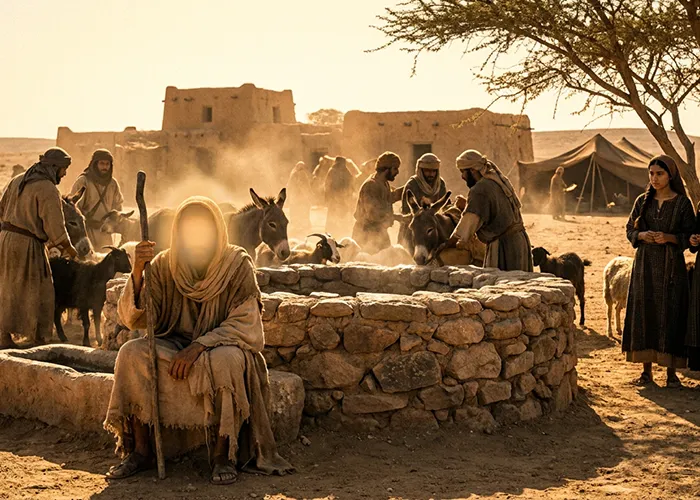
After the unintended incident in Egypt and in order to escape Pharaoh’s oppression, Prophet Moses (Mūsā, peace be upon him) set out on foot toward the land of Madyan, carrying neither provisions, nor a mount, nor a guide. He walked for days until, exhausted, hungry, and with blistered feet, he finally arrived near Madyan. Reaching a well, he sat down for a brief rest.
The place was crowded. Numerous shepherds had gathered around the well, noisily watering their flocks. Yet, in a quieter corner, a scene caught Prophet Moses’ attention. Two young women were standing apart, struggling to restrain their sheep so that they would not have to mingle with the men. The Holy Qur’an describes the scene as follows:
وَلَمَّا وَرَدَ مَاءَ مَدْيَنَ وَجَدَ عَلَيْهِ أُمَّةً مِنَ النَّاسِ يَسْقُونَ وَوَجَدَ مِنْ دُونِهِمُ امْرَأتَيْنِ تَذُودَانِ قَالَ مَا خَطْبُكُمَا ۖ قَالَتَا لَا نَسْقِي حَتَّىٰ يُصْدِرَ الرِّعَاءُ ۖ وَأَبُونَا شَيْخٌ كَبِيرٌ
(Surah al-Qaṣaṣ 28:23)
“And when he arrived at the watering place of Madyan, he found there a crowd of people watering their flocks, and besides them he found two women holding back their sheep. He said, ‘What is your situation?’ They replied, ‘We cannot water our flock until the shepherds have departed, and our father is an old man.’
Although Prophet Moses (peace be upon him) was extremely tired and hungry, he stepped forward, lifted the heavy stone covering the well, and drew water for their flock. Then, without waiting for thanks or expecting any reward, he withdrew to the shade of a tree, turned toward his Lord, and prayed:
فَسَقَىٰ لَهُمَا ثُمَّ تَوَلَّىٰ إِلَى الظِّلِّ فَقَالَ رَبِّ إِنِّي لِمَا أَنْزَلْتَ إِلَيَّ مِنْ خَيْرٍ فَقِيرٌ
(Surah al-Qaṣaṣ 28:24)
“So he watered their flock for them; then he withdrew to the shade and said, ‘My Lord, indeed I am in desperate need of whatever good You may send down to me.’
An Invitation to the House and the Observance of Chastity in Conduct
Before long, one of the two young women approached Prophet Moses (pbuh) with remarkable dignity and modesty in order to invite him to her father’s house so that he might be rewarded for his kindness.
فَجَاءَتْهُ إِحْدَاهُمَا تَمْشِي عَلَى اسْتِحْيَاءٍ قَالَتْ إِنَّ أَبِي يَدْعُوكَ لِيَجْزِيَكَ أَجْرَ مَا سَقَيْتَ لَنَا ۚ فَلَمَّا جَاءَهُ وَقَصَّ عَلَيْهِ الْقَصَصَ قَالَ لَا تَخَفْ ۖ نَجَوْتَ مِنَ الْقَوْمِ الظَّالِمِينَ
(Surah al-Qaṣaṣ 28:25)
“Then one of the two women came to him, walking with modesty. She said, ‘My father invites you so that he may reward you for watering our flock.’ When Moses came to him and related his story, he said, ‘Do not fear; you have escaped from the wrongdoing people.’
After Prophet Moses (peace be upon him) entered the house and recounted the story of his life to Prophet Shuʿayb (peace be upon him), Prophet Shuʿayb (peace be upon him) reassured him and gave him peace of mind. During this conversation, one of Shuʿayb’s daughters made a wise suggestion to her father, a recommendation that the Qur’an has preserved:
قَالَتْ إِحْدَاهُمَا يَا أَبَتِ اسْتَأْجِرْهُ ۖ إِنَّ خَيْرَ مَنِ اسْتَأْجَرْتَ الْقَوِيُّ الْأَمِينُ
(Surah al-Qaṣaṣ 28:26)
“One of the two women said, ‘O my father, employ him. Indeed, the best person you can hire is the one who is strong and trustworthy.’
According to Islamic narrations, Prophet Shuʿayb (peace be upon him) asked his daughter, “You witnessed his strength when he drew water from the well, but how did you recognize his trustworthiness?” She replied, “As we were walking home, he refused to walk behind me lest his eyes should fall upon my figure.”
When Prophet Shuʿayb (peace be upon him) observed such maturity and modesty in his daughter and such integrity and nobility in Prophet Moses (pbuh), he proposed that Prophet Moses (pbuh) marry one of his daughters.
قَالَ إِنِّي أُرِيدُ أَنْ أُنْكِحَكَ إِحْدَى ابْنَتَيَّ هَاتَيْنِ عَلَىٰ أَنْ تَأْجُرَنِي ثَمَانِيَ حِجَجٍ ۖ فَإِنْ أَتْمَمْتَ عَشْرًا فَمِنْ عِنْدِكَ ۖ وَمَا أُرِيدُ أَنْ أَشُقَّ عَلَيْكَ ۚ سَتَجِدُنِي إِنْ شَاءَ اللَّهُ مِنَ الصَّالِحِينَ
(Surah al-Qaṣaṣ 28:27)
“He said, ‘I wish to marry one of these two daughters of mine to you on the condition that you serve me for eight years; but if you complete ten, that will be of your own accord. I do not wish to make things difficult for you. God willing, you will find me among the righteous.’
Prophet Shuʿayb (peace be upon him) proposed that the dowry (mahr) for his daughter would consist of eight years of service—extendable to ten if Prophet Moses (peace be upon him) wished—helping him tend his flocks.
Prophet Moses (peace be upon him) accepted this fair proposal, which was founded upon respect for elders and faithfulness to one’s covenant:
قَالَ ذَٰلِكَ بَيْنِي وَبَيْنَكَ ۖ أَيَّمَا الْأَجَلَيْنِ قَضَيْتُ فَلَا عُدْوَانَ عَلَيَّ ۖ وَاللَّهُ عَلَىٰ مَا نَقُولُ وَكِيلٌ
(Surah al-Qaṣaṣ 28:28)
“He said, ‘That shall be the agreement between me and you. Whichever of the two terms I fulfill, there shall be no injustice toward me. And Allah is Witness over what we say.’
Educational Lessons from This Story
Lesson One: Women’s Presence in Society with Dignity and Modesty
This passage demonstrates that Islam has never called women to isolation or confinement within the home. The daughters of Prophet Shuʿayb (peace be upon him) engaged in economic and social work out of necessity, since their father had become elderly and could no longer perform those tasks himself. The crucial point, however, lies in how they participated in society. They preferred to wait patiently under the scorching sun rather than enter into unnecessary mingling with men.
Likewise, modesty (ḥayāʾ) in contemporary society does not require women to abandon universities or workplaces. Rather, it entails cultivating a strong moral character and maintaining professional conduct that protects one’s dignity and discourages disrespect or inappropriate behaviour from others.
Lesson Two: Understanding the Qur’anic Expression “تَمْشِي عَلَى اسْتِحْيَاءٍ” (“Walking with Modesty”)
Some argue that modesty and chastity are purely internal virtues expressed through behaviour, while outward dress is merely a cultural practice subject to change. This verse offers an important response to that claim.
- The outward manifestation of chastity: The Qur’an does not simply say that the young woman approached Prophet Moses (peace be upon him) with a “pure intention.” Rather, it explicitly states that she came “walking with modesty” (تَمْشِي عَلَى اسْتِحْيَاءٍ). This indicates that modesty is not merely an inner feeling; it is a visible and recognizable quality reflected even in one’s manner of walking, demeanour, and appearance. In the Islamic worldview, one’s outward conduct and inward character are inseparable: the outward reflects the inward, while the inward safeguards the outward.
- Distinguishing between immutable principles and cultural forms: According to this interpretation, the Qur’anic guidelines concerning modest dress (such as those found in Surah al-Nūr and Surah al-Aḥzāb) constitute enduring religious principles that transcend particular cultures and historical periods. Their purpose is to preserve a woman’s human dignity and moral agency so that she is recognized in society primarily for her knowledge, competence, and character rather than merely for physical attractiveness. While styles, colours, and forms of clothing may legitimately vary across cultures and climates, the underlying principle of modest covering remains unchanged. From this perspective, claiming that inner modesty alone is sufficient while dismissing outward observance is comparable to saying, “I respect the law, but I do not stop at a red traffic light.”
Prophet Moses (peace be upon him) likewise displayed the highest standard of modest conduct. According to Islamic narrations, he said to Shuʿayb’s daughter: “I will walk ahead, and you guide me from behind, for we are a family who do not look at women from behind.”
This reflects his concern for preserving the dignity of women and fostering a sense of psychological security within society.
Lesson Three: The Qur’an’s Criteria for Choosing a Man
This verse introduces two fundamental qualities that define an ideal man—whether for employment or marriage:
- Strength (القويّ): competence, physical ability, professional expertise, determination, and the capacity to shoulder life’s responsibilities.
- Trustworthiness (الأمين): moral integrity, chastity, reliability, honesty, and God-consciousness.
Many of today’s social problems arise when these two qualities become separated. A capable but unethical individual (“strong without trustworthiness”) may abuse authority through corruption or betrayal, while an honest but incompetent individual (“trustworthy without capability”) may harm institutions through inefficiency.
Likewise, in choosing a spouse, this verse teaches young people to prioritize enduring qualities -competence, responsibility, and moral integrity- over superficial wealth or material advantages.
Lesson Four: Honouring Parents and Strengthening the Family
This story highlights the importance of honouring parents and preserving family bonds. Prophet Moses (peace be upon him), despite being destined for prophethood, served his elderly father-in-law with humility and faithfully fulfilled his covenant for many years.
Their relationship was built upon mutual respect, consideration for the needs of the elderly, and commitment to the well-being of the family. It serves as a model of intergenerational responsibility and family solidarity.
Lesson Five: The Blessings that Follow Faith, Integrity, and Modesty
Prophet Moses (peace be upon him) arrived in Madyan as a refugee possessing neither wealth nor shelter. Yet because of his strength, trustworthiness, modesty, chastity, and respect for family values, divine blessings gradually transformed his life. He was granted a family, a home, meaningful work, and ultimately the great mission of prophethood.
This story teaches that God-consciousness (taqwā) and adherence to ethical boundaries -both inwardly and outwardly- can open doors that appear impossible and remove obstacles that seem insurmountable.
Conclusion
The story of Prophet Moses (peace be upon him) and the daughters of Prophet Shuʿayb (peace be upon him) teaches several timeless lessons:
- Modesty is not a restriction but a source of dignity and protection that preserves healthy and respectful relationships between men and women within society.
- When choosing a spouse, lasting qualities should take precedence over outward appearance or material wealth. Moral integrity, trustworthiness, responsibility, competence, and diligence constitute the true foundations of a successful marriage.
- Serving parents and honouring one’s elders brings abundant blessings. As demonstrated in the life of Prophet Moses (peace be upon him), such devotion became the means through which he attained a family, a home, meaningful work, and ultimately his divine mission.
References
- Primary Scriptural Sources
- The Holy Qur’an, Surah al-Qaṣaṣ (28:22–28): The account of Prophet Moses’ migration to Madyan, his encounter with the daughters of Prophet Shuʿayb (peace be upon him), the qualities of “the strong and trustworthy” (القوي الأمين), and the marriage agreement.
- The Holy Qur’an, Surah al-Nūr (24:31) and Surah al-Aḥzāb (33:59): Concerning the Qur’anic principles of modest dress, standards of outward covering, and their social philosophy.
- Classical and Contemporary Qur’anic Exegesis
- Al-Mīzān fī Tafsīr al-Qur’ān, by ʿAllāmah Sayyid Muḥammad Ḥusayn Ṭabāṭabāʾī, especially the commentary on Surah al-Qaṣaṣ (28:22–28), discussing the profound meaning of the daughters of Shuʿayb’s modest conduct, the character of Prophet Moses (peace be upon him), and the expression “تَمْشِي عَلَى اسْتِحْيَاءٍ.”
- Tafsīr Nemūneh, by Āyatullāh Nāṣir Makārim Shīrāzī and collaborators, Vol. 16, for its educational insights, criteria for spouse selection in Islam, and contemporary applications.
- Tafsīr Nūr, by Ḥujjat al-Islām Muḥsin Qarāʾatī, for concise ethical and practical lessons concerning relations between men and women and the honouring of parents.
- Al-Jāmiʿ li-Aḥkām al-Qur’ān (Tafsīr al-Qurṭubī), for its legal and ethical discussions of the narrative, including the reported conduct of Prophet Moses (peace be upon him) in walking ahead of Shuʿayb’s daughter as an expression of modesty.
- Analytical and Sociological Studies
- The Issue of Hijab (Mas’aleh-ye Hijab), by Martyr Murtadha Muṭahharī, particularly the chapters discussing the philosophy of hijab in Islam, the distinction between chastity and outward covering, responses to contemporary objections concerning the universality of Islamic dress regulations, and the inseparable relationship between outward appearance (ḥijāb) and inward modesty (ḥayāʾ)
editor's pick

news via inbox
Subscribe to the newsletter.