
Hadith Of The Week – Volume 03 Issue 39
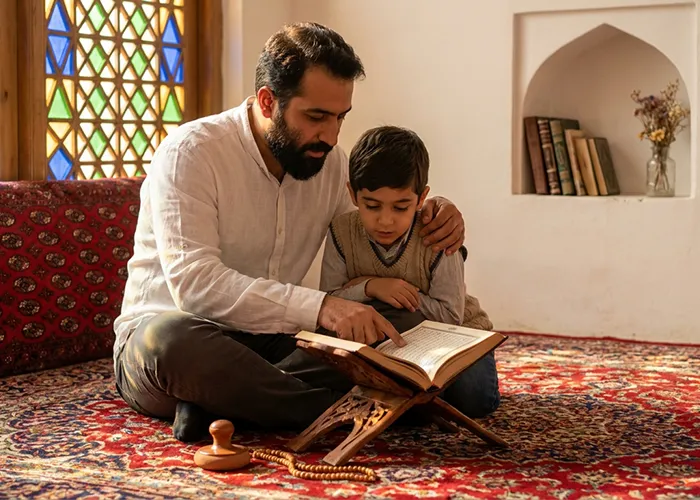
Reading Is Not Enough: The Qur’an Calls Us to Reflect and Understand
Occasion of reflecting on this hadith: 12th of Rabi‘ al-Thani: The anniversary of the passing of Mehdi Elahi Qomshe’i, the well-known translator of the Qur’an
Introduction
The Qur’an is not a book to be read only for the sake of completing a recitation. It is a book to be understood, reflected upon and lived by. On this occasion, it is valuable to remember an important saying of Imam Ali (peace be upon him) about the way we should approach the Qur’an and our worship:
امیرالمومنین علی (ع): أَلاَ لاَ خَيْرَ فِي قِرَاءَةٍ لَيْسَ فِيهَا تَدَبُّرٌ، أَلاَ لاَ خَيْرَ فِي عِبَادَةٍ لَيْسَ فِيهَا تَفَقُّهٌ
“Indeed, there is no good in a recitation that contains no reflection, and there is no good in worship that contains no understanding.” (Wasā’il al-Shī‘ah, vol. 6, p. 173.)
Educational messages of this hadith for teenagers and youth
- Read, Understand, Act
For every verse you read, take three simple steps: read its meaning, understand its message, and write down how you can use it to improve your behaviour, studies or daily life.
Practical Challenge: Today, choose one verse and write one small change you can make because of it.
- Turn a Verse into a Life Choice
Tadabbur means connecting the Qur’an to real decisions, such as how you speak to your friends, use social media or deal with anger.
Practical challenge: Choose one verse this week and identify one decision in your daily life where you can put its message into practice.
- Do Not Follow the Crowd Without Thinking
The Qur’an teaches us to think carefully rather than simply copying what everyone else is doing.
Practical challenge: The next time your friends encourage you to do something you are unsure about, pause for ten seconds and ask, “Would this choice fit the values I learn from the Qur’an?”
- Ask Questions About Your Worship
Worship should not become something we do automatically; understanding why we pray, fast or give charity can make our worship more meaningful.
Practical challenge: Pick one part of your daily worship and learn its meaning from a trusted teacher, book or reliable educational resource.
- Let Reflection Change One Habit
The real value of understanding the Qur’an appears when it changes something in our behaviour.
Practical challenge: Choose one habit – such as losing your temper, wasting time online, speaking harshly or delaying prayer – and use one Qur’anic teaching to work on it for one week.
Educational messages of this hadith for parents
- Teach Meaning, Not Only Memorisation
A child may memorise many verses, but the goal of Qur’anic education should also be to understand their message.
Practical challenge: Once a week, choose one short verse with your child and discuss its meaning together instead of simply asking them to memorise it.
- Make Learning the Qur’an a Priority for Yourself and Your Children
Make learning and understanding the Qur’an your foremost educational and spiritual priority, both for yourself and for your children.
Practical Challenge: This week, enrol yourself and your child in an online or in-person Qur’an course.
- Make Qur’an Conversations Practical
Children understand the Qur’an more deeply when parents connect its teachings with ordinary situations at home.
Practical challenge: During one family meal this week, discuss one Qur’anic teaching and ask everyone to give one example of how it could be used in daily life.
- Explain the “Why” Behind Worship
Children should learn not only how to pray or fast, but also why these acts are important and what qualities they are meant to develop.
Practical challenge: Choose one act of worship your child regularly performs and spend ten minutes explaining its purpose in simple language.
- Give Children Space to Ask Difficult Questions
Real understanding grows when young people are allowed to ask questions rather than being expected simply to accept every answer without discussion.
Practical challenge: Create a weekly “question time” at home when your children can ask any religious question without being criticised for asking it.
- Let Your Family See Understanding in Action
Parents teach the meaning of the Qur’an most effectively when their own decisions show that they reflect on its guidance.
Practical challenge: When you face a difficult family decision, explain to your children one Islamic principle you are considering and show them how it helps you make the decision.
Educational messages of this hadith for imams and teachers
- From Recitation to Reflection
Do not only recite Qur’anic verses quickly; recite them clearly and share one short, practical reflection from the same verses.
Practical Challenge: After your next Qur’an recitation, share one useful point that people can apply in daily life.
- Explain the Meaning of Worship
Teach not only how to pray or fast, but also why we do it and how it can change our lives.
Practical Challenge: In your next lesson, explain one simple personal or social benefit of an act of worship.
- Make the Mosque a Place for Thinking
Let the mosque be more than a place for rituals; make it a place where people can ask, discuss and understand.
Practical Challenge: Hold a short question-and-answer or discussion session this week on one important religious topic.
- Teach People to Ask “Why?” & “How”
Move beyond memorisation and encourage learners to ask questions, examine ideas and think deeply about what they read.
Practical Challenge: In your next class, ask one “Why?” question and give students time to discuss it before giving your answer.
- Test Understanding, Not Memory
Give audiences tasks that show whether they understand and can use what they have learnt, not just whether they can memorise it.
Practical Challenge: Replace one memorisation question in your next lesson with a question that asks audiences to explain or apply an idea.
- Build Behaviour on Understanding
Instead of simply telling audiences what to do, help them understand the wisdom and beauty behind good behaviour and worship.
Practical Challenge: Choose one good behaviour this week and explain its meaning and benefit before asking audiences to practise it.
- Ask Questions That Make People Think
Good teaching does not give every answer immediately; it also encourages learners to think about the message of the Qur’an for themselves.
Practical Challenge: Add one open question to every lesson, such as, “What could this verse change in our daily behaviour?”
- Connect Qur’anic Guidance with Modern Life
Tadabbur becomes meaningful when learners can see how Qur’anic guidance relates to real issues such as social media, relationships, honesty, money, stress and responsibility.
Practical Challenge: Choose one everyday issue faced by your audience and discuss one relevant Qur’anic principle without turning the lesson into a purely theoretical discussion.
- Measure Learning by Changed Behaviour
Understanding should eventually appear in a person’s choices and character, not only in their ability to repeat information.
Practical Challenge: At the end of a lesson, ask learners to choose one small action they will take during the coming week based on what they have learnt, and invite them to reflect on the result at the next meeting.
editor's pick

news via inbox
Subscribe to the newsletter.