Everlasting Tales of the Quran – Volume 03 Issue 25
The Crimson Story of Prophet Yahya (Peace Be Upon Him)
The Cold Silence of the Sanctuary and the Glad Tidings of Spring
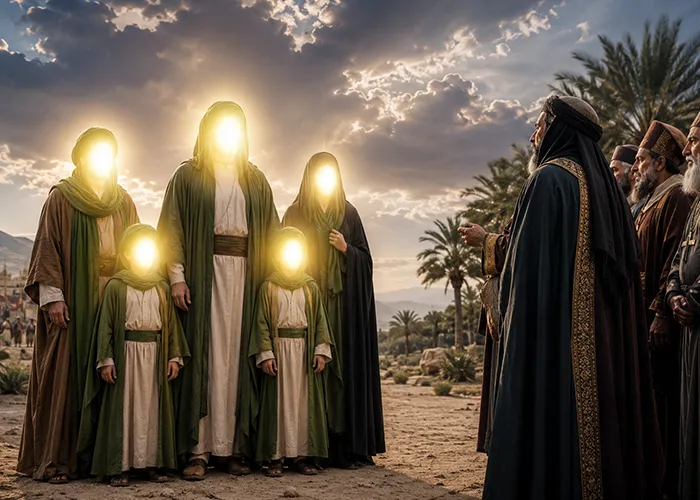
A fierce wind swept through the narrow alleys of Jerusalem. In a corner of the Holy Temple, an elderly man with cotton-white hair and a stooped frame raised his hands in prayer. It was Zakariya (pbuh), an aged prophet who felt the heavy burden of guiding his people upon his weary shoulders. He was ninety or perhaps one hundred and twenty years old, and his wife, Isha‘, was barren.
Zakariya (pbuh) was anxious about the future. He feared the day when, after his passing, the corrupt and worldly among the Children of Israel would turn God’s religion into a plaything for their own desires. Amid the darkness of despair, as he stood in the sanctuary devoted to worship, a light shone within his heart. Raising his trembling hands, he whispered:
“My Lord, my bones have grown weak, and my head is aflame with grey hair… I fear what my relatives will do after me, and my wife is barren. So, grant me, from Yourself, an heir…”
(Qur’an 19:4–6)
Before Zakariya (pbuh) had even finished his supplication, the sanctuary was suddenly flooded with light. Angels stood between heaven and earth, and a celestial voice echoed through the air:
«يَا زَكَرِيَّا إِنَّا نُبَشِّرُكَ بِغُلَامٍ اسْمُهُ يَحْيَىٰ لَمْ نَجْعَل لَّهُ مِن قَبْلُ سَمِيًّا»
“O Zakariya, We give you glad tidings of a boy whose name will be Yahya. We have never before given this name to anyone.” (Qur’an 19:7)
Zakariya’s heart trembled with joy and astonishment. How could he have a child at such an advanced age, with a wife who was barren? He asked for a sign, and God replied:
“Your sign is that you shall not speak to the people for three days except by gestures.”
Thus, a green shoot of life sprang forth in the withered womb of Zakariya’s wife. They named the child Yahya (pbuh), meaning “he lives” or “he shall be given life” a unique name for a miraculous child.
A Child Unfamiliar with Play
Yahya (pbuh) was born, unlike any other child in the city. A profound mystery seemed hidden within his deep, dark eyes. He thirsted for truth rather than worldly amusements. While he was still a child, the divine command came:
«يَا يَحْيَىٰ خُذِ الْكِتَابَ بِقُوَّةٍ ۖ وَآتَيْنَاهُ الْحُكْمَ صَبِيًّا»
“O Yahya, hold firmly to the Scripture.” And We granted him wisdom while he was still a boy. (Qur’an 19:12)
He turned to the wilderness. His companions were the solemn silence of the mountains, and his sustenance consisted of leaves and desert plants. He wore garments made of coarse camel wool and wept so intensely out of awe for his Lord those tears carved deep furrows into his youthful cheeks.
Whenever his father Zakariya (pbuh) wished to preach about Paradise and Hell in the mosque, he would first look among the congregation. If he saw Yahya (pbuh) present, he would refrain from speaking about Hellfire, knowing that the tender-hearted and God-fearing young prophet was so deeply affected by the mention of divine punishment that he could scarcely bear it.
During these years, his cousin, Prophet ‘Isa (peace be upon him), was also called to prophethood. Standing firmly in the waters of the Jordan River, Yahya (pbuh) baptized people as a sign of repentance and proclaimed: “O people! I baptize you with water, but after me will come One who will baptize you with the Holy Spirit!”
He was the first to affirm the prophethood of the Messiah (pbuh) and helped prepare the people to accept the new divine message.
The Sinister Dance and the Verdict Beside the Golden Basin
Years passed, and darkness settled over the royal palace. Herod, the indulgent and tyrannical ruler, had become ensnared by his own passions. He had fallen in love with Herodias (described in various traditions as his brother’s wife or his stepdaughter), a union that, according to the Torah, was considered a grave sin and open adultery.
The king knew that if he proceeded without religious approval, the foundations of his rule might be shaken. Therefore, he summoned Yahya (pbuh) the prophet whose words carried the weight of law in the hearts of the people.
With a deceitful smile, the king said: “O Yahya, declare this marriage lawful.”
But Yahya (pbuh), the man of the desert and of ascetic devotion, was not one to sell God’s judgment for the favour of a tyrant. Looking directly into the king’s eyes, he cried out in a voice that sent tremors through the royal court: “This is forbidden! The law of God does not change to accommodate your lusts!”
From that day on, Herodias harboured a burning hatred for Yahya (pbuh). She knew that as long as his head remained upon his shoulders, the marriage would never gain acceptance.
Then came the king’s birthday celebration. The palace overflowed with wine, music, and the fragrance of incense. Herodias set her plan into motion. She sent her beautiful young daughter, Salome, dressed in alluring attire, into the banquet hall to dance before the intoxicated king.
Captivated by her performance, the king lost all restraint and exclaimed: “Ask whatever you wish of me! Even if you ask for half my kingdom, I will give it to you!”
The girl glanced toward her mother, who was waiting behind a curtain. Herodias signalled to her. The girl approached the throne, bowed, and in a chilling tone declared: “I do not want your kingdom. I want the head of Yahya ibn Zakariya (pbuh), this very hour, presented to me on a golden platter.”
A heavy silence descended upon the hall. For a moment, the king hesitated. He feared the anger of the people and respected the stature of Yahya (pbuh). Yet pride and desire had blinded him. He nodded and signalled to the executioners.
Martyrdom in the Mihrab and the Wrath of the Earth
Assailants stormed the monastery of Yahya (pbuh). He was standing in prayer before God. The executioner drew his sharp blade and, while the most pious and ascetic human on earth was worshiping, severed his head from his body. They placed the holy head into a golden basin. Blood gushed from the Prophet’s neck, turning the golden basin crimson. The head was brought into the hall and placed before the triumphant eyes of that wicked woman.
But this was not the end of the story. The blood of Yahya (pbuh), once spilled upon the ground, began to boil. It was as though the earth could not bear to digest this pure blood. No matter how much soil they poured over it, the blood continued to bubble and rise. This blood boiled and surged for years, until the day a tyrannical commander named Nebuzaradan conquered Jerusalem. He slaughtered thousands of the leaders and criminals of the Children of Israel over that blood until it finally fell still.
Mourning, Storm, and Christ’s Revelations
When the news of Hazrat Yahya’s decapitation echoed through Jerusalem, it was as if time stood still. For Hazrat Isa (pbuh), this news did not merely signify the loss of a cousin or a companion; Yahya (pbuh) was the steadfast fortress of endurance and the confirmer of his mission.
Upon hearing of this horrific crime, Isa (pbuh) was plunged into a deep, agonizing sorrow. Accompanied by his disciples, he temporarily left the main cities and sought refuge in the solitude of the wilderness—both as a sign of mourning and due to the severe security threats facing other believers. For days, he remained in seclusion, communing with God and mourning Yahya’s oppression.
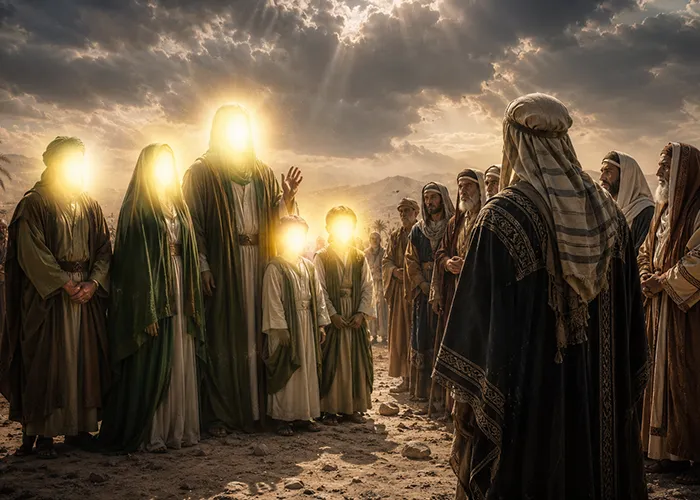
Yet, this isolation did not last long. Isa (pbuh) returned to the city with even greater resolve. His tone had shifted; his past gentleness gave way to a storm of revelations. He stood publicly in the town squares, condemning the crime of Herod and the deathly silence of the worldly scholars of the Children of Israel. When warned that Herod was also bent on killing him, he courageously declared: “Go and tell that Herod that I will continue my work until the day my mission is complete.”
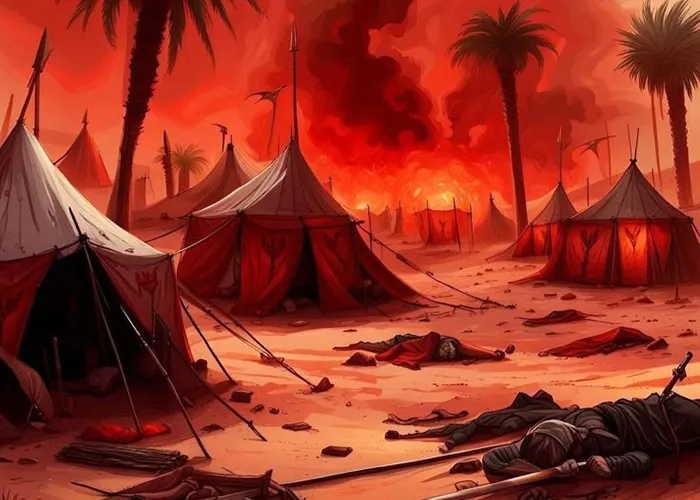
Isa (pbuh) intensified his mission, made his miracles more public, and made his disciples understand that the path of truth is a crimson road nurtured by blood. During one of his journeys, as he passed through the land of Iraq and the arid terrain of “Karbala,” he stopped, wept profusely, and turned to his disciples, saying:
“In this land, they will kill the son of the daughter of the final Prophet, just as they killed Yahya ibn Zakariyya. The earth and the sky will weep for him, and his killer is accursed.”
The Mirroring of Karbala (An Analysis of the Connection Between the Two Martyrdoms)
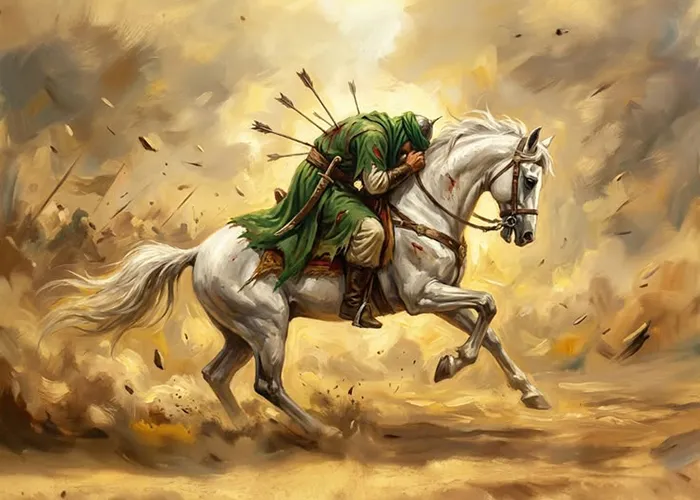
Centuries after Yahya (pbuh) and Isa (pbuh), a caravan was moving from Medina toward Kufa-the caravan of Imam Husayn ibn Ali (pbuh). It is narrated that during this journey, the Imam Husayn (pbuh) did not halt at any station or depart from it without weeping and remembering Yahya ibn Zakariyya (pbuh). The destinies of these two martyrs are two sides of the same coin in history:
- 1. Confronting Distortion and Innovation: Yahya (pbuh) stood against Herod because the corrupt ruler wanted to distort the rulings of the Torah; Imam Husayn (pbuh) also stood against Yazid because he openly defied the tenets of Islam. Both fell victim to the principle of “enjoining what is good and forbidding what is evil.”
- 2. The Worthlessness of the World and the Fall of Tyrants: Just as the pure head of Yahya (pbuh) was presented in a golden basin as a gift to the wicked, the holy head of Imam Husayn (pbuh) was also severed and placed in a golden basin before Yazid and Ibn Ziyad. The world does not remain faithful to the pure, but it immortalizes their names.
- 3. The Eternally Boiling Blood: Yahya’s blood boiled until vengeance was taken; Imam Husayn’s blood likewise courses eternally through the veins of history, kindling a heat in the hearts of believers that will never cool-until the day the ultimate avenger, the Promised Mahdi (AJ), reappears with the battle cry, “Ya Latharat al-Husayn” (O Avengers of Husayn).
“And peace be upon him (Yahya) the day he was born, the day he died (martyred with a severed head), and the day he will be raised up alive!” (Surah Maryam, 15)
As the grandson of the Prophet (pbuh) and the Master of Martyrs, Imam Husayn (pbuh) chose the path of resistance against oppression. He was martyred with a severed head in the Event of Karbala for the revival of his grandfather’s religion. The profound similarities in their destinies and the manner of their martyrdoms have been highlighted in Islamic narrations, as well as by Imam Husayn (pbuh) himself.
The story of Hazrat Yahya (pbuh) and its crimson link to the epic of Ashura is not merely a historical account or a sorrowful elegy; rather, it is a school of thought and spiritual training that holds deep, practical lessons for our lives today.
Key Ideological, Moral, and Social Lessons from This Story:
- The Authenticity of Truth and Uncompromising Stance Against Falsehood (The Lesson of Courage)
The greatest lesson from the life of Hazrat Yahya (pbuh) is choosing the pleasure of God over the approval of those in power. He could have saved his life and preserved his social standing through an opportunistic edict (fatwa) or by simply remaining silent before the ruler.
Lesson: Seeking truth comes at a cost. At the crossroads of life, where moral principles and divine decrees are at stake, self-interest and complacency are unacceptable. A free-spirited human does not sacrifice truth for fleeting expediencies.
- Eradicating Corruption at Its Source (The Fight Against Innovation)
Hazrat Yahya’s intense sensitivity in opposing an unlawful marriage demonstrates a profound sociological insight. If corruption and depravity originate from the head of state and the social elite, and then assume a legal or religious guise, they drag the entire society into a quagmire.
Lesson: One must not remain indifferent to ideological and moral deviations, especially when there are attempts to “make permissible what God has forbidden.” Silence in the face of such innovations hollows out a society from within.
- The Futility, Faithlessness, and Baseness of the Material World
The fact that the severed head of the purest human on earth was presented in a golden basin as a reward for a courtesan’s dance offers a jarring illustration of the world’s worthlessness. By reminding his companions of this point, Imam Husayn (pbuh) taught them not to attach their hearts to the illusions and glitter of this world.
Lesson: If we define success by comfort, longevity, and superficial material victory, the history of the Prophets becomes meaningless. A human’s true value lies in their steadfastness in faith, not in the wealth or palaces they leave behind. Tyrants fade away into ash, but the names of Yahya (pbuh) and Imam Husayn (pbuh) endure as symbols of honour.
- The Hidden Power of Asceticism and Detachment from Luxury
Hazrat Yahya (pbuh) was a reclusive, simple-dressing, and ascetic man. Yet, this prophet, who possessed neither palace nor army, commanded such awe and influential eloquence among the people that the powerful king of the Children of Israel trembled at his opposition and begged him for legitimacy.
Lesson: True human power does not lie in dependency on material things, but rather in spiritual independence and servitude to God. A person who desires nothing from the world cannot be bought, coerced, or intimidated by threats or bribes.
- The Eternal Surge of the Martyr’s Blood (History’s Commitment to Truth)
Oppressors falsely believed that by severing Yahya’s head or by slaughtering Husayn in the desert of Karbala, they had silenced their voices. However, the boiling of Yahya’s blood and the enduring legacy of Imam Husayn prove that a martyr’s blood exerts a direct, fundamental impact on history.
Lesson: Oppression may appear victorious in the short term, but it is never sustainable. Martyrdom is not the end of the road; it is the beginning of an awakening for generations. The blood of the oppressed is never lost, and history ultimately acts as the avenger of truth.
- The Continuity and Solidarity of the Front of Truth Throughout History
Hazrat Isa’s reaction to Yahya’s martyrdom and Imam Husayn’s continuous remembrance of this story teaches us that the followers of truth across centuries and eras are members of a single body. They share in each other’s grief, continue one another’s paths, and strive toward identical goals.
Lesson: We are not alone in the fight against darkness and ignorance. Today’s reformers and pure souls are continuing the path of those same crimson-hued prophets and Imams, and they must draw inspiration and motivation from their lives.
Authentic Sources of This Story:
To ensure scholarly reliability and authenticity, the above content has been extracted from the following primary sources:
- Quranic Sources (The Foundation of the Narrative)
- Surah Maryam, Verses 2 to 15: Detailing Zakariya’s prayer, the miraculous birth of Yahya, his naming by God, and his ascetic attributes. Surah Ale ‘Imran, Verses 38 to 41: The angels bringing glad tidings to Zakariya in the mihrab (prayer niche) and describing Yahya as a “noble leader” (Sayyid) and “chaste” (Hasur-one who restrains worldly desires). Surah Al-Anbiya, Verses 89 and 90: The fulfillment of Zakariya’s prayer and the curing of his barren wife for pregnancy.
- Shia Hadith and Exegetical Sources (The Boiling Blood, Parallel with Karbala, and Isa’s Reaction)
- Bihar al-Anwar (Allamah Majlisi): Volume 14, Chapter on “Stories of Yahya ibn Zakariya,” and Volume 44 (The section addressing the connection between Imam Husayn’s martyrdom and Hazrat Yahya). Kamil al-Ziyarat (Ibn Qulawayh al-Qummi): Chapter 26, p. 76 (Narrations concerning the weeping of the heavens and the earth for Yahya and Husayn, and the account of Hazrat Isa passing through Karbala and prophesying the martyrdom). Al-Amali (Sheikh Saduq): Session 28 (Narrating traditions on the shared fate of Imam Husayn and Hazrat Yahya regarding their holy heads being sent to the basest of people). Tafsir Nur al-Thaqalayn (Al-Hwayzi) & Tafsir al-Qummi: Under the commentary of the verses of Surah Maryam (The account of the boiling of Yahya’s blood and Nebuchadnezzar’s vengeance).
- Sunni Historical and Exegetical Sources (Details Regarding Herod and the Execution)
- Tarikh al-Umam wa al-Muluk (History of the Prophets and Kings by Tabari): Volume 1, Section mentioning the accounts of Yahya ibn Zakariya (Full details of the story of Herod, Herodias, and the court dance). Al-Kamil fi al-Tarikh (Ibn al-Athir): Volume 1, Section on the story of Hazrat Yahya. Qasas al-Anbiya (Ibn Kathir): The account of Yahya’s resistance against the unlawful edict of the contemporary ruler and the manner of his martyrdom in the mihrab.
- New Testament Sources (Christianity – Regarding the Reaction of Hazrat Isa)
Gospel of Matthew (Chapter 14, Verses 1 to 13): Detailing how Hazrat Isa withdrew to a solitary place in the wilderness upon hearing of the execution of Yahya (known in Christian tradition as John the Baptist). Gospel of Luke (Chapter 13, Verses 31 and 32): Hazrat Isa’s firm response to Herod’s threats, where he refers to him as “that fox.”
editor's pick

news via inbox
Subscribe to the newsletter.