
Fatwa Panel of the Week – Volume 03 Issue 25
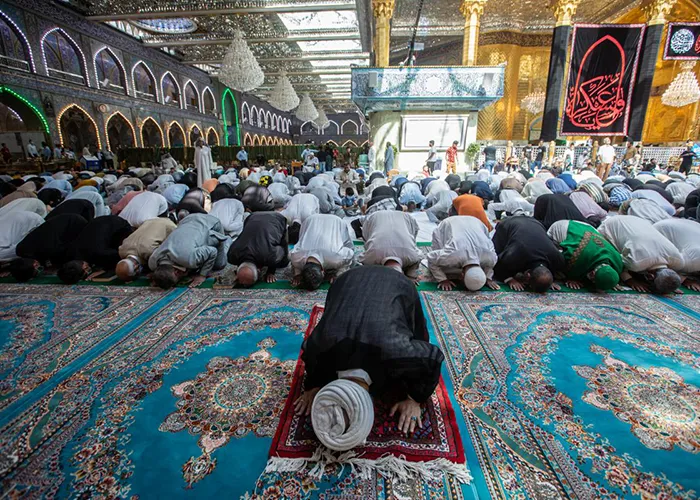
Congregational Prayer-Part-4
According to the fatwas of the Grand Religious Authorities: Shaheed Ayatollah Sayyed Ali Khamenei, Ayatollah Sistani, and Ayatollah Makarem Shirazi (may Allah prolong their blessings):
Fatāwā presented without citing a differing opinion or a specific reference are the common rulings shared by all of the three respected Marāji‘. In cases where the ruling of one Marjaʿ differs from that of the other two, it is indicated in a footnote under the same number, mentioning the Marjaʿ by name.Bottom of Form
Rulings on Joining Congregational Prayer (Jamā‘ah) in Different Rak‘ahs
A) Joining in the Imam’s First or Second Rak‘ah
- If a follower (ma’mūm) joins the congregational prayer during the Imam’s first or second rak‘ah, the recitation of Sūrat al-Ḥamd and the other surah is waived for him.
- If the Imam is standing and the follower does not know which rak‘ah the Imam is in, he may join the congregation and should recite al-Ḥamd and the surah with the intention of seeking closeness to Allah (qurbah). In this case, the congregational prayer is valid even if it later becomes clear that the Imam was in the first or second rak‘ah.
Ayatollah Sistani: If the Imam is standing and the follower does not know which rak‘ah he is in, he may join the congregation and, based on obligatory precaution, should recite al-Ḥamd and the surah with the intention of qurbah.
Ayatollah Makarem Shirazi: If the Imam is standing and the follower does not know which rak‘ah he is in, he may join the congregation and recite al-Ḥamd and the surah with the intention of qurbah. His prayer is valid whether it later becomes clear that the Imam was in the third or fourth rak‘ah, or in the first or second rak‘ah, provided that it is a Ẓuhr or ʿAṣr prayer in which the Imam recites quietly.
- If the follower assumes that the Imam is in the first or second rak‘ah and therefore does not recite al-Ḥamd and the surah, then realizes while in rukūʿ that the Imam was actually in the third or fourth rak‘ah, his prayer remains valid.
However, if he realizes this before rukūʿ, he must:
- Recite al-Ḥamd and the surah.
- If there is not enough time for both, he should recite only al-Ḥamd and then join the Imam in rukūʿ.
Ayatollah Sistani: If there is not enough time to complete al-Ḥamd, he may stop the recitation and go into rukūʿ with the Imam. However, it is recommended precaution (iḥtiyāṭ mustaḥabb) that he changes his intention to an individual prayer (furādā) and completes the prayer individually.
4. If a person joins the congregation at the beginning of the prayer or during al-Ḥamd and the surah, but before he goes into rukūʿ the Imam rises from rukūʿ, his congregational prayer is still valid. He should perform his own rukūʿ and continue the prayer with the Imam.
B) Joining While the Imam Is in Rukūʿ
If a follower (ma’mūm) joins the congregational prayer while the Imam is in rukūʿ, four possible situations may arise:
- Reaching the Imam’s Rukūʿ
If the follower reaches the position of rukūʿ before the Imam rises, the congregation is valid and that rak‘ah counts for him, even if the Imam has already completed the rukūʿ dhikr.
- Failing to Reach the Imam’s Rukūʿ
If the follower reaches the position of rukūʿ only when the Imam is rising from rukūʿ or has already stood up, the congregational prayer is not established, and his prayer is valid only as an individual prayer.
Ayatollah Makarem Shirazi: If he fails to reach the Imam’s rukūʿ, he should complete the prayer individually and, based on obligatory precaution, repeat the prayer. The same applies if he doubts whether he reached the Imam’s rukūʿ.
- Doubting Whether He Reached the Imam’s Rukūʿ
If he bends to the extent of rukūʿ but doubts whether he actually caught the Imam’s rukūʿ, his prayer is valid as an individual prayer and that rak ‘ah is considered the first rak‘ah of his own prayer.
- Imam Rises before the Follower Reaches Rukūʿ
If the Imam raises his head from rukūʿ before the follower reaches the position of rukūʿ, the follower may change his intention to an individual prayer (furādā).
C) Joining in the Imam’s Second Rak‘ah
The rulings differ according to the total number of rak‘ahs in the Imam’s prayer:
- If the Imam’s Prayer Is Two Rak‘ahs
- It is recommended (mustaḥabb) that the follower recite the qunūt with the Imam.
- During the Imam’s tashahhud, the follower may either:
- Stand up and continue the remainder of his prayer individually, or
- Sit in a half-risen posture (tajāfī) until the Imam finishes with salām, then stand up.
- If the Imam’s Prayer Is Three Rak‘ahs
- It is recommended to recite both the qunūt and tashahhud with the Imam.
- Based on obligatory precaution, during the tashahhud he should sit in a half-risen posture (tajāfī).
- After the Imam’s tashahhud, he rises with the Imam and recites al-Ḥamd and the surah.
- If there is not enough time to recite the surah, he recites only al-Ḥamd and catches the Imam in rukūʿ.
- After completing two sajdahs, he recites the tashahhud of his own second rak‘ah.
- If his own prayer is also three rak‘ahs, then when the Imam gives salām he may:
- Stand and continue individually, or
- Remain in the half-risen posture until the Imam finishes, then stand for his next rak‘ah.
- If the Imam’s Prayer Is Four Rak‘ahs
- In his first rak‘ah he follows the same rulings mentioned above.
- In his own second rak‘ah (which corresponds to the Imam’s third rak‘ah), after the two sajdahs he recites the obligatory amount of tashahhud.
- He then stands for his own third rak‘ah.
- If there is not enough time to recite the tasbīḥāt three times, he may recite them once and then join the Imam in rukūʿ.
D) Joining in the Imam’s Third or Fourth Rak‘ah
- If the follower joins in the third or fourth rak‘ah of the Imam, he must recite al-Ḥamd and the surah. If there is not enough time for the surah, he should recite only al-Ḥamd and then join the Imam in rukūʿ.
- If he knows that by reciting the surah he will miss the Imam’s rukūʿ, he should not recite the surah. If he does recite it and consequently misses the Imam’s rukūʿ, his prayer becomes an individual prayer (furādā).
- If he knows that even by reciting al-Ḥamd he will not reach the Imam’s rukūʿ, then based on obligatory precaution he should wait until the Imam goes into rukūʿ and only then join the congregation.
Attaining the Reward of Congregational Prayer during the Final Tashahhud
1. If a follower arrives when the Imam is in the final tashahhud of the prayer, he may still attain the reward of congregational prayer by:
- Making the intention (niyyah) to join the congregation.
- Saying the opening takbīr (Takbīrat al-Iḥrām).
- Sitting with the Imam and reciting the tashahhud.
- Not saying the salām.
Ayatollah Sistani: Based on obligatory precaution, he should not recite the salām and should wait until the Imam completes the salām of the prayer.
- After the Imam’s salām, he should stand up and begin his own prayer from the beginning.
Ayatollah Sistani: Without making a new intention or saying another takbīr, he should recite al-Ḥamd and the surah and count this as the first rak‘ah of his own prayer.
Note: This ruling applies only to the final tashahhud of a congregational prayer. It does not apply to the tashahhud of the second rak‘ah in three- or four-rak‘ah prayers.
Changing from Congregational Prayer to Individual Prayer (from Jamāʿah to Furādā)
- Intending to Continue Individually: A follower (ma’mūm) may, at any point during a congregational prayer, change his intention and continue the prayer individually (furādā), even if he had planned from the beginning to do so. However, it is recommended precaution (iḥtiyāṭ mustaḥabb) not to have such an intention from the outset.
Ayatollah Sistani: If a follower decides to separate from the congregation during the prayer without a valid excuse, the validity of his congregational participation is problematic. However, the prayer itself remains valid unless he fails to perform the duties required of one praying individually, in which case, based on obligatory precaution, he should repeat the prayer.
Ayatollah Makarem Shirazi: One may not leave the congregation and intend an individual prayer without a valid excuse, whether this was planned from the beginning or decided during the prayer.
- Recitation after Switching to Individual Prayer: If a follower changes his intention to individual prayer after the Imam has completed the recitation, he does not need to recite al-Ḥamd and the surah.
However:
- If he changes to individual prayer after the Imam has completed al-Ḥamd, he does not need to repeat al-Ḥamd.
- If he changes during al-Ḥamd or during the surah, then based on obligatory precaution he should recite them again from the beginning with the intention of absolute nearness to Allah (qurbah muṭlaqah).
Ayatollah Sistani: If the follower changes to individual prayer due to an excuse after the Imam have completed al-Ḥamd and the surah, he does not need to recite them. However, if he separates without an excuse, or before the Imam has completed al-Ḥamd and the surah, then based on precaution he must recite the entire al-Ḥamd and surah himself.
Ayatollah Makarem Shirazi: If the follower separates due to an excuse after the Imam has completed al-Ḥamd and the surah, he does not need to recite them. But if he separates before their completion, he must recite the portion that the Imam has not yet recited.
- Returning to the Congregation: If a follower changes his intention from congregational prayer to individual prayer, then based on obligatory precaution he may not re-join the congregation during the same prayer.
Likewise, if he becomes uncertain whether to separate from the congregation or not, then based on obligatory precaution he should complete the prayer as an individual prayer.
Ayatollah Sistani: If a follower intends individual prayer during the congregational prayer, he may not later renew the intention of congregational prayer. The same ruling applies –based on obligatory precaution– if he becomes undecided whether to separate or not, and later decides to continue with the congregation. In such a case, he should complete the prayer individually.
editor's pick

news via inbox
Subscribe to the newsletter.