Everlasting Tales of the Quran – Volume 03 Issue 45

The Story of Prophet Solomon (AS) and Bilqis (The Queen of Sheba)
The Rejection of the Gifts and the Revelation of the Truth
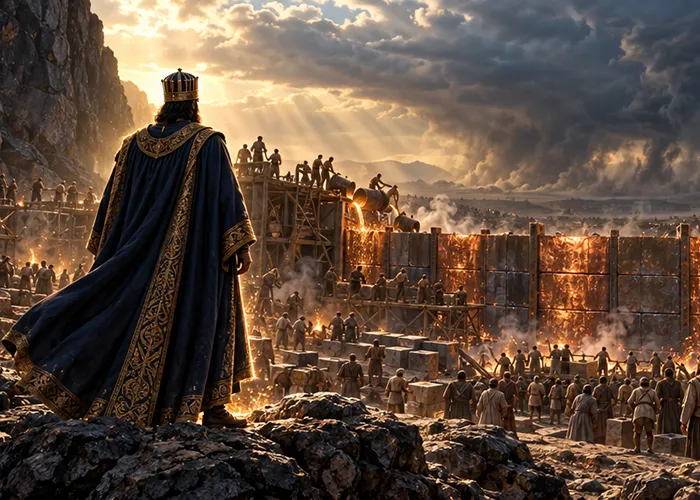
A magnificent caravan, laden with jewels, gold and precious gifts, was dispatched towards the court of Prophet Solomon (AS). However, when the envoys arrived in his presence, they were met with an unexpected response: Solomon showed complete indifference towards worldly wealth, luxury and material splendour.
Prophet Solomon (AS) declared:
أَتُمِدُّونَنِ بِمَالٍ فَمَا آتَانِيَ اللَّهُ خَيْرٌ مِّمَّا آتَاكُم
“Do you seek to enrich me with wealth? What Allah has bestowed upon me is far better than what
He has bestowed upon you.” (Surah An-Naml, 27:36)
He then added:
بَلْ أَنتُم بِهَدِيَّتِكُمْ تَفْرَحُونَ
“Rather, it is you who rejoice in such gifts.”
He subsequently sent the envoys back, and they came to realise that they were dealing with a divinely guided personality, not a worldly ruler driven by wealth and ambition.
When the account of this encounter reached Bilqis, she understood that Solomon was no ordinary king, but a Prophet (pbuh) sent by Almighty God.
The Bringing of Bilqis’s Throne
At this point, before Bilqis arrived, Prophet Solomon (AS) decided to demonstrate a manifestation of divine power.
He turned towards those gathered in his assembly and said:
يَا أَيُّهَا الْمَلَأُ أَيُّكُمْ يَأْتِينِي بِعَرْشِهَا قَبْلَ أَن يَأْتُونِي مُسْلِمِينَ
“O nobles! Which of you can bring me her throne before they come to me in submission?” (Surah An-Naml, 27:38)
A powerful jinn, described as an Ifrit, replied:
أَنَا آتِيكَ بِهِ قَبْلَ أَن تَقُومَ مِن مَّقَامِكَ
“I will bring it to you before you rise from your place.” (Surah An-Naml, 27:39)
However, a divinely inspired man, whom the Qur’an describes as:
الَّذِي عِندَهُ عِلْمٌ مِنَ الْكِتَابِ
“the one who possessed knowledge from the Book”,
and whom Islamic narrations identify as Asif ibn Barkhiya, declared:
أَنَا آتِيكَ بِهِ قَبْلَ أَن يَرْتَدَّ إِلَيْكَ طَرْفُكَ
“I will bring it to you before your glance returns to you.” (Surah An-Naml, 27:40)
Suddenly, the throne appeared before Solomon. Yet, even at this extraordinary moment, instead of displaying pride or boasting about his power, he declared:
هَٰذَا مِن فَضْلِ رَبِّي لِيَبْلُوَنِي أَأَشْكُرُ أَمْ أَكْفُرُ
“This is by the grace of my Lord, to test me whether I will be grateful or ungrateful.” (Surah An-Naml, 27:40)
The Arrival of Bilqis and Her Embrace of Faith
Some time later, Bilqis arrived in the land of Prophet Solomon (AS), accompanied by a group of distinguished members of her people.
Solomon had ordered that certain alterations be made to the appearance of her throne. When Bilqis entered, she was asked:
أَهَكَذَا عَرْشُكِ
“Is your throne like this?” (Surah An-Naml, 27:42)
She examined it carefully and replied:
كَأَنَّهُ هُوَ
“It seems to be the very same one.”
Her response demonstrated her intelligence, attentiveness and remarkable judgement. She was then guided to another section of the palace. There, she encountered a magnificent hall with a smooth, transparent glass floor, beneath which water flowed.
When Bilqis saw it, she assumed that she would have to walk through water and therefore raised her garment slightly to avoid getting it wet.
However, Prophet Solomon (AS) explained:
إِنَّهُ صَرْحٌ مُمَرَّدٌ مِن قَوَارِيرَ
“Indeed, it is a palace hall paved with smooth, polished glass.” (Surah An-Naml, 27:44)
At that moment, the veils of ignorance and pride were lifted from before Bilqis’s eyes. She realised that true greatness does not lie in outward power and material splendour, but in knowing Almighty God and submitting to Him.
With complete sincerity and humility, she turned towards her Lord and declared:
رَبِّ إِنِّي ظَلَمْتُ نَفْسِي وَأَسْلَمْتُ مَعَ سُلَيْمَانَ لِلَّهِ رَبِّ الْعَالَمِينَ
“My Lord! I have indeed wronged myself, and now I submit, together with Solomon, to Allah, the Lord of all the worlds.” (Surah An-Naml, 27:44)
The Conclusion of the Story
Islamic narrations relate that, following Bilqis’s acceptance of faith, Prophet Solomon (AS) treated her with the utmost respect, dignity and generosity.
According to some narrations, he married her, while other accounts state that he arranged for her to marry a believing ruler of Yemen and subsequently sent her back to the land of Sheba with honour and dignity, so that she could govern her people according to the principles of faith and justice.
Thus, a story that could have developed into a great and bloody war between two powerful kingdoms ended instead through guidance, peace, wisdom and the affirmation of divine unity.
This remarkable episode reveals one of the most beautiful examples of divinely guided leadership: a form of governance in which knowledge triumphs over ignorance, wisdom over violence, and guidance over the pursuit of power. It demonstrates how hearts can be guided towards God without war or bloodshed.
Lessons from the Story
- Power Is a Trust and a Test, not a Means of Superiority
Despite possessing an extensive kingdom, mighty armies, control over the wind and knowledge of the language of birds, Prophet Solomon (AS) never regarded power as something belonging to him personally.
When the throne of Bilqis appeared before him, instead of boasting about his abilities, he declared:
هَٰذَا مِنْ فَضْلِ رَبِّي لِيَبْلُوَنِي أَأَشْكُرُ أَمْ أَكْفُرُ
“This is by the grace of my Lord, to test me whether I will be grateful or ungrateful.” (Surah An-Naml, 27:40)
This story teaches us that power, wealth and social status have no inherent value in themselves. Rather, they are means through which human beings are tested, and their true worth lies in how they are used.
- The Superiority of Knowledge and Wisdom over Force and Military Power
Although Solomon (AS) possessed the ability to conquer the land of Sheba, he chose the path of invitation, dialogue and enlightenment. He sent a letter filled with wisdom and relied upon the power of knowledge and understanding.
Even in the episode of bringing the throne of Bilqis, the Qur’an highlights the role of the individual who possessed knowledge from the Book.
This episode demonstrates that the most profound transformations are achieved not through force, but through knowledge, insight and divine guidance.
- The Wisdom and Truth-Seeking Nature of Bilqis
One of the most remarkable figures in this story is Bilqis herself.
Despite her considerable power and political position, she did not allow herself to become a prisoner of pride. Before making a decision, she chose investigation and consultation.
When she recognised the danger of war, she declared:
إِنَّ الْمُلُوكَ إِذَا دَخَلُوا قَرْيَةً أَفْسَدُوهَا…
“Indeed, when kings enter a land, they bring corruption and devastation to it…” (Surah An-Naml, 27:34)
She placed truth above prejudice, and it was precisely this open-minded attitude that prepared the way for her guidance and acceptance of faith.
- Indifference towards Worldly Glitter and Material Possessions
Bilqis sent valuable gifts to test Solomon (AS). However, he responded firmly:
أَتُمِدُّونَنِ بِمَالٍ فَمَا آتَانِيَ اللَّهُ خَيْرٌ مِّمَّا آتَاكُم
“Do you seek to enrich me with wealth? What Allah has given me is far better than what He has given you.” (Surah An-Naml, 27:36)
In the eyes of the Prophets(pbut), this world is not an ultimate goal; rather, it is a means of fulfilling the divine mission and serving the servants of God.
- The Lifting of the Veils of Illusion in the Face of Truth
Bilqis’s entrance into the magnificent palace of glass was more than simply witnessing an architectural wonder. It was a moment in which the veils of pride and mistaken beliefs were lifted from before her eyes.
Ultimately, she humbly acknowledged:
رَبِّ إِنِّي ظَلَمْتُ نَفْسِي وَأَسْلَمْتُ مَعَ سُلَيْمَانَ لِلَّهِ رَبِّ الْعَالَمِينَ
“My Lord! I have indeed wronged myself, and now I submit, together with Solomon, to Allah, the Lord of all the worlds.” (Surah An-Naml, 27:44)
A human being draws closer to the truth when they distance themselves from selfconceit and prejudice and become willing to accept what is right.
- The Triumph of Peace and Guidance over War
Perhaps the most beautiful message of this story is that an episode which could have culminated in a devastating war instead reached its conclusion through dialogue, wise leadership and divine guidance. No blood was shed, and no land was destroyed. Instead, hearts were guided towards faith and the oneness of God.
This story teaches us that true victory does not lie in defeating others. Rather, it lies in transforming ignorance into awareness, hostility into friendship, and distance from God into faith and devotion to Him.
The Central Message of the Story
The story of Prophet Solomon (AS) and Bilqis is an account of wisdom triumphing over pride, knowledge over the pursuit of power, truth over prejudice, and peace over violence.
It demonstrates that hearts can be won through reason, moral excellence and divine guidance – a victory far more enduring and valuable than any military triumph.
Qur’anic References
Verses Related to Prophet Solomon (AS) and the Queen of Sheba
- Surah Al-Baqarah, verse 102.
- Surah Al-An’am, verse 84.
- Surah Al-Anbiya, verses 78-82.
- Surah An-Naml, verses 15-16 and 20-44.
- Surah Saba, verses 12-14.
- Surah Sad, verses 31-35.
Authentic Shi’a Narrational and Exegetical Sources
The narrations, Qur’anic commentaries and details relating to these events are recorded in the following classical Shi’a sources:
- Tafsir al-Qummi– by Ali ibn Ibrahim al-Qummi.
- Tafsir al-Mizan– by Allamah Muhammad Husayn Tabataba’i.
- Bihar al-Anwar, Volume 14 – by Allamah Muhammad Baqir al-Majlisi.
- Qisas al-Anbiya– by Qutb al-Din al-Rawandi.
- Tafsir Nur al-Thaqalayn– by Abd Ali al-Huwayzi.
editor's pick

news via inbox
Subscribe to the newsletter.