Exploring Islamic Jurisprudence – Volume 03 Issue 30
Islamic Jurisprudence (Fiqh) and the Status of the Five Legal Categories (al‑Ahkam al‑Khamsah)
- Definition and Nature of Islamic Jurisprudence (Fiqh)
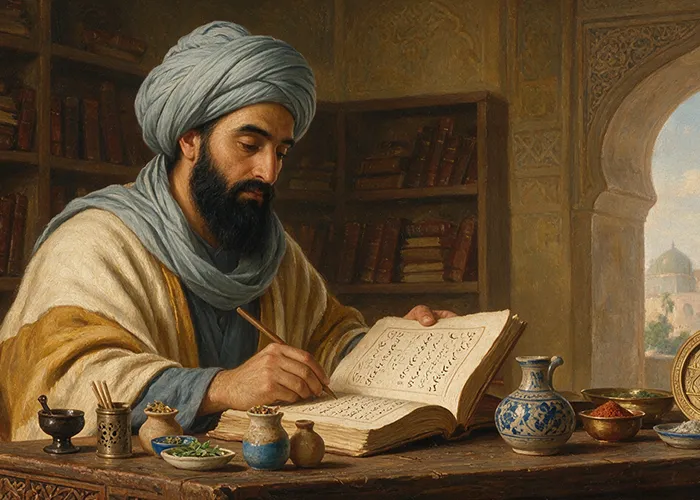
Etymologically, fiqh denotes deep, accurate understanding. In the technical usage of Islamic scholarship, fiqh is the discipline concerned with deriving subsidiary legal rulings (al‑ahkam al‑sharʿiyah al‑farʿiyah), the practical obligations governing human conduct in domains such as worship, commerce, family relations, economics, and politics, through systematic reasoning applied to authoritative sources: the Qur’an, the Sunnah, consensus (ijmaʿ), and rational proof (ʿaql). In essence, jurisprudence investigates these sources to determine which of the five normative categories (al‑ahkam al‑khamsah) applies to any given act: obligatory (wajib), prohibited (haram), recommended (mustahabb), discouraged (makruh), or permissible (mubah).
- The Necessity and Function of Jurisprudence in Human Life
For the believer who affirms God and the Hereafter, human actions are inseparable from spiritual salvation or ruin. Jurisprudence therefore fulfills several essential functions:
- Clarifying Divine Duty: Fiqh outlines the boundaries of lawful and unlawful conduct across all spheres of life, enabling individuals to fulfill their religious obligations.
- Responding to Emerging Questions: As societies evolve, new issues arise, such as brain death, organ transplantation, intellectual property, and technological innovation. Through its methodological adaptability, fiqh determines the rulings governing these contemporary matters.
- Regulating Social Relations: A significant portion of jurisprudence addresses interpersonal and societal interactions, including contracts, family law, and penal codes. This dimension forms the structural foundation of social justice.
- The Philosophical Foundations of the Fivefold Classification of Rulings
The classification of voluntary human actions into five normative rulings (al‑ahkam al‑taklifiyah) constitutes one of Islamic law’s most refined educational and legal frameworks. This categorisation rests on several core rational principles:
- A) Balancing Real Benefits (Masaleh) and Harms (Mafased)
In Shi‘i school of thought, divine rulings correspond to objective benefits and harms. Each action is assigned to one of the five categories according to its impact on the individual, the community, and the moral-spiritual order:
- Obligatory (Wajib): Acts embodying essential benefit whose omission results in grave harm (e.g., prayer, justice, repayment of debts).
- Prohibited (Haram): Acts containing severe and destructive harm (e.g., murder, theft, oppression).
- Recommended (Mustahabb): Acts promoting spiritual or moral growth without strict necessity (e.g., voluntary charity, night prayer).
- Discouraged (Makruh): Acts involving minor harm or detriment (e.g., excessive eating).
- Permissible (Mubah): Neutral acts with no specific spiritual consequence, encompassing the ordinary activities of daily life.
- B) Respecting Human Freedom and Psychological Capacity
If all human actions were strictly obligatory or forbidden, life would become unbearably rigid. The fivefold system introduces nuance and flexibility:
- Permissible acts provide a broad sphere of personal freedom.
- Recommended and discouraged acts function as moral and psychological buffers: recommended acts reinforce commitment to obligatory duties, while avoiding discouraged acts prevents gradual descent into prohibited behaviour.
- C) Enabling Gradual, Voluntary Moral Development
Religion aims to cultivate human beings through free will. If every virtuous act were legally mandatory, the value of voluntary devotion, sacrifice, and striving would disappear. Recommended acts preserve a domain for spiritual ascent beyond minimal duty.
Taken together, the five rulings constitute a comprehensive architecture of human conduct, one that harmonises spiritual growth, personal autonomy, and psychological realism.
- The Source of Authority for the Five Rulings and the Role of Jurists (Fuqahaʾ)
The principle is undeniable: no human being, not even the Prophet Muhammad (PBUH), possesses independent authority to declare an act obligatory or forbidden.
To understand this precisely, one must distinguish between Legislation (Tashriʿ) and Discovery (Kashf al‑Hukm).
- A) The Domain of Legislation (Tashriʿ)
In Islamic thought, legislation belongs exclusively to God. This exclusivity rests on two foundations:
- Absolute Ownership: As Creator and Sustainer, God alone has the right to legislate for human life.
- Perfect Knowledge: Because rulings correspond to objective benefits and harms, only God possesses complete knowledge of all dimensions of existence.
Even the Prophet (PBUH) did not legislate autonomously, as the Qur’an affirms:
“وَمَا يَنْطِقُ عَنِ الْهَوَىٰ، إِنْ هُوَ إِلَّا وَحْيٌ يُوحَىٰ”
“Nor does he speak from [his own] desire. It is nothing but revelation revealed.” (Najm :3–4)
- B) The Domain of Discovery (Kashf)
How, then, do believers determine what is obligatory or prohibited?
Although legislation (Tashri’) and lawmaking are exclusively within the authority of God, the manifestation and declaration of these rulings to human beings take place through two channels.
First, the Holy Prophet (PBUH) and the Infallible Imams (As), who are the direct bearers of the divine will, and second, the jurists (Fuqaha), who, during the era of Occultation, extract God’s rulings from religious sources through scholarly ijtihad.
- The Infallibles (As) as the Direct Conveyors of Divine Rulings
The Holy Prophet (PBUH) received the divine rulings through revelation (Wahy) and delivered the complete body of the religion of Islam to the people. After him, the Infallible Imams (As),who were all appointed to the station of Imamat by divine decree,are the infallible guardians and interpreters of the Sharia by virtue of possessing infallibility (‘Ismah) and divinely-inspired knowledge (‘Ilm al-Ladunni). Their role is not the legislation of new rulings, but rather the precise explanation, clarification, and interpretation of those very universal divine rulings brought by the Prophet (PBUH). Therefore, their speech, behaviour, and implicit approval (Sunnah) constitute a definitive proof (Hujjah) for us and are considered a direct reflection of God’s will.
- The Jurists (Fuqaha) as Experts and Discoverers of the Divine Ruling
During the era of Occultation and the lack of direct access to the Infallible (As), the duty of clarifying divine rulings falls upon the jurists. However, their position is not one of lawmaking, but rather the discovery and precise understanding of God’s ruling. A jurist has no right to declare an action obligatory (Wajib) or prohibited (Haram) based on personal taste, preference, or self-determined convenience. He is an expert who, relying on foundational sciences such as Arabic literature, Ilm al-Rijal (biographical evaluation), Usul al-Fiqh (principles of jurisprudence), and the rules of inference, approaches the sources of religion and extracts God’s actual ruling on an issue through the method of ijtihad.
The result of the jurist’s effort is a “Fatwa” or, in other words, “the expression of an expert opinion” regarding the divine ruling, meaning he announces to the people: “In light of the divine laws, the ruling of God on this matter appears to be such.” Therefore, the jurist is neither authorised to change the rulings nor is he a legislator of a new ruling; rather, he is a researcher who, with scholarly precision, uncovers the divine will and clarifies it for society.
The Peril of Innovation (Bidʿah)
Anyone who declares something lawful or unlawful based on personal preference or interest commits religious innovation (bidʿah). The Qur’an warns:
“وَلَا تَقُولُوا لِمَا تَصِفُ أَلْسِنَتُكُمُ الْكَذِبَ هَٰذَا حَلَالٌ وَهَٰذَا حَرَامٌ…“
“And do not say, according to the false assertions of your tongues, ‘This is lawful and this is unlawful’…” (Nahl:116)
- Conclusion
The classification of actions into the five rulings is fundamentally an act of discovering the Divine Will. No human authority may fabricate laws; God alone legislates. The Prophet and Imams conveyed these laws, and jurists, through rigorous scholarship, identify and articulate them. Through this precise and principled framework, Islamic jurisprudence organises human life while illuminating the path toward spiritual perfection.
editor's pick

news via inbox
Subscribe to the newsletter.