Editorial – volume 03 Issue 35
When the Calendar Becomes a Compass
Introduction
A calendar does more than mark the passing of days. For a believer, it can become a compass: connecting memory with responsibility, knowledge with service, worship with character, and the lessons of history with the moral choices of the present. The coming week invites us to reflect on medicine and knowledge, prophetic mercy and ethical conduct, spiritual leadership, the dangers of tyranny, the building of community, courageous service, and justice in economic life.
5 Shahrivar – 27 August: Commemoration of Muhammad ibn Zakariya al-Razi: National Pharmacists’ Day
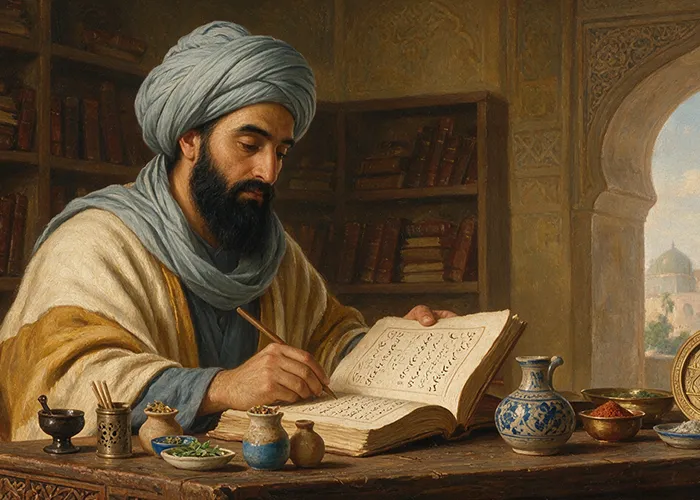
Muhammad ibn Zakariya al-Razi, known in the West as Rhazes, was one of the most influential physicians and scholars of the Islamic Golden Age. Born in Rayy in the ninth century, he made major contributions to medicine, pharmacy and clinical observation, and his works influenced medical learning for centuries in both the Muslim world and Europe.
In an age of rapid science and medical innovation, Islam encourages the pursuit of beneficial knowledge and the responsible care of human life; scientific knowledge becomes especially noble when it serves humanity and protects health.
Message for today:
Seek knowledge, serve life, and ensure that professional expertise is guided by conscience, compassion, and faith.
17 Rabiʿ al-Awwal: The Birth of the Holy Prophet Muhammad (peace and blessings be upon him) and Imam Jaʿfar al-Sadiq (peace be upon him): Day of Ethics and Compassion
According to the history, 17 Rabiʿ al-Awwal marks the birth anniversary of the Prophet Muhammad (peace and blessings be upon him), the final Messenger of God, whose mission transformed the religious, moral and social life of human-being. The same date is also commemorated as the birth anniversary of Imam Jaʿfar al-Sadiq (peace be upon him), the sixth Imam (pbuh), a towering teacher whose intellectual legacy profoundly shaped Islamic scholarship.
The Qur’an describes the Prophet’s mission as a manifestation of mercy:
وَمَا أَرْسَلْنَاكَ إِلَّا رَحْمَةً لِّلْعَالَمِينَ
“And We have not sent you, [O Muhammad], except as a mercy to the worlds.” (Qur’an 21:107)
Imam Jaʿfar al-Sadiq (peace be upon him) is also reported to have said:
كُونُوا دُعَاةً لِلنَّاسِ بِغَيْرِ أَلْسِنَتِكُمْ
“Call people [to the truth] without using your tongues.”
That is, the believer’s conduct should itself become an invitation to faith.
At a time of polarisation, hostility and moral confusion, the Prophet’s mercy and Imam al-Sadiq’s emphasis on exemplary conduct remind us that Islam must be visible not only in words, but in character.
Message for today:
Let your behaviour become a living expression of mercy, honesty, dignity and love for humanity.
13 Rabiʿ al-Awwal: The Passing of Grand Ayatollah Sayyid Reza Baha al-Dini
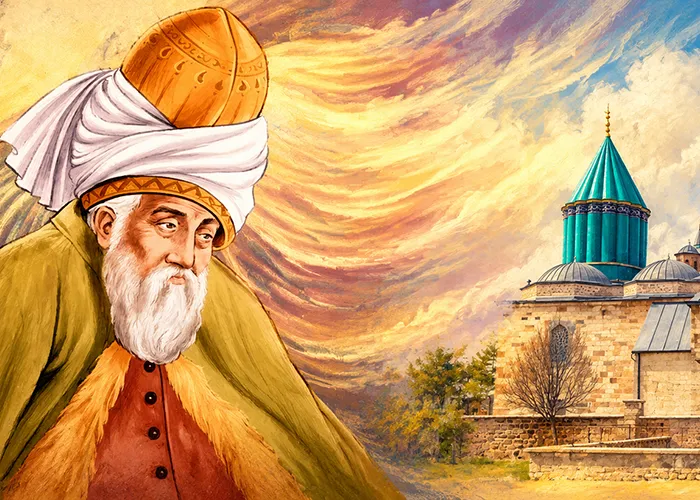
Grand Ayatollah Sayyid Reza Baha al-Dini was among the distinguished Shiʿi scholars and spiritual teachers of the contemporary period. He became particularly respected for his deep spirituality, moral discipline and emphasis on self-purification alongside religious learning.
His life represented an important tradition within Islamic scholarship: the union of ʿilm, knowledge, with taqwā, God-consciousness. Learning, in this understanding, is not merely the accumulation of information, but a means of refining the human being.
The Qur’an says:
إِنَّمَا يَخْشَى اللَّهَ مِنْ عِبَادِهِ الْعُلَمَاءُ
“Only those of His servants who possess knowledge truly stand in awe of Allah.” (Qur’an 35:28)
Message for today:
Do not merely gain knowledge; strive to become wiser, humbler and closer to God.
14 Rabiʿ al-Awwal: The Death of Yazid ibn Muʿawiyah, 64 AH
Yazid ibn Mu‘awiyah ibn Abi Sufyan (26–64 AH) was the second Umayyad ruler. During his reign, Imam Husayn (peace be upon him) and his companions were martyred at Karbala by forces acting under his authority.
Yazid ruled for three years and eight months after the death of his father, Mu‘awiyah. During this period, three major atrocities took place under his rule: in 61 AH, the tragedy of Karbala occurred; in 63 AH, his forces attacked Madinah, resulting in the deaths of thousands, including companions of the Prophet (pbuh) and memorizers of the Qur’an, in what became known as the Battle of al-Harrah; and in 64 AH, in an attempt to suppress his opponents, his forces attacked Makkah and targeted the Ka‘bah with fire and siege weapons.
Historical accounts also report that Yazid openly consumed wine and acted in ways contrary to Islamic teachings. Consequently, he is regarded as a deeply reviled and condemned figure by many Muslims, particularly among Shi‘a Muslims.
Message for today:
Recognise the Yazids of your own time and dissociate yourselves from them.
15 Rabiʿ al-Awwal: The Building of the Mosque of Quba by the Prophet (peace and blessings be upon him) and His Companions, 1 AH
Following the Hijrah, the Prophet Muhammad (peace and blessings be upon him) and his companions established the Mosque of Quba near Madinah. It became the mosque founded upon piety and symbolised the beginning of a new Muslim community built around worship, solidarity and shared responsibility.
The Qur’an praises a mosque established upon God-consciousness:
لَمَسْجِدٌ أُسِّسَ عَلَى التَّقْوَىٰ مِنْ أَوَّلِ يَوْمٍ أَحَقُّ أَن تَقُومَ فِيهِ
“A mosque founded upon righteousness from the first day is more worthy for you to stand in.” (Qur’an 9:108)
Message for today:
Make the mosque a close friend and companion for yourself and your children.
15 Rabiʿ al-Awwal: The Expedition of Hamza ibn ʿAbd al-Muttalib
Hamza ibn ʿAbd al-Muttalib, the beloved uncle of the Prophet (peace and blessings be upon him), was entrusted with one of the earliest military expeditions of the Muslim community after the Hijrah. The expedition demonstrated the emerging community’s need for vigilance, organisation and protection during a period of serious external threats.
Hamza later became renowned for his courage and steadfastness, earning a lasting place in Islamic memory as a symbol of devotion and sacrifice.
Message for today:
Be courageous in defending truth, but never allow strength, anger or conflict to make you abandon justice.
10 Shahrivar – 01st September: Islamic Banking Day
Islamic banking emerged from the effort to organise financial activity according to Islamic ethical principles, particularly the prohibition of ribā and the emphasis on lawful trade, shared responsibility and economic justice. Modern Islamic finance has developed a range of structures intended to connect financial activity more closely with real economic transactions and ethical accountability.
The Qur’an clearly distinguishes legitimate trade from usurious exploitation:
وَأَحَلَّ اللَّهُ الْبَيْعَ وَحَرَّمَ الرِّبَا
“Allah has permitted trade and forbidden usury.” (Qur’an 2:275)
Message for today:
Treat wealth as a trust, conduct financial affairs honestly, and seek prosperity without exploitation.
editor's pick

news via inbox
Subscribe to the newsletter.