
Fatwa Panel of the Week – Volume03 Issue03
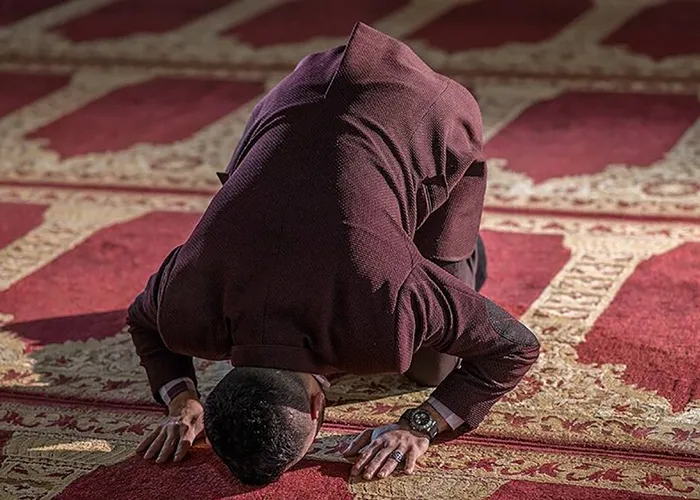
Doubts in Prayer (Shakkiyāt)-)Part 4(
According to the fatwas of the Grand Religious Authorities: Ayatollah Sayyed Ali Khamenei, Ayatollah Sistani, and Ayatollah Makarem Shirazi (may Allah prolong their blessings):
Fatāwā presented without citing a differing opinion or a specific reference are the common rulings shared by all of the three respected Marāji‘. In cases where the ruling of one Marjaʿ differs from that of the other two, it is indicated in a footnote under the same number, mentioning the Marjaʿ by name.
Doubts of Someone who doubts excessively (kathīr al-shakk)
1. If one usually doubts three times in one prayer or even once in each of three consecutive prayers, so long as their excess doubting is not due to an incident that causes fear or anger or distracts their attention from the prayer, they are considered as “a person who doubts too much”, and they should ignore their doubts.
Ayatollah Sistani: A *kathīr al-shakk* (someone who doubts excessively) is a person who has frequent doubts; that is, when we compare his condition with the condition of people like him—who have the same (presence or absence of) distracting factors—he doubts more than the normal. It should be noted that *kathīr al-shakk* is not limited only to someone for whom frequent doubting has become an established habit; rather, it is sufficient that the person is liable to become accustomed to excessive doubting.
Ayatollah Makarem Shirazi: A *kathīr al-shakk* is someone of whom it is said that he doubts a lot; and if a person doubts three times in a single prayer, or doubts in three consecutive prayers, then he is considered *kathīr al-shakk*.
2. One who doubts too much must assume the occurrence of the act about which they have doubts if performing such act does not invalidate one’s prayer. For example, if a person doubts were having performed prostration (sajdah), they should assume that they have performed it. If such act invalidates prayer, one who doubts excessively must assume that they have not performed it. For example, when one doubts having performed one bow (rukū‘) or two, they should posit that they have performed one bow (rukū‘), because performing more than two bows (ruku’) in one unit (rak’ah) invalidates the prayer.
3. A person who doubts too much about only one part of prayer is regarded as an “overdoubter” [someone who is abnormally doubting almost every act of worships] only in that case; therefore, if one doubts about other parts of the prayer, they should act according to the duties of ordinary people. For example, when an over doubter [i.e. someone who is abnormally doubting almost every act of worships], gets confused about performing prostration (sajdah), if they doubt performing the bowing (rukū‘), they should follow the rule of that doubt, i.e., if one is standing, one should perform the bow (rukū‘), and if one is prostrating (sajdah), one should ignore their doubt.
4. An over doubter [i.e. someone who is abnormally doubting almost every act of worships], who gets confused in a special prayer (Jahr prayers)1, e.g., in a prayer to be recited aloud, if one experiences doubts in another prayer (Ikhfāt prayers)2, e.g., in a whispered prayer, one should act according to the rule of doubt.
1 – Jahr prayers, i.e., those in which Chapter (Surah) al-Fātiḥah and the second chapter (surah) are recited aloud.
2 -Ikhfāt prayers, i.e., those in which Chapter (Surah) al-Fātiḥah and the second chapter (surah) are recited in a whisper.
5. If one who over-doubts in a specific place experience doubt while performing prayer in another place must act according to the rule of doubt.
6. If one does not know whether or not they have become an over-doubter, they are not regarded as such. However, an over-doubter should not take their doubts seriously until they return to the normal state of other people.
Doubts in Recommended (Mustaḥab) Prayers
1. If one doubts the unit (rak’ah) number while performing a recommended (mustaḥab) prayer, one may assume it to be either the higher or the lower number, unless the higher number invalidates the prayer, in which case one should give priority to the lower number. For example, if one doubts having said two or three units (Rak’ahs) during the dawn non-obligatory (fajr nāfilah) prayers, one should assume that they have performed two units (Rak’ahs), and if one doubts whether they have prayed one or two units (Rak’ahs), they may assume either way, or the prayer is valid.
2. If in a part of a recommended (mustaḥab) prayer, one doubts whether it is a foundational element (rukn) of the prayer or not and has not passed its place, one should perform it; if the person praying has passed its place, they should ignore their doubt.
3. Increasing the foundational elements (rukn) does not invalidate a recommended (mustahab) prayer, but omitting one invalidates the prayer by way of obligatory precaution. Therefore, if one forgets a part of a non-obligatory (nāfilah) prayer and remembers it after being engaged in the next foundational element (rukn), they should perform the missed part first and then perform the foundational element (rukn) again. For example, if one remembers in the middle of bowing (rukū‘) that he has not recited the second chapter (surah), one should go back and recite it and then perform the bow (rukū‘) again.
editor's pick

news via inbox
Subscribe to the newsletter.