Hadith Of The Week – Volume03 Issue02

True Friendship Revealed in Times of Hardship
The occasion for reflecting on this hadith: 19 Rajab: The Occurrence of the Battle of Tabuk (9 AH)
Introduction
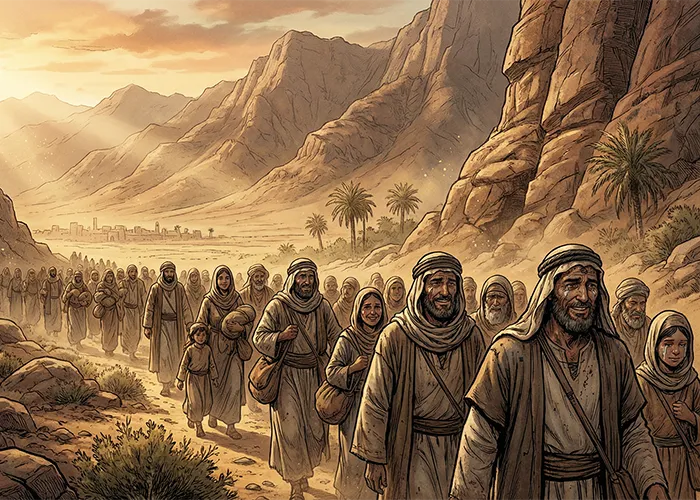
The Battle of Tabuk took place under extremely harsh conditions: a long journey, intense heat, drought, and scarcity. The Qur’an describes it as “the time of hardship” (sāʿat al-ʿusrah). In these difficult circumstances, the true believers stood firm, while some outwardly Muslim but inwardly hypocritical individuals refused to accompany the Prophet (peace be upon him and his family).
On this occasion, the Hadith of the Week reflects on a short but profound saying of Imam ʿAli (peace be upon him) about the nature of true friendship.
قالَ الامام علي عليه السلام: فِي اَلضِّيقِ وَ اَلشِّدَّةِ يَظْهَرُ حُسْنُ اَلْمَوَدَّةِ
Imam ʿAli (peace be upon him) said, “In times of difficulty and hardship, the quality of true friendship becomes clear.” (Ghurar al-Ḥikam wa Durar al-Kalim, vol. 1, p. 479)
Educational messages from the hadith for teens and youth
- Hard Times Show Who Truly Cares
Real friends do not disappear when life becomes difficult.
Practical challenge: Think about who stood by you during a hard moment and appreciate them.
- Popularity Is Not Friendship
Many people stay close only when things are easy and fun.
Practical challenge: Think to yourself and remind yourself that having a large number of followers on social media does not mean you have many real friends. So do not become dependent on this space.
- Be the Friend You Want to Have
Loyalty starts with your own behaviour, not others’.
Practical challenge: Check in on one friend this week without expecting anything back.
- Do Not Judge Friends Only by Words
Promises are easy; support in hardship is what matters.
Practical challenge: Notice who acts when help is needed, not just who speaks kindly.
- Difficulties Build Strong Bonds
Shared hardship can deepen sincere friendships.
Practical challenge: Think of one friend who helped you during a difficult time, and if they are a God-fearing person, strengthen and deepen your friendship with them.
- See Hardships as Opportunities, Not Only Problems
Difficult times help you recognise who your real friends are and who only stay close when things are easy.
Practical challenge: Think about one recent hardship and write down who left you alone and did not offer help. Reconsider your friendship with them.
- Loyalty Has Value in Goodness, Not in Wrongdoing
Remaining loyal to a bad action or to a person with harmful behaviour is not a virtue; rather, it is itself a wrongful act and a form of sharing in their wrongdoing. True loyalty is virtuous only when it is directed towards good people and good causes.
Practical challenge: Identify one loyalty you have towards a harmful person or a bad habit, and distance yourself from it starting today.
Educational messages from the hadith for parents
- Teach Children the Meaning of True Friendship
Children need guidance to recognise sincere relationships.
Practical challenge: Talk with your child about a time when someone supported them in difficulty.
- Model Loyalty at Home
Children learn friendship by watching how parents treat others in difficult times.
Practical challenge: Show patience and support toward a family member under pressure.
- Encourage Standing by the Truth
True friendship includes standing for what is right, even when costly.
Practical challenge: Praise your child when they support someone who is treated unfairly.
Educational messages from the hadith for imams and religious leaders
- Teach Communities to Value Loyalty
Faithful communities are built on trust during hardship.
Practical challenge: Address loyalty and commitment in one sermon or lecture.
- Teaching the Community to Recognise True Loyalty from Empty Claims
Times of crisis reveal who genuinely supports the community and who only speaks without commitment. Imams should teach that loyalty is proven through action, sacrifice, and responsibility, not slogans.
Practical challenge: Reflect on who carries responsibility when challenges arise in the community.
- Stand with the Community in Hard Times
Leadership is proven during pressure, not comfort.
Practical challenge: Be visibly present during a community difficulty this month.
- Turn Hardship into Organised Compassion
Community crises require more than words; they need organised, practical action led by trusted leadership. Imams should teach that true faith is expressed through structured service, where collective compassion is translated into concrete help.
Practical challenge: During the next community difficulty, design one clear initiative that enables congregants to offer support – financial, practical help, time, or professional skills – to those in need.
- Use History as Moral Guidance
Tabuk shows how hardship separates sincerity from hypocrisy.
Practical challenge: Connect a historical example to a current community challenge.

news via inbox
Subscribe to the newsletter.