Editorial – volume03 Issue01
Seasons of Birth, Trial and Renewal: Lessons for Community Life
Introduction
This week gathers births and sorrow, private miracles and public change. Each event from our calendar – whether joyful or painful – offers practical lessons for community leaders: how to nurture youth, protect the vulnerable, honour women, and sustain hope through hardship.
10 Rajab: Birth of Imam Muhammad al-Jawād (a)
Imam Muhammad al-Jawad (pbuh), the ninth Imam, assumed religious authority while still very young and became known for his learning and piety in difficult political circumstances. His life shows how knowledge and sincerity win respect more than age or rank.
Today his story reminds us to trust and train young talent rather than dismissing them because of age, Islam values knowledge and moral competence over appearance.
Message for today: Give meaningful responsibility and mentorship to capable young people in your community.
10 Rajab: Birth of ʿAlī al-Aṣghar (a)
ʿAlī al-Aṣghar (pbuh), the infant of Karbala, is remembered as a symbol of innocence and the tragic cost of oppression. This story teaches us that injustice, evil, and cruelty – if left unchecked – can advance to such an extent that they recognise no moral or human boundaries, eventually leading to the slaughter of children and infants who have no power to defend themselves and have committed no wrong.
Message for today: Fight the injustice of the oppressors wherever you can and in whatever way you can, for injustice knows no bounds.
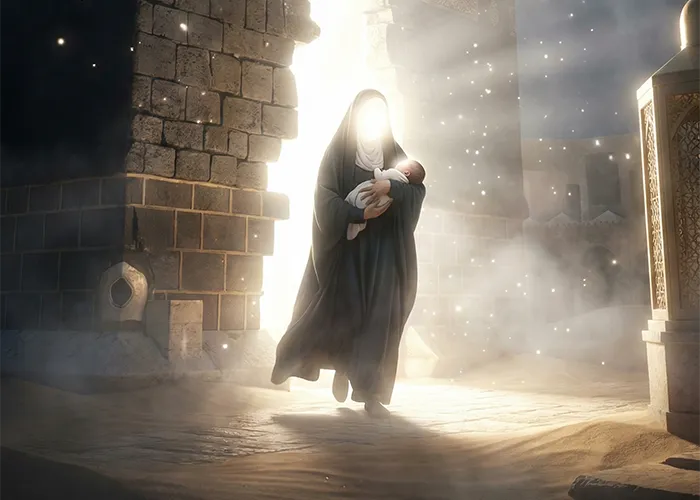
12 Rajab: The Kaʿbah Wall Opens for Fāṭimah bint Asad (pbuh)
Tradition relates that the Kaʿbah’s wall miraculously opened so Fāṭimah bint Asad (pbuh) could give birth to Imam ʿAlī (pbuh) within the sanctuary, signifying divine honour for a righteous woman and her highly respectful son.
This event serves as yet another proof of the sanctity and spiritual greatness of the Commander of the Faithful, Ali (peace be upon him), and demonstrates his sublime status to us.
Message for today: Bring yourself closer in practice to the guidance of the Commander of the Faithful, Imam Ali ibn Abi Talib (peace be upon him).
13 Rajab: Birth of Amir al-Mu’minīn Imam ʿAlī (a)
Imam ʿAlī (pbuh), born in the Kaʿbah, became the model of justice, courage and ethical leadership whose sermons and conduct shaped Islamic moral thought. His life remains a benchmark for leaders: justice, humility and service matter more than power. Imam ʿAlī (pbuh) taught that a person’s worth lies in excellence:
قِيمَةُ كُلِّ اِمْرِئٍ مَا يُحْسِنُ
“The value of every person is what they excel in.” (Tafsīr Nūr al-Thaqalayn)
Message for today: Base leadership on moral excellence and service, not on status.
13 – 15 Rajab: Ayyām al-Bīḍ
“Ayyām al-Bīḍ” refers to the 13th, 14th, and 15th days of each lunar month. The term means “the white days,” because during these nights the full moon shines brightly, filling the sky with light. These days – especially in the months of Rajab, Shaʿbān, and Ramaḍān – hold special significance for Muslims due to their high spiritual merit, and recommended acts such as fasting, prayer, and supplication are encouraged during them. In a distracted age, these brief, regular acts of worship restore discipline and spiritual balance.
Message for today: Use simple, repeatable acts of worship to steady morale and spiritual focus.
1 January: New Year (Gregorian)
The civil New Year is a global observance marking the calendar change and a cultural moment for reflection and goal setting.
Muslims can use this moment for honest self-accounting and setting ethical intentions; Islam encourages constant moral renewal rather than mere calendar ritual.
Message for today: Mark the new year with sincere reflection and practical plans for moral and communal renewal.
15 Rajab: Passing of Lady Zaynab (s)
Lady Zaynab (pbuh), a central figure after Karbala, is renowned for her courage, eloquence, and defence of truth in the face of tyranny. Her example calls communities to speak truth with wisdom and to protect victims of injustice.
Message for today: Be courageous advocates for justice while speaking with wisdom and dignity.
15 Rajab: Change of the Qiblah (2 AH)
In the second year after Hijrah the direction of Muslim prayer was changed from Jerusalem to the Kaʿbah in Makkah, a decisive moment of communal reorientation.
The Qiblah change teaches obedience and unity under divine guidance, showing that communities must be ready to change course when guided by principle:
فَوَلِّ وَجْهَكَ شَطْرَ الْمَسْجِدِ الْحَرَامِ وَحَيْثُ مَا كُنْتُمْ فَوَلُّوا وُجُوهَكُمْ شَطْرَهُ
“So, turn your face towards al-Masjid al-Ḥarām; and wherever you are, turn your faces towards it.” (Qur’an 2:144)
Message for today: Let principled guidance, not inertia, determine communal direction.
15 Rajab: Departure from Shiʿb Abī Ṭālib (pbuh)
The Prophet’s exit from the valley of Abī Ṭālib (pbuh) ended a long period of boycott and hardship, opening a new phase for the Muslim community.
This event reminds us that perseverance in trial can lead to relief and renewal; the Qur’an assures:
إِنَّ مَعَ الْعُسْرِ يُسْرًا
“Indeed, with hardship comes ease.” (Qur’an 94:6)
Message for today: Hold to patience and collective solidarity – hardship can precede new beginnings.
Closing reflection
These days – births and grief, private miracles, ritual devotion and public change – offer leaders a weekly curriculum in pastoral care: empower youth, protect the vulnerable, honour women, renew spiritual practice, and lead with moral clarity. Use them to turn memory into action, and tradition into practical guidance for a better communal future.
editor's pick

news via inbox
Subscribe to the newsletter.