
Ayah Of The Week – Volume 03 Issue 25
Promoting Good, Preventing Harm: The Social Accountability of Muslims
Introduction & Occasion of reflecting on this Ayah
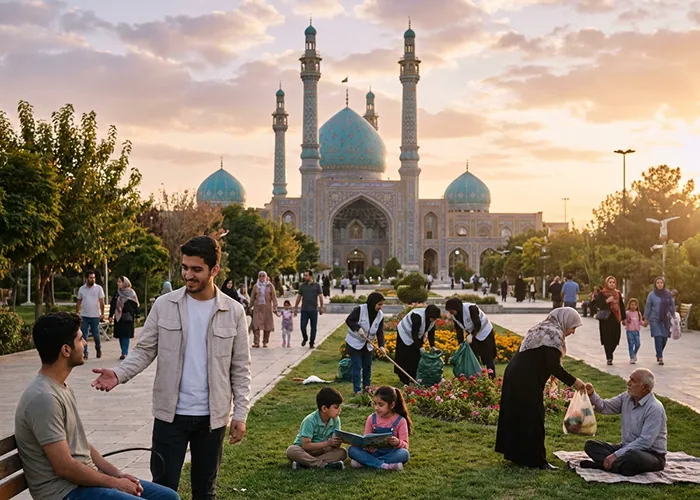
On 27 Khordad (17 June), observed as the Day of Enjoining Good and Forbidding Wrong, Muslims are reminded of their collective responsibility to promote virtue and protect society from harmful influences. On this occasion, it is fitting to reflect on Qur’an 9:71:
وَالْمُؤْمِنُونَ وَالْمُؤْمِنَاتُ بَعْضُهُمْ أَوْلِيَاءُ بَعْضٍ يَأْمُرُونَ بِالْمَعْرُوفِ وَيَنْهَوْنَ عَنِ الْمُنْكَرِ وَيُقِيمُونَ الصَّلَاةَ وَيُؤْتُونَ الزَّكَاةَ وَيُطِيعُونَ اللَّهَ وَرَسُولَهُ أُولَئِكَ سَيَرْحَمُهُمُ اللَّهُ إِنَّ اللَّهَ عَزِيزٌ حَكِيمٌ
The believing men and believing women are allies of one another. They encourage what is right and forbid what is wrong, establish prayer, give zakāh, and obey Allah and His Messenger. It is they upon whom Allah will have mercy. Indeed, Allah is Almighty, All-Wise. (Sūrat al-Tawbah, 9:71)
Educational messages of the Ayah for teens and youth
- Choose Friends with the Right Values
This verse highlights key qualities of good believers: encouraging good, discouraging wrong, praying regularly, helping others, and obeying Allah and His Messenger. These are the qualities to look for in close friends.
Practical challenge: Think about your closest friends and identify which positive qualities they encourage in your life.
- Be a Good Friend
A true friend helps others choose what is right, not what is popular or harmful.
Practical challenge: Today, encourage one friend to do one good deed.
- Courage with Manners
Speaking up against wrongdoing is important, but it should be done with wisdom, kindness, and self-control.
Practical challenge: When you see a wrong attitude online or at school, respond calmly and respectfully.
- Allah’s Mercy Has Conditions
The verse teaches that Allah’s mercy is connected to faith, good actions, worship, generosity, and obedience. We should not expect guidance and blessings while ignoring these responsibilities.
Practical challenge: Choose one good habit from this verse and practise it consistently for the next seven days.
- Enjoining Good and Preventing Wrong Is Everyone’s Duty
The command to encourage good and discourage wrong is addressed to both believing men and believing women. Every young Muslim has a role in making their environment better.
Practical challenge: Take one positive initiative this week at school, home, or among friends that encourages kindness, honesty, or respect.
- Do Not Follow the Crowd Blindly
Many people follow the majority simply to fit in, even when the group is moving in the wrong direction. A believer should have the courage to stand for what is right and avoid harmful influences.
Practical challenge: The next time you feel pressured to follow a negative trend, politely refuse and choose an action that reflects your values instead.
Educational messages of the Ayah for parents
- Parenting Is More Than Providing
This verse teaches that a true parent does more than provide food, shelter, and education. Parents are also responsible for guiding their children towards what is right and protecting them from what is harmful.
Practical challenge: Have a meaningful conversation with your child this week about one important moral or spiritual value.
- Correct with Mercy
Amr bil ma‘rūf works best in a home where discipline is joined with warmth and understanding.
Practical challenge: Give one correction today without anger, shouting, or humiliation.
- Guidance Grows Through Love and Trust
The verse links enjoining good with mutual care and support. Parents are more effective in guiding their children when advice is given through love, trust, and a strong relationship.
Practical challenge: Give one piece of advice to your child today in a warm and friendly conversation rather than as a command.
- Lead Through Action, Not Words Alone
The verse connects enjoining good with prayer, charity, and obedience to Allah and His Messenger. Advice becomes more effective when children see those values reflected in their parents’ daily lives.
Practical challenge: Practise one good habit you wish to see in your children and let them witness it consistently.
- Guidance Is the Responsibility of Both Parents
The verse addresses believing men and believing women together. Raising righteous children and encouraging good character is a shared responsibility of both fathers and mothers.
Practical challenge: Set aside time this week to discuss with your spouse one shared goal for your children’s moral and spiritual development.
- Choose Positive Companions for Your Children
Children are strongly influenced by the friends and families they spend time with. Parents should help them build relationships with people who encourage faith, good character, responsibility, and kindness.
Practical challenge: Review your child’s friendships and social environment and encourage one connection that supports positive values and healthy growth.
Educational messages of the Ayah for imams and teachers
- Build Faith-Based Communities and Friendships
The verse describes believers as allies and supporters of one another. Imams and teachers should create environments where young people form friendships based on faith, good character, and mutual encouragement.
Practical challenge: Organise one activity this month that helps students or congregants build positive and meaningful relationships.
- Teach the Right Criteria for Choosing Friends
Many young people choose friends based on popularity or shared interests alone. This verse teaches that good companions should encourage faith, good deeds, and moral growth.
Practical challenge: Dedicate part of a lesson or sermon this week to discussing the qualities of a good friend.
- Do Not Neglect Your Duty to Guide
Enjoining good and discouraging wrong is not an optional task for imams and teachers; it is a central part of their mission. Education is not only about transferring information but also about shaping character and values.
Practical challenge: Address one important moral issue facing your audience this week with wisdom and clarity.
- Address Problems Before They Become Habits
Wrong actions are easier to correct in their early stages. When harmful behaviours begin to appear in a school, mosque, or community, timely guidance can prevent deeper problems later.
Practical challenge: Identify one emerging concern among your students or congregation and take a practical step to address it this week.
- Strengthen the Sense of Collective Responsibility
This verse presents believers as a caring community whose members support and guide one another. In an age that often emphasises individual interests alone, Islamic teachings remind us that families and communities share responsibility for one another’s well-being and moral development.
Practical challenge: Encourage one project or discussion this month that promotes cooperation, service, and mutual responsibility within your community.
- Use Wisdom in Advice
People respond better to sincere guidance that respects their dignity and real-life struggles.
Practical challenge: Choose one sermon point and present it in a simple, compassionate way.
editor's pick

news via inbox
Subscribe to the newsletter.