
Fatwa Panel of the Week – Volume 03 Issue 19
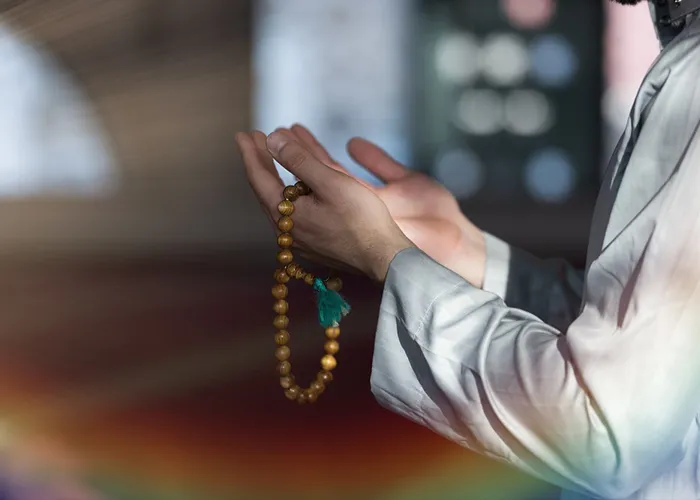
Prayer of a Traveller (Part-10)
According to the fatwas of the Grand Religious Authorities: Ayatollah Sayyed Ali Khamenei, Ayatollah Sistani, and Ayatollah Makarem Shirazi (may Allah prolong their blessings):
Fatāwā presented without citing a differing opinion or a specific reference are the common rulings shared by all of the three respected Marāji‘. In cases where the ruling of one Marjaʿ differs from that of the other two, it is indicated in a footnote under the same number, mentioning the Marjaʿ by name.
Ruling on Recommended Prayers (Nawāfil) During Travel
- In a journey where the obligatory prayers are shortened (qaṣr), performing the nawāfil of ẓuhr and ʿaṣr is not permitted (even with the intention of rajāʾ, i.e., hope for acceptance).
- The night nawāfil of ʿishāʾ (al-watīrah) may be performed during travel with the intention of rajāʾ (hope for reward).
Ayatollah Sistani: The nawāfil of ẓuhr and ʿaṣr fall away during travel, as does the nawāfil of ʿishāʾ; however, performing it (al-watīrah) with the intention of rajāʾ al-maṭlūbiyyah (hope that it is desired by God) is permissible.
Ayatollah Makarem Shirazi: The daily nawāfil fall away during travel, including the nawāfil of ʿishāʾ; however, performing it with the intention of rajāʾ is not problematic.
- The daily nawāfil that are dropped for a traveller become legitimate and recommended again for someone who intends to stay (iqāmah) for ten days; likewise, recommended fasting becomes applicable for them.
- In the places of option (amākin al-takhyīr)—where a traveller may choose between qaṣr and full prayer—if one performs the obligatory prayer in full, they may also perform the nawāfil.
- The nawāfil of night (ṣalāt al-layl), dawn (ṣubḥ), and maghrib do not fall away during travel and remain recommended.
- Other recommended prayers (such as Ṣalāt Jaʿfar al-Ṭayyār, Ṣalāt of Imam al-Mahdī (ʿaj), and occasion-based prayers like those of Friday) also remain valid and recommended during travel.
Ruling on Performing Full Prayer Instead of Qaṣr (with Knowing or unknowing)
- If a traveller knows that their duty is to perform the shortened prayer (qaṣr), but still performs it in full (tamām), the prayer is invalid. They must repeat it—within the time (iʿādah) or after the time (qaḍāʾ)—in its shortened form.
- If a person was unaware of the ruling (i.e., a non-negligent ignorant / jāhil qāṣir), then after becoming aware, no repetition or makeup (qaḍāʾ) is required.
- If the ignorance was due to negligence in learning (i.e., a jāhil muqaṣṣir), they have committed a sin and must:
- Within the time: repeat the prayer (iʿādah)
- After the time: perform it as qaḍāʾ (makeup prayer)
Ruling on Forgetting the Prayer Rule during Travel
- If a traveller forgets that they must perform the prayer in shortened form (qaṣr)—or forgets that they are traveling—and performs it in full (tamām):
- If they realize within the prayer time: they must repeat the prayer (iʿādah). If they do not repeat it within the time, then qaḍāʾ (makeup prayer) becomes obligatory.
- If they realize after the prayer time has passed: the prayer they performed is valid, and no qaḍāʾ is required.
Ruling on the Places of Option (Choice between Qaṣr and Tamām)
- In four sacred places—Makkah, Madina, Masjid al-Kūfa, and the Shrine of Imam al-Ḥusayn (peace be upon him)—a traveller may choose to perform the four-rakʿah prayers either shortened (qaṣr) or in full (tamām). Although performing them in full is more virtuous, qaṣr is recommended as a precaution.
- In Makkah and Madina, this ruling applies to the entire present-day cities, although it is recommended as a precaution to limit oneself to al-Masjid al-Ḥarām and al-Masjid al-Nabī.
- In Kūfa, according to one view, this ruling is limited to Masjid al-Kūfa, and applying it to the entire city is subject to obligatory precaution.
Ayatollah Sistani: This option in the first three places (Makkah, Madina & Kūfa) is not restricted to their mosques, but rather applies to the entire cities, although observing precaution (i.e., performing qaṣr) is preferable.
- In the Shrine of Imam al-Ḥusayn (peace be upon him), this ruling is restricted to the area close to the blessed grave, and—according to precaution—does not extend to the courtyards and surrounding arcades.
Ayatollah Sistani: This option applies to the area surrounding the grave up to a distance of 25 cubits (approx. 11.5 meters) on each side; thus, some arcades fall within this boundary while other sections (such as parts of the rear mosque area) fall outside it.
Ayatollah Makarem Shirazi: The traveller has the choice in four locations: al-Masjid al-Ḥarām, the Mosque of the Prophet (pbuh), Masjid al-Kūfa, and the Shrine of Sayyid al-Shuhadāʾ (peace be upon him). Performing the prayer in full is more virtuous, and there is no difference between the original structures from the time of the Prophet and Imams and any later or future expansions.
- If a prayer is missed (qaḍāʾ) in these places:
- If it is made up elsewhere, the stronger opinion is that it must be performed as qaṣr.
- If it is made up in the same places, then—based on obligatory precaution—it should still be performed as qaṣr.
editor's pick

news via inbox
Subscribe to the newsletter.