
Religious Outreach Experiences – Volume02 Issue47
Lessons from an Honest Answer
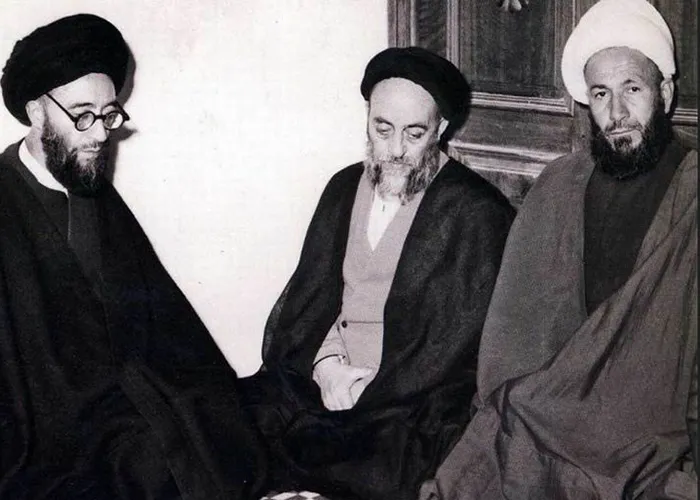
Years before the victory of the Islamic Revolution in Iran, the virtuous jurist and insightful mystic, the late Allamah Seyed Mohammad Hussein Tabatabai (R.A.), travelled to England for several months to receive medical treatment. His presence in those days, when the Muslim community in the West was still very limited and scattered, created a unique opportunity for people to meet and converse with this exceptional figure. During his nearly three-month stay, the Allamah dedicated a specific time each day for public meetings. People-especially students eager to learn about Islamic teachings-came to him from various parts of England to benefit from his knowledge through their academic, doctrinal, and ethical questions.
In those days, I was a fifteen-year-old boy, full of the passion for knowledge and deeply captivated by the Allamah’s personality and works. Every day, I would go to his residence and listen wholeheartedly to his penetrating answers, particularly to the questions posed by students and youth, learning profoundly from him. One day, a young university student came to him and posed a question. After listening, the Allamah fell into deep thought for a long period-perhaps about four minutes-meditating on the core of the query. Finally, he lifted his head, and instead of attempting a hasty or perfunctory reply, he stated with complete honesty: “I do not know. If you come back tomorrow, I will give you the answer.”
The Allamah’s candid admission of “I do not know” was astonishing and profoundly surprising to me, as I had mentally constructed an almost superhuman image of the concept of an “Allamah” and his persona. Such an unreserved answer from a scholar of his stature seemed far from what I expected. The next day, I returned with even greater curiosity, waiting for the young student to appear again to see how the Allamah would respond. Moments after the young man arrived, I was utterly astonished to see the Allamah-with hands trembling due to frailty, old age, and illness-reach into the pocket of his robe, pull out a piece of paper, and hand it to the young man, saying: “This is the answer to your question, which I have prepared for you.”
As I looked closer, I was struck by a deeper sense of wonder: I realized the Allamah had written over seven pages in his own blessed handwriting. This meant he had dedicated an entire day solely to answering the question of one young student, whom perhaps no one else would have seen again. If yesterday I was surprised by his honest reply, today, I was even more amazed by the sight of him writing over seven pages with trembling hands just to clarify a young person’s ambiguity. This extraordinary level of attention and dedication shown by a distinguished scholar towards the intellectual concerns of the youth was deeply instructive to me. I thought to myself: “Truly, the beautiful title of ‘Allamah Tabatabai’ is worthy of him.” It was in that moment that I grasped the true meaning of “beneficial knowledge” and the “responsibility of scholars.”
Key Lessons from this Prophetic Experience:
- The Courage to Admit Ignorance: The propagation of faith must be based on truthfulness. A true scholar will never give an incorrect answer merely to save face. Saying “I do not know” is, in itself, a moral lesson, an act of intellectual integrity, and a way to build trust in the field of religious outreach.
- Maximum Commitment to the Audience’s Questions: The Allamah spent a full day answering one young man’s question. This behaviour sends a clear message: the youthful mind is a divine investment and must be addressed with seriousness, affection, and patience.
- Preaching by Deeds Before Words: The Allamah’s humility, scientific rigor, meticulousness, attention to the audience, and sense of responsibility were more impactful in action than any speech could have been. This conduct teaches us that true preaching begins in the heart and through behaviour, long before it ever reaches the tongue.
editor's pick

news via inbox
Subscribe to the newsletter.