Editorial – volume 03 Issue 41
When the Calendar Becomes a School of Life
Introduction:
A calendar is more than a sequence of dates. For a believer, it can become a school of memory, conscience and action – connecting the lessons of the past with the moral questions of the present. This week brings together Persian literature, Islamic scholarship, resistance to injustice, intellectual service and the increasingly urgent question of mental well-being.
26 Rabīʿ al-Thānī: The Passing of Āqā Najafī Qūchānī
Āqā Najafī Qūchānī (1878–1944) was a prominent Shi’a scholar and jurist who studied in Qūchān, Mashhad, Isfahan and Najaf, where he studied under major scholars including Ākhūnd Muḥammad Kāẓim Khurāsānī. He later returned to Qūchān, where he spent many years teaching, guiding the community and leading its religious seminary.
He is especially remembered for Siyāḥat-i Sharq (The Eastern Journey), an autobiographical work, and Siyāḥat-i Gharb (The Western Journey), a work dealing with the world of the barzakh and the human being’s journey after death. His life combined scholarship, spiritual reflection and close engagement with ordinary people.
Message for today: Seek knowledge that changes the way you live, not merely knowledge that increases what you know.
26 Rabīʿ al-Thānī: The Passing of Sayyid Mujtabā Mūsavī Lārī
Sayyid Mujtabā Mūsavī Lārī (1925–2013) was a Shi’a scholar from Lar who continued his religious education in Qom and became known for presenting Islamic teachings to contemporary audiences. His writings included works on Islamic ethics, theology, resurrection, Prophethood and Imamate (pbut).
His contribution was not confined to writing: he established a charitable organisation that supported disadvantaged people and worked among young people, while helping to establish mosques, schools and clinics in rural areas. His Western Civilization Through Muslim Eyes was also translated and published in several languages.
Message for today: Make Islamic knowledge accessible, relevant and useful – especially to the younger generation.
10 October: World Mental Health Day
World Mental Health Day is observed annually on 10 October to raise awareness of mental-health issues and mobilise support for mental well-being worldwide.
Islam regards faith in God as one of the most effective and beneficial sources of mental well-being and inner peace. The Holy Quran says:
الَّذِينَ آمَنُوا وَتَطْمَئِنُّ قُلُوبُهُم بِذِكْرِ اللَّهِ ۗ أَلَا بِذِكْرِ اللَّهِ تَطْمَئِنُّ الْقُلُوبُ
“Those who have believed and whose hearts are assured by the remembrance of Allah. Unquestionably, by the remembrance of Allah hearts are assured.”
Message for today: In an age of growing distance from religious beliefs, firm and lived faith in Almighty God remains one of the most authentic and reliable foundations and sources of physical and spiritual well-being, inner peace, and human resilience.
18 Mehr / 10 October: The Passing of Dr Muḥammad Ibrāhīm Āyatī
Dr Muḥammad Ibrāhīm Āyatī (1293–1343 SH) was a scholar, historian, lecturer and translator who combined traditional Islamic learning with university education; he earned a doctorate in Islamic philosophy from the University of Tehran and taught Islamic history and related subjects there.
He wrote and translated extensively, including works on the Prophet’s life, the history of Islam and Andalusia, and the history of Ashura, while also producing important translations from Arabic and English.
Message for today: Familiarise yourself, your family, and your audience with authentic Islamic and religious sources.
28 Rabīʿ al-Thānī: The Passing of ʿAllāmah ʿAbd al-Ḥusayn Amīnī
ʿAllāmah ʿAbd al-Ḥusayn Amīnī (1909–1970) was a major Shi’a scholar and researcher, best known for his monumental multi-volume work al-Ghadīr, in which he collected and examined extensive material concerning Ghadīr Khumm from hadith, history and Arabic literature. He travelled widely, including through Arab countries and India, in search of manuscripts and historical sources.
He also established the Maktabat Amīr al-Muʾminīn al-ʿĀmma in Najaf, building a major scholarly library from the books and manuscripts he collected; after becoming seriously ill, he passed away in Tehran in 1970 and was buried beside the library he had founded.
Message for today: Familiarise yourself and your children with the illuminating teachings of Amīr al-Mu’minīn ʿAlī (peace be upon him), and strive to outdo one another in putting these teachings into practice.
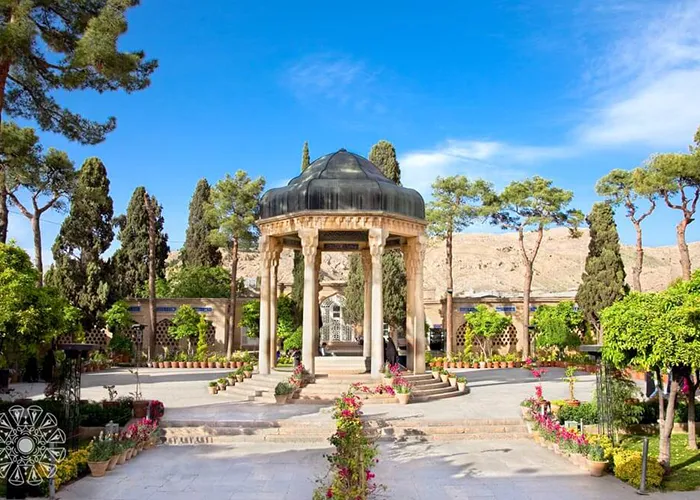
20 Mehr / 12 October: Hafez Memorial Day
Shams al-Dīn Muḥammad Hafez of Shiraz (c. 1315–1390) is regarded as one of the greatest Persian lyric poets, and his Dīvān has exerted an extraordinary influence on Persian language, literature and culture.
Hafez’s poetry is particularly notable for bringing ethical, philosophical, mystical and even political themes into the lyrical form of the ghazal. His language also frequently incorporates Qur’anic expressions and religious allusions, although his poetry contains layers of symbolism that have generated diverse interpretations.
Message for today: Let words become a bridge to wisdom, beauty and moral awakening – not merely entertainment.
1 Jumādā al-Awwal: The Tobacco Prohibition of Mīrzā Ḥasan Shīrāzī
In 1890, Nāṣir al-Dīn Shāh granted the British merchant Gerald Talbot a sweeping tobacco concession, giving the Régie Company extensive control over the purchase, sale and export of Iranian tobacco. Opposition grew among merchants, scholars and the wider population as the humiliating implications of the concession became clearer.
On 1 Jumādā al-Awwal 1309 AH, Mīrzā Muḥammad Ḥasan Shīrāzī issued his famous ruling prohibiting the use of tobacco in response to the circumstances surrounding the concession. The ruling spread rapidly and sustained popular opposition eventually contributed to the cancellation of the concession.
Message for today: Faith is not merely private conviction; it can also require principled, informed and responsible action when the public good is at stake.
editor's pick

news via inbox
Subscribe to the newsletter.