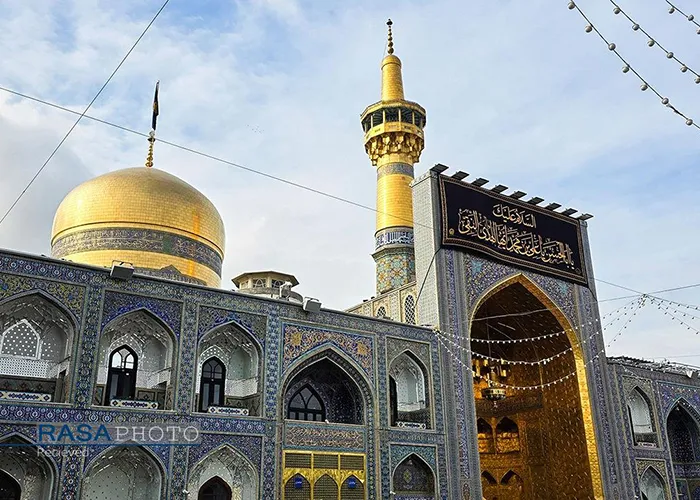
Topic of the Week – Volume03 Issue01
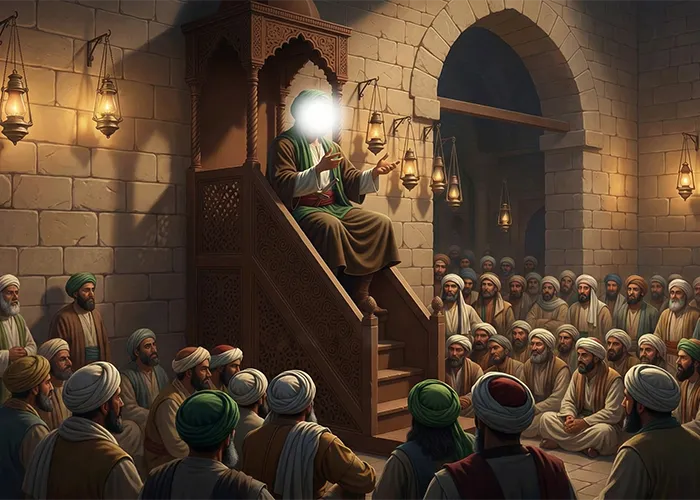
The Alawite School of Thought: A Civilization-Building Model for Overcoming the Crisis of Identity in the Modern Age
Seyed Hashem Moosavi
The Birth of Imam Ali (peace be upon him): A Return to the Source of Meaning
The birth anniversary of Amir al-Mu’minin Ali ibn Abi Talib (peace be upon him) is not merely a commemoration of a great historical or religious figure. Rather, it is an opportunity to revisit a divine educational tradition-a school of thought that succeeded in shaping human beings, reforming society, and laying the foundations of a great civilization.
At a time when modern humanity, despite astonishing scientific and technological advances, is experiencing unprecedented levels of identity crisis, existential anxiety, and spiritual emptiness, revisiting the Alawite tradition is far more than a religious ritual. It is a response to a profound human and civilizational need-a response rooted in revelation yet articulated through reason and lived human experience.
Imam Ali (peace be upon him) was not only an Imam of worship and devotion; he was a teacher of humanity and an architect of a civilization built upon the harmonious integration of revelation and reason. Divine education in his school offers a comprehensive model-one that addresses the depths of the human soul while simultaneously seeking to build a just, ethical, and meaning-cantered society.
The Crisis of Identity and Meaninglessness in the Modern World: A Problem Beyond Economics and Technology
The human being of the twenty-first century, surrounded by an overwhelming flow of information, rapid change, and superficial freedoms, often suffers from deep inner disorientation. Widespread depression, the breakdown of family structures, growing loneliness, and an expanding sense of meaninglessness all point to a deeper crisis: the absence of convincing answers to the questions “Who am I?” and “Why do I live?”
In many of its interpretations, modern thought has severed the human being from transcendence, reducing the person to a purely material entity-either a consumer or a tool of production. Within this framework, life lacks a higher purpose, and values become relative and unstable. The natural consequence of such a worldview is the rise of nihilism, existential emptiness, and a sense of rootlessness.
This crisis cannot be resolved merely through psychological prescriptions, economic growth, or technological development. The core problem is not a lack of resources, but a crisis in defining the human being and the purpose of life.
In response to this existential confusion, the Alawite school proposes a deeply ontological solution: self-knowledge. Imam Ali (peace be upon him) is reported to have said:
رَحِمَ اللَّهُ امرَءً عَرَفَ مِن أینَ و فی أینَ و إلى أینَ
“May God have mercy on the one who knows where he has come from, where he is, and where he is heading.” (A’lam al-Din, p. 344, quoted by Abdullah Javadi Amoli, Raheeq Maktoum, p. 128.)
This profound statement stands in direct opposition to nihilism. It restores direction, purpose, and meaning to human existence.
Divine Education in the Alawite Tradition: Redefining the Human Being
In contrast to reductionist modern perspectives, the Alawite school presents a deep, balanced, and dignity-cantered understanding of the human being. This vision is rooted in the Qur’an, which declares:
وَلَقَدْ کَرَّمْنَا بَنِی آدَمَ
“Indeed, we have honoured the children of Adam.” (Qur’an 17:70)
Based on this foundational principle, Imam Ali (peace be upon him) views the human being as a creature in a state of continuous growth and transcendence, who finds true peace and meaning only through connection with divine truth. Human beings, in this view, possess intrinsic dignity and inner freedom, and must safeguard that dignity by avoiding humiliating dependencies.
In his famous counsel to his son (Letter 31 of Nahj al-Balaghah), Imam Ali (pbuh) states:
لا تَكُنْ عَبْدَ غَيْرِكَ وَقَدْ جَعَلَكَ اللّهُ حُرّاً،
“Do not be a slave to others when God has created you free.”
Elsewhere he affirms:
أيها الناس إن آدم لم يلد عبدا ولا أمة، وإن الناس كلهم أحرار ؛
“O people! Adam did not give birth to any slave or maidservant. All people are born free.” (Nahj al-Saada, Mahmoudi, vol. 1, p. 198)
This dignity, in the Alawite worldview, extends even to non-Muslims. In his celebrated letter to Malik al-Ashtar (Letter 53), Imam Ali (pbuh) instructs:
« وَ أَشْعِرْ قَلْبَكَ الرَّحْمَةَ لِلرَّعِيَّةِ وَ الْمَحَبَّةَ لَهُمْ وَ اللُّطْفَ بِهِمْ، وَ لَا تَكُونَنَّ عَلَيْهِمْ سَبُعاً ضَارِياً تَغْتَنِمُ أَكْلَهُمْ، فَإِنَّهُمْ صِنْفَانِ: إِمَّا أَخٌ لَكَ فِي الدِّينِ وَ إِمَّا نَظِيرٌ لَكَ فِي الْخَلْقِ؛
“Fill your heart with mercy, love, and kindness toward your subjects. Do not behave toward them like a predatory beast seeking to devour them. For they are of two kinds: either your brothers in faith or your equals in humanity.”
Here, ethical awareness is woven into governance, and responsibility toward all human beings-regardless of belief-is firmly established.
Self-Purification as the Foundation of Civilization: The Logic of Alawite Civilization-Building
One of the most fundamental teachings of the Alawite school is that no sustainable civilization can be built without morally and spiritually educated human beings. The golden age of Islamic civilization was not merely the product of political power or scientific advancement; it was the result of nurturing balanced, responsible, and meaning-oriented individuals.
Imam Ali (peace be upon him) repeatedly emphasizes that self-reform must precede social reform. In his view, ethics and education form the foundation of politics and economics. Social corruption, he argues, is not primarily structural-it originates from failures in human moral formation.
In Nahj al-Balaghah (Wisdom 73), he states:
مَن نَصَّبَ نَفسَهُ لِلنّاسِ إِمامًا فَلیَبدَأ بِتَعلِیمِ نَفسِهِ قَبلَ تَعلیمِ غَیرِهِ؛
“Whoever appoints himself as a leader of people must begin by educating himself before educating others.”
Leadership, therefore, begins with inner discipline, self-education, and moral integrity.
The flourishing of Islamic civilization rested upon individuals who viewed justice as an internal moral value, not merely a legal obligation-individuals shaped by an educational system grounded in the Qur’an and the prophetic and Alawite traditions.
Justice, Meaning, and Responsibility: The Three Pillars of Alawite Civilization
A civilization built upon Alawite education rests on three fundamental pillars:
- Justice
Justice is a central concept in Alawite thought, yet it is far more than a legal or political mechanism. It is the outcome of educating a just human being-one who first rejects oppression within himself. Even at the height of power, Imam Ali (pbuh) refused to sacrifice justice for expediency or personal interest.
His famous encounter with his brother Aqil, and the story of the heated iron, exemplify this unwavering commitment.
Imam Ali (pbuh) famously declared:
وَاللّه ِ لَوْ اُعْطِيتُ الْأَقاليمَ السَّبْعَةَ بِما تَحْتَ اَفْلاكهِا عَلى أَنْ أَعْصِىَ اللّه َ فى نَمْلَةٍ أَسْلُبُها جِلْبَ شَعيرَةٍ ما فَعَلْتُ،
“By God, if I were given the seven regions of the world and all that lies beneath their skies, in order to disobey God even to the extent of taking a grain of barley from an ant, I would never do so.” Nahj al-Balaghah (Sermon 222)
In the Alawite vision, justice unfolds in stages:
- justice toward oneself,
- justice in personal conduct,
- and finally, justice within social structures.
Such a civilization ensures that power is subordinate to ethics-not the other way around.
- Meaning in Life
One of the greatest achievements of Alawite education is restoring meaning to human existence. In this worldview, life is a field of testing, growth, and nearness to God. Suffering, responsibility, and even failure acquire purpose within a higher moral horizon.
This is the faith that allowed Imam Ali (pbuh), at the moment he was struck, to proclaim:
فُزتُ و رَبِّ الکَعبَة،
“By the Lord of the Ka‘bah, I have succeeded.”
Such a perspective replaces modern despair with hope, patience, and purposeful striving. Life is not accidental, death is not annihilation, and humanity is not abandoned without direction.
- Social Responsibility
In the Alawite tradition, faith and ethics are never purely individual matters. A truly educated human being cannot remain indifferent to injustice, poverty, ignorance, or discrimination. In the famous Sermon of Shaqshaqiyyah, Imam Ali (pbuh) explains that he accepted leadership because God had taken a covenant from scholars not to remain silent in the face of the oppressor’s excess and the oppressed person’s hunger.
«…و ما أخَذَ اللَّهُ عَلَی العُلَماءِ ألاّ یُقارّوا علی کِظَّةِ ظالِمٍ و لا سَغَبِ مَظلومٍ؛
This profound link between self-purification and social engagement is the secret of Alawite civilization-building. In such a society:
- scholars guide the community,
- rulers are trustees of the people,
- and individuals see themselves as responsible members of a greater whole.
The Alawite Response to the Confused Modern Human Being
If the modern human asks, “In an unstable world, what is truly worth living for?”
The Alawite school responds: truth, justice, and the moral cultivation of humanity.
The covenant of Imam Ali (pbuh) with Malik al-Ashtar is not merely a political document; it is a charter of humane governance-one so universal that it has been cited in modern times as a model of ethical leadership.
In this vision, human dignity is the foundational principle, justice is the criterion of decision-making, and power is merely a tool for serving humanity.
Because it speaks to universal human concerns-justice, dignity, meaning, and responsibility-the Alawite school remains deeply relevant even for non-Muslims. It offers a moral bridge between religious faith and contemporary human concerns, and a powerful ethical framework for intercultural and civilizational dialogue.
Conclusion
The Birth of Imam Ali (peace be upon him): An Invitation to Rebuild Humanity and Civilization
The birth anniversary of Amir al-Mu’minin Ali (peace be upon him) is an invitation to return to a school of thought that builds the human being from within and reforms society from without.
In a world where identity crisis and nihilism threaten the future of humanity, divine education in the Alawite tradition is not a nostalgic memory-it is a living, civilization-building solution.
Revisiting this tradition may mark the beginning of a renewed journey toward a meaning-centred human being, a just society, and an ethical civilization-the very vision for which Imam Ali (pbuh) lived, suffered, and illuminated history.
editor's pick

news via inbox
Subscribe to the newsletter.