Editorial – volume 03 Issue 47
The Forgotten Art of Being Human
Introduction
In a world increasingly defined by rapid change, technological advancement and growing social divisions, perhaps one of our greatest challenges is not simply to know more, achieve more or progress further, but to remember what it truly means to be human. The occasions we reflect upon this week offer timeless lessons in rediscovering this forgotten art: upholding justice, pursuing wisdom, protecting the vulnerable, nurturing compassion and honouring sacrifice. Through the teachings of Islam and the lives of those who embodied its values, we are reminded that humanity is not merely an identity we inherit, but a responsibility we must consciously practise every day.
10 Jumada al-Thani: The Covenant of Imam Ali (peace be upon him) with the People of Najran
In 37 AH (657 CE), representatives of the Christian community of Najran approached Imam Ali (peace be upon him) with an earlier covenant granted to them by the Prophet Muhammad (peace be upon him and his family). Having been relocated from Yemen to Iraq during the caliphate of Umar, they sought the Imam’s protection and recognition of their rights.
Imam Ali (pbuh) issued a new written covenant, reaffirming the commitments made by the Prophet (pbuh). It explicitly required Muslims to honour their rights, protect them from injustice and refrain from violating their lawful entitlements. The document was recorded on 10 Jumada al-Thani, 37 AH.
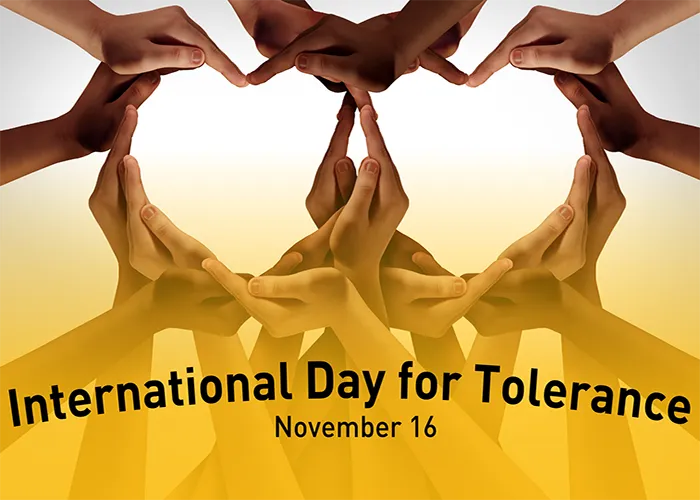
At a time when religious intolerance, discrimination and sectarian divisions continue to challenge societies, this covenant demonstrates Islam’s commitment to religious coexistence, justice, the protection of minorities and the fulfilment of agreements. Respect for the rights of people of other faiths is not merely a political choice but a moral and religious responsibility.
The Qur’an declares:
إِنَّ اللَّهَ يَأْمُرُ بِالْعَدْلِ وَالْإِحْسَانِ
“Indeed, Allah commands justice and excellence.” (Surah al-Nahl, 16:90)
Message for today: Honour every person’s rights, regardless of their religion, and make justice and peaceful coexistence the foundations of your relationships and communities.
20 November: World Children’s Day
World Children’s Day recognises children’s rights to education, healthcare, protection from violence and discrimination, family life, play and participation in decisions affecting them. It has become the world’s most widely ratified international human rights treaty.
The Prophet Muhammad (peace be upon him and his family) said:
لَيْسَ مِنَّا مَنْ لَمْ يَرْحَمْ صَغِيرَنَا وَيُوَقِّرْ كَبِيرَنَا
“He is not one of us who does not show mercy to our young and respect to our elders.”
Message for today: Protect every child’s dignity, listen to their voices, provide opportunities for their growth and make homes, schools and communities safe places for them to flourish.
30 Aban / 21 November: Day of Wisdom and Philosophy – Honouring Abu Nasr al-Farabi
Abu Nasr Muhammad al-Farabi (c. 870–950 CE) was one of the most influential philosophers and scholars of the Islamic Golden Age. Born in Farab, in Central Asia, he studied and worked in major intellectual centres, particularly Baghdad, where he engaged deeply with Greek philosophy, logic and the sciences.
Known as al-Mu’allim al-Thani (the Second Teacher), after Aristotle, he made major contributions to logic, metaphysics, political philosophy, ethics and music. His influential works include The Virtuous City (Al-Madina al-Fadila), in which he explored the relationship between good leadership, moral excellence and a well-ordered society. 30 Aban / 21 November is observed as an occasion honouring philosophy and wisdom in his name.
In an era shaped by artificial intelligence, technological advancement, misinformation and competing ideologies, al-Farabi’s legacy reminds us that knowledge must be guided by wisdom, ethical reasoning and a vision of the common good.
The Qur’an states:
يُؤْتِي الْحِكْمَةَ مَنْ يَشَاءُ ۚ وَمَنْ يُؤْتَ الْحِكْمَةَ فَقَدْ أُوتِيَ خَيْرًا كَثِيرًا
“He grants wisdom to whom He wills, and whoever has been granted wisdom has certainly been granted abundant good.” (Surah al-Baqarah, 2:269)
Message for today: Do not measure progress merely by how much we know or how advanced our technology becomes, but by how wisely and ethically we use them for the benefit of humanity.
12 Jumada al-Thani: The Birth Anniversary of Haji Agha Rahim Arbab
Haji Agha Rahim Arbab was born on 12 Jumada al-Thani 1297 AH (1880 CE) in Chermahin, near Isfahan, Iran. He became one of the distinguished religious scholars, philosophers and spiritual figures of modern Iranian history, renowned for his mastery of Islamic jurisprudence, philosophy, literature and the rational and transmitted sciences.
He studied under prominent scholars, including Jahangir Khan Qashqai and Akhund Mulla Muhammad Kashani. Remembered for his humility, piety, intellectual depth and compassion, he spent his life teaching, guiding people and serving society. He passed away in Isfahan in December 1976.
Message for today: Pursue knowledge with humility, cultivate good character and use your learning to serve others rather than seeking recognition or status.
13 Jumada al-Thani: The Demise of Umm al-Banin (peace be upon her) – A Day to Honour the Mothers and Wives of Martyrs
Umm al-Banin (pbuh), whose given name was Fatimah bint Hizam al-Kilabiyyah, was the wife of Imam Ali (AS) and the mother of four sons: Abbas, Abdullah, Ja’far and Uthman (pbut). All four accompanied Imam Husayn (AS) to Karbala and were martyred during the tragedy of Ashura in 61 AH (680 CE). Her son, al-Abbas ibn Ali (pbuh), became especially renowned for his courage, loyalty and devotion to Imam Husayn.
Umm al-Banin (pbuh) is remembered in the Islamic tradition for her profound devotion to the Ahl al-Bayt (pbut), her love for Imam Husayn and her patience following the martyrdom of her sons. The 13th of Jumada al-Thani is observed as the anniversary of her passing and is also dedicated to honouring the mothers and wives of martyrs.
In societies affected by war, violence and the loss of loved ones, remembering Umm al-Banin (pbuh) provides an opportunity to recognise the often-unseen sacrifices, emotional strength and enduring contributions of the mothers and wives who bear the burden of martyrdom and its aftermath. Islam honours patience, steadfastness, maternal devotion and the dignity of those who endure hardship with faith.
The Qur’an states:
إِنَّمَا يُوَفَّى الصَّابِرُونَ أَجْرَهُمْ بِغَيْرِ حِسَابٍ
“Indeed, those who are patient will be given their reward without measure.” (Surah al-Zumar, 39:10)
Message for today: Honour the mothers and wives of martyrs not only through words and ceremonies, but through lasting compassion, practical support, respect and care for their families.
editor's pick

news via inbox
Subscribe to the newsletter.