Editorial – volume 03 Issue 11

Faith, Leadership, and Moral Courage: Lessons from a Defining Week in Islamic History
Introduction
The coming week of Ramadan gathers together a remarkable series of spiritual, historical, and intellectual milestones. From the martyrdom of great leaders and the remembrance of prophets to global challenges such as Islamophobia, these occasions offer Imams, teachers, chaplains, and leaders of Muslim cultural centres valuable opportunities to guide their communities. By reflecting on these events, we can transform sacred history into practical moral insight for contemporary Muslim life.
21 Ramadan: Passing of Prophet Musa (Moses) and Prophet Yusha‘ ibn Nun (peace be upon them)
According to Islamic historical traditions, the 21st of Ramadan is associated with the passing of Prophet Musa (Moses), one of the greatest prophets of Allah, and his successor Prophet Yusha‘ ibn Nun (Joshua).
The story of Musa represents the struggle for justice, patience in leadership, and unwavering trust in Allah during times of oppression. The Qur’an repeatedly emphasises his perseverance in confronting tyranny:
وَلَقَدْ أَرْسَلْنَا مُوسَىٰ بِآيَاتِنَا وَسُلْطَانٍ مُبِينٍ
“And We certainly sent Moses with Our signs and clear authority.” (Qur’an 11:96)
Message for Today:
Moral leadership requires patience, courage, and trust in divine guidance even in the face of powerful injustice.
21 Ramadan: Ascension of Prophet ‘Isa ibn Maryam (Jesus) to Heaven
Islamic belief holds that Prophet ‘Isa (Jesus), son of Mary, was raised by Allah to heaven and was not crucified. The holy Quran says:
وَقَوْلِهِمْ إِنَّا قَتَلْنَا الْمَسِيحَ عِيسَى ابْنَ مَرْيَمَ رَسُولَ اللَّهِ وَمَا قَتَلُوهُ وَمَا صَلَبُوهُ وَلَكِنْ شُبِّهَ لَهُمْ وَإِنَّ الَّذِينَ اخْتَلَفُوا فِيهِ لَفِي شَكٍّ مِنْهُ مَا لَهُمْ بِهِ مِنْ عِلْمٍ إِلَّا اتِّبَاعَ الظَّنِّ وَمَا قَتَلُوهُ يَقِينًا * بَلْ رَفَعَهُ اللَّهُ إِلَيْهِ وَكَانَ اللَّهُ عَزِيزًا حَكِيمًا (النساء، ۱۵۷-۱۵۸)
“And for their saying: ‘Indeed, we have killed the Messiah, Jesus son of Mary, the Messenger of God.’ But they did not kill him, nor did they crucify him; rather, it was made to appear so to them. And indeed, those who differ concerning it are in doubt about it. They have no knowledge of it except the following of conjecture; and certainly they did not kill him. Rather, God raised him to Himself. And God is All-Mighty, All-Wise.” (Qur’an, Surah An-Nisā’, 4:157–158)
This event symbolises divine protection of His prophets and the continuation of the prophetic mission. In a world often shaped by religious misunderstanding and interfaith tensions, the Islamic perspective on Jesus reminds Muslims of the shared spiritual heritage between Islam and Christianity.
Message for Today:
Respect for all prophets and sincere dialogue with other faith communities strengthens peace and mutual understanding.
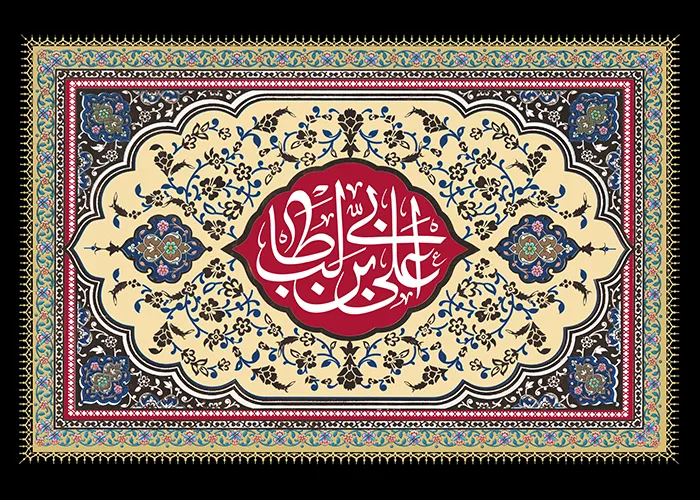
21 Ramadan: Martyrdom of Imam ‘Ali ibn Abi Talib (40 AH)
On the 21st of Ramadan in the year 40 AH, Imam ‘Ali ibn Abi Talib—the cousin and son-in-law of the Prophet Muhammad (peace be upon him)—was martyred after being struck while praying in the mosque of Kufa. In that moment, reflecting his deep faith and certainty, he famously declared:
فُزْتُ وَرَبِّ الْكَعْبَةِ
“By the Lord of the Ka‘bah, I have succeeded.”
Imam ‘Ali stands as a timeless symbol of justice, humility, courage, and principled leadership. His life and teachings continue to inspire individuals and communities who strive to establish fairness, integrity, and compassion in society.
Message for Today:
For a believer – unlike for those who deny God – martyrdom is the beginning of salvation and eternal life, not misfortune and darkness.
21 Ramadan: Allegiance to Imam Hasan al-Mujtaba (40 AH)
After the martyrdom of Imam Ali, Muslims pledged allegiance to his son, Imam Hasan al-Mujtaba. His leadership was characterised by wisdom and a commitment to preserving unity within the Muslim community.
Imam Hasan’s decision to prioritise peace and unity over political conflict offers an important lesson for a world experiencing deep divisions. The Prophet Muhammad (peace be upon him) said about him:
إِنَّ ابْنِي هَذَا سَيِّدٌ وَلَعَلَّ اللَّهَ أَنْ يُصْلِحَ بِهِ بَيْنَ فِئَتَيْنِ عَظِيمَتَيْنِ مِنَ الْمُسْلِمِينَ (الارشاد، ج ۲، ص۷).
“This son of mine is a leader, and perhaps Allah will reconcile through him two great groups of Muslims.”
Message for Today:
True leadership sometimes means choosing reconciliation over confrontation.
22 Ramadan: One of the Possible Nights of Qadr
Among the final ten nights of Ramadan are several nights regarded as possible Laylat al-Qadr, the Night of Decree, when the Qur’an was first revealed.
Laylat al-Qadr represents a moment of spiritual renewal, reflection, and divine mercy in the life of every believer. Allah says:
لَيْلَةُ الْقَدْرِ خَيْرٌ مِنْ أَلْفِ شَهْرٍ
“The Night of Decree is better than a thousand months.” (Qur’an 97:3)
Message for Today:
Even a single sincere night of worship and repentance can transform a lifetime.
23 Ramadan: Birth of Imam Musa al-Sadr (1928)
Imam Musa al-Sadr was born in 1928 and later became a prominent Muslim scholar and social leader in Lebanon. He worked tirelessly to promote social justice, interfaith dialogue, and dignity for marginalised communities.
Message for Today:
Religious leadership must combine spiritual guidance with social responsibility.
25 Ramadan: Disappearance of Imam Musa al-Sadr (1978)
In 1978, during a visit to Libya, Imam Musa al-Sadr mysteriously disappeared and his fate remains unknown. His disappearance became one of the most significant unresolved events in modern Muslim history.
His legacy continues to inspire movements for justice, dignity, and peaceful coexistence.
Message for Today:
The struggle for justice and truth must continue even when expected outputs remain uncertain.
27 Ramadan: Passing of Allamah Muhammad Baqir al-Majlisi (1110 AH)
Allamah Muhammad Baqir al-Majlisi, the renowned scholar and compiler of the monumental hadith collection Bihar al-Anwar, passed away in 1110 AH. His work preserved thousands of narrations and contributed significantly to Islamic scholarship.
In an era of misinformation and superficial knowledge, scholars like al-Majlisi remind us of the importance of preserving authentic knowledge. The Qur’an emphasises the value of knowledge:
هَلْ يَسْتَوِي الَّذِينَ يَعْلَمُونَ وَالَّذِينَ لَا يَعْلَمُونَ
“Are those who know equal to those who do not know?” (Qur’an 39:9)
Message for Today:
Preserving and teaching authentic knowledge is essential for protecting the intellectual future of Muslim communities.
15 March: International Day to Combat Islamophobia
The United Nations designated 15 March as the International Day to Combat Islamophobia to address growing discrimination and prejudice against Muslims worldwide.
Muslims across many societies face misunderstanding, stereotypes, and discrimination. Islam teaches dignity, patience, and justice in responding to such challenges. The Qur’an reminds believers:
ادْفَعْ بِالَّتِي هِيَ أَحْسَنُ
“Repel evil with what is best.” (Qur’an 41:34)
Message for Today:
Respond to hostility with wisdom, dignity, and positive engagement with society.
editor's pick

news via inbox
Subscribe to the newsletter.