Topic of the Week – Volume03 Issue06
The Ideal Awaiting: From Silent Observation to Responsible Readiness
Seyed Hashem Moosavi
Introduction
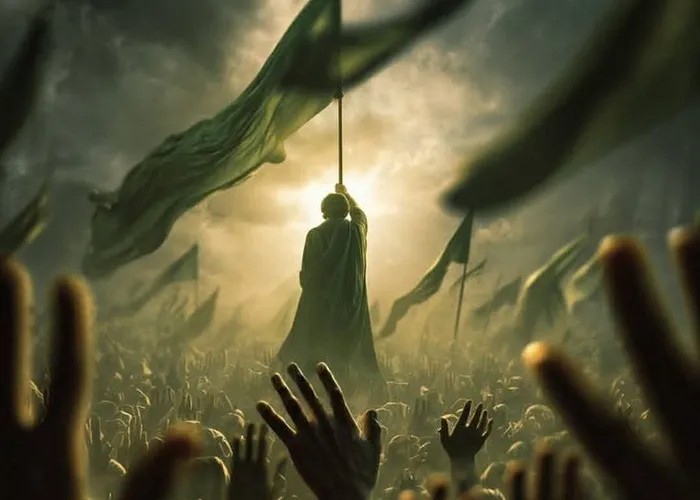
The birth of Imam Mahdi (may Allah hasten his reappearance) is more than the commemoration of a historical figure or a ritualistic event; it is a reminder of a “Living Horizon” in the history of faith. It represents a future that is not a product of random chance, but a divine, law-governed promise.
However, more critical than the belief in the Reappearance itself is the nature of our waiting (Intidhar). Is it merely sitting idly by, or is it a continuous exercise in self-construction and social reform?
Historically, misconceptions have often reduced “waiting” to a passive state, as if the true seeker is one who abdicates responsibility and defers everything to “tomorrow.” Conversely, in the logic of the Quran and the school of the Ahl al-Bayt (peace be upon them), true waiting is dynamic, proactive, and accountable.
This article seeks to demonstrate, through the lens of Quranic verses, authentic narrations, and socio-educational analysis that “The Ideal Awaiting” is fundamentally incompatible with stagnation or passivity. Instead, it stands as one of the most profound models of moral and social agency in Islamic thought.
When understood correctly, this model transcends mere belief; it becomes the catalytic engine for two simultaneous movements:
- Individual Self-Refinement: The constant honing of one’s character and skills.
- Collective Reform: The active pursuit of justice and the betterment of the community.
In this paradigm, the “waiter” is not a bystander to history, but its most dedicated architect.
- Etymology of Intidhar: Beyond Mere Passing of Time
In its Arabic roots, Intidhar is inextricably linked to Nadhar (vision/looking). It is not the simple passage of time; it is a “vigilant gaze” toward the distant horizon. Scholars distinguish it through two related terms:
- «ترقّب» Tarqqub: Stretching one’s neck to spot something far off.
- «تربّص» Tarabbus: A conscious pause combined with keen observation.
True waiting is a state of heightened senses and total readiness. To understand it fully, we must distinguish it from three common pitfalls:
- Waiting vs. Wishing: A wish is often an emotional or abstract desire. Intidhar is focused on an inevitable reality.
- Waiting vs. Suspension: Suspension implies helplessness and uncertainty. Intidhar is filled with purpose and direction.
- Waiting vs. Justification: True waiting never justifies the status quo. It is a resounding “No” to current injustices in pursuit of an ideal state.
- The Quranic Vision: A Law-Governed Future
The Quran views the ultimate triumph of justice not as a random miracle, but as a “divine law” (Sunnah). The victory of truth over falsehood is the necessary result of historical evolution and human maturity.
As stated in Surah Al-Anbiya:
وَلَقَدْ كَتَبْنَا فِي الزَّبُورِ مِنْ بَعْدِ الذِّكْرِ أَنَّ الْأَرْضَ يَرِثُهَا عِبَادِيَ الصَّالِحُونَ
“ Certainly We wrote in the Psalms, after the Torah: ‘Indeed My righteous servants shall inherit the earth.’ (21:105)
In this profound Quranic verse, God introduces the “Inheritance of the Earth” not as a mere possibility or a prophetic forecast, but as an immutable Divine Law. By using the expression “We have written” (Laqad Katabna), the Quran signals that this is a fixed decree in the blueprint of creation.
The term “Inherit” (Yarithuha) transcends the idea of mere habitation. In this context, it signifies:
- Administration: The systematic management of the world’s resources.
- Sovereignty: The establishment of a just governing authority.
- Direction: Guiding the trajectory of human civilization toward its ultimate purpose.
The crux of the verse lies in the qualification of the heirs. “Righteousness” (Salah) here is dual layered:
- Spiritual Devotion (Ubudiyyah): A clear, unwavering relationship with the Creator.
- Functional Competence (Salahiyyah): This goes beyond individual piety. It encompasses expertise, merit, and strategic readiness.
The Earth is promised to those who have ascended to the level of “Global Administrative Competence.” Therefore, in the Quranic paradigm, “waiting” is not a verbal plea; it is a rigorous process of qualification. To be a true “waiter” is to bridge the gap between who we are, and the “Standard of Proficiency” required to manage a divinely aligned world.
The Link Between Divine Promise and Human Agency
The Quran clarifies that social change begins from within:
إِنَّ اللَّهَ لَا يُغَيِّرُ مَا بِقَوْمٍ حَتَّى يُغَيِّرُوا مَا بِأَنْفُسِهِمْ
“Indeed, Allah will not change the condition of a people until they change what is in themselves.” (13:11)
This verse dismantles the “passive waiting” narrative. Divine intervention and the promise of the Reappearance are extensions of human effort, not a replacement for it. True waiting is the acceptance of the responsibility to transform our internal and structural realities.
Quranic waiting teaches us that Divine Laws (Sunan) are always aligned with those who strive. The Reappearance is not the end of human effort; rather, it is the ultimate reward for the struggles endured in the pursuit of competence and qualification.
Consequently, the true seeker is not one who waits for God to fix the world from afar. Instead, a true seeker is one who strives to become a “Divine Instrument” of that great reformation.
- The Prophetic Paradigm: Waiting as an “Action”
In the teachings of the Ahl al-Bayt, waiting is defined as a “Strategic Project” and a lifestyle. The Prophet Muhammad (PBUH) famously stated:
أفضلُ أعمالِ أمّتی انتظارُ الفرج
“The best of actions for my nation is waiting for the Deliverance (Al-Faraj).”
By categorizing waiting as an “action” (Amal), the Prophet signalled that it requires energy, planning, and resilience. A true seeker “summons the future into the present.” It is a state of moral and combat readiness that affects every facet of life.
The Three Dimensions of Active Waiting:
- The Ethical Dimension:
Cultivating a “micro-Mahdist society” within one’s own soul. One cannot yearn for global justice while practicing personal injustice.
- When a man asked Imam al-Sadiq (AS) about the Deliverance, «متی الفرج؛ the Imam replied: “What have you to do with the Deliverance while you are still chasing the world?” «مالک و الفرج و انت ممن ترید الدّنیا!؟.
- The Intellectual Dimension:
Increasing one’s insight (Basirah) to ensure the “compass of truth” is never lost during the era of Occultation.
- The Social Dimension:
Actively confronting poverty, discrimination, and corruption. The true seeker plays a role in improving the world, however small the scale.
- Characteristics of the True Seeker
The traditions of the Infallibles provide clear benchmarks for those who truly wait:
- Piety and Noble Character: Imam al-Sadiq (AS) said:
من سرّه ان یکون من اصحاب القائم فلینتظر و لیعمل بالورع و محاسن الاخلاق “Whoever desires to be among the companions of the Qaim (AS) must wait while practicing piety and noble character.”
The Imam (AS) further clarifies the essential characteristics of this spiritual and social journey, stating:
«مِن دِينِ الأَئِمَّةِ الوَرَعُ وَ العِفَّةُ وَ الصَّلَاحُ وَ انتِظَارُ الفَرَجِ بِالصَّبرِ» “The creed of the Imams consists of: God-wariness (Wara’), Chastity, Righteousness, and awaiting the Deliverance with patience and perseverance.”
- Steadfast Attachment to Leadership (Wilayah):
طوبى لشیعتنا المتمسکین بحبلنا فى غیبة قائمنا “Blessed are our followers who hold fast to our rope (guidance) during the occultation of our Qaim.”
- Resilience Against Adversity: Imam al-Sadiq (AS) advised not to let the whispers of the world or the mockery of enemies shake one’s resolve, for:
من انتظر امرنا و صبر على ما یرى من الاذى و الخوف، هو غداً فى زمرتنا “He who waits for our cause and bears the harm and fear with patience shall be in our ranks tomorrow.”
Imam al-Ridha (peace be upon him) also elegantly captures the essence of this spiritual state, saying:
«مَا أَحْسَنَ الصَّبْرَ وَ اِنْتِظَارَ الْفَرَجِ» “How beautiful are patience and the anticipation of deliverance.”
- Sincere Love: Imam Hasan al-Askari (AS) described the hearts of the faithful as:
واعلم ان قلوب اهل الطاعة و الاخلاص نزع الیک مثل الطیر الى او کارها “Know that the hearts of the obedient and sincere fly toward you [the Mahdi] just as birds fly to their nests.”
Conclusion: Living the Reappearance
Active waiting is the practice of “Mahdist Living.” It is a bridge between the difficult reality of today and the bright horizon of tomorrow. The Reappearance is not an abrupt, isolated event; it is the natural harvest of wills and choices made during the Occultation.
Every step toward truth, every effort for honesty, and every act of reform is a literal step toward the Reappearance. The true seeker does not wait for the Imam to change the world; they strive to be the “Divine Instrument” through which that change occurs.
editor's pick

news via inbox
Subscribe to the newsletter.